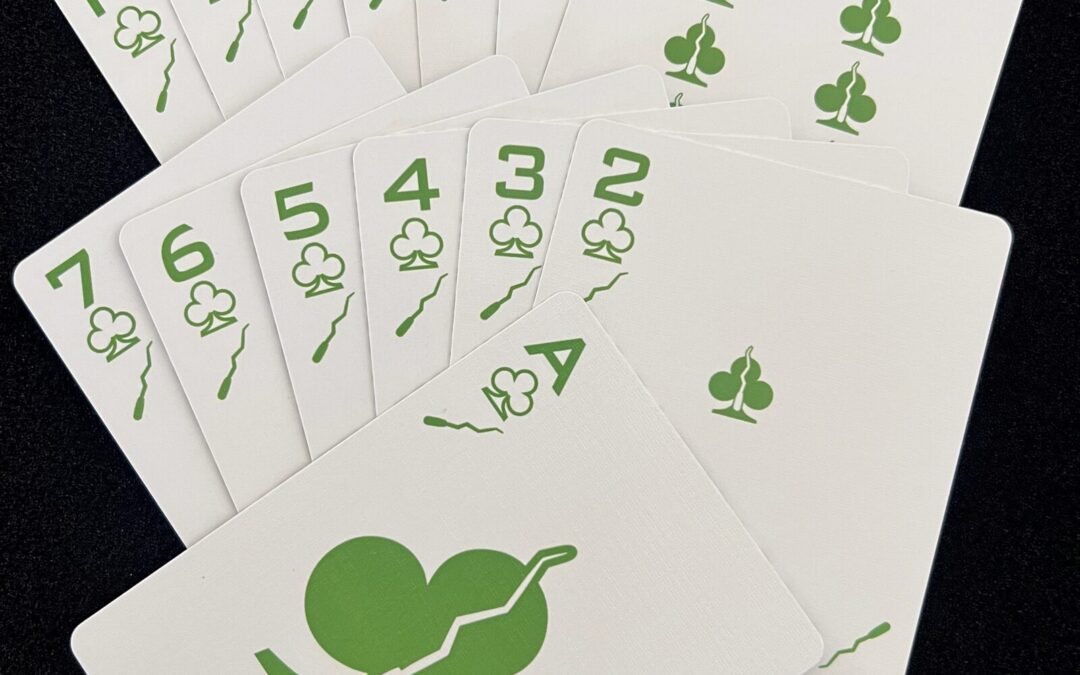
Wands are the suit of fire: action, energy, ambition and creativity. They govern the things you start because you want to, as opposed to the things you're handed. In the Ikonology deck they are the green Clubs, so if you play poker with this deck, every Wands card is also a club. This page covers all fourteen cards of the suit, from the Ace to the King, with a full upright meaning, a full reversed meaning and a note on the icon printed on each card.
If you own the deck, the short keyword versions of these meanings are on pages 15 to 18 of the booklet in the box. This is the longer version the booklet promised. If you don't own it yet, you can read this as a plain-spoken guide to the traditional meanings of the Wands cards, whatever deck you use. For the deck itself, see the Ikonology deck page.
Table of Contents
The Suit of Wands in Brief
The booklet sums up the suit this way: “Drive, will, creation. Work you choose rather than work you are given. Ambition, enterprise, the spark before the thing exists.” Before you read a single card, its suit has already told you what kind of matter you are looking at, and in a spread, a run of Wands cards suggests the question is mostly about drive, will and creation.
Each number carries its own weight whatever the suit. The Ace is the seed, the Two is duality, the Three is first growth, the Four is structure, the Five is disruption, the Six is recovery, the Seven is assessment, the Eight is movement, the Nine is near completion and the Ten is completion and excess. Read the number first, then the suit, and you have a working reading before you look anything up.
The court cards can be people, or they can be the manner in which you are acting. The Page is the student, the Jack is the Knight of tarot, the Queen is mastery held inwardly and the King is mastery expressed outwardly. In the Ikonology deck the Knight is called the Jack and is marked J, which is why a poker deck made from these cards has a full set of Jacks. Let the surrounding cards decide whether a court card is a person or an attitude.
Every Ikonology card reads one way up. The Roman numeral of a Major Arcana card sits at the top and its name at the bottom, and on the Minor Arcana the corner index sits at the top left. A card that lands the right way round is upright. A card that lands upside down is reversed, and reversed means the same energy in a different mood: blocked, delayed, turned inward or overdone. Reversals are optional, and you can turn every card upright if you prefer.
Ace of Wands (Ace of Clubs)
A spark in a dry forest. What happens next is entirely your call.
Ace of Wands Upright
The Ace of Wands is the seed of the whole suit: inspiration, a spark, a new venture. It's the moment an idea lands and refuses to leave, the 3 a.m. thought that turns out to be the start of something.
Traditionally a hand reaches out of a cloud holding a living branch, which tells you where this energy comes from. It arrives as a gift, and it has to be taken up. The booklet describes every ace as potential “offered but not yet taken up,” and that fits perfectly here. Nothing has been built, planned or even written down. All you have is the pure charge of wanting to begin.
In a reading, the Ace of Wands is a green light for new projects, creative work, a business idea, a first draft, or a fresh start with more energy than you've felt in months. Act while it's warm. A spark is a perishable thing, and it needs kindling, in the form of a plan, a first step or a friend to tell, before the mood passes and the idea goes back into the drawer.
Ace of Wands Reversed
Reversed, the booklet reads delay, false start and no direction. The spark is there but it keeps fizzling. You may be all enthusiasm and no follow-through: three new notebooks bought, none filled. Or the timing's wrong, and a good idea is landing on ground that isn't ready for it yet.
It can also describe energy with nowhere to go, the restless buzz of someone with six ideas and no way to choose between them. The fix is to choose. Pick the idea you'd still be excited about in a month, give it one concrete action this week, and let the others wait in line.
The Icon on the Ace of Wands
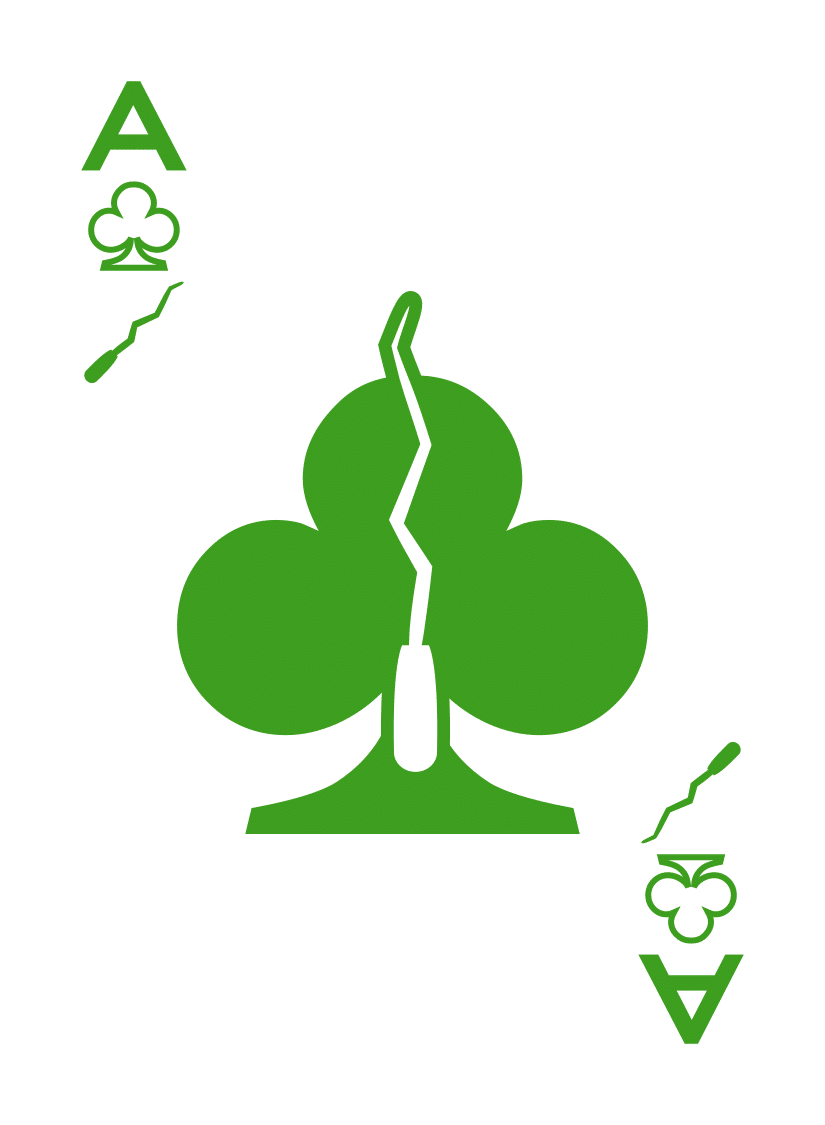
The Ikonology Ace of Wands is a single large green club with a jagged, sprouting wand running up through the middle like a crack of lightning or a twig in spring. It's the biggest symbol on any Wands card and the only thing on its face, which suits a card about one idea at full size. The wand through the club shows how every card in the suit works: the poker symbol and the tarot symbol fused into one.
Two of Wands (Two of Clubs)
The world in one hand, a plan in the other. Pick which one to start with.
Two of Wands Upright
The Two of Wands is the card of planning, future vision and first steps. The traditional picture shows a figure standing on a battlement, holding a small globe
and looking out over the sea. He has already achieved something, and he's wondering what's next. That is the energy here: the quiet moment after the spark, when you step back and ask where this could really go. The booklet's number key calls the two “duality,” a choice held between two things, and in Wands that choice is usually between staying with what you have and reaching for something bigger.
In a reading, the Two says to make a plan. Sketch the map, list the resources, imagine the version of this where it works. It's also a card about stepping out of your comfort zone. The castle behind you is secure, and the horizon in front of you is exciting, and the Two asks you to notice both without pretending that you can't have a view of the other. Decide where you're headed, then take the first real step toward it.
Two of Wands Reversed
Reversed, the booklet gives fear of the unknown and poor planning. The globe is still in your hand, but you can't bring yourself to leave the wall. It's the plan that never leaves the notebook, the dream you keep describing and never starting, or a leap taken with no map at all.
Ask which side of the problem you're on. If you're frozen, shrink the step: not “start the business,” but “make one phone call.” If you're rushing, slow down and write down what could go wrong. A reversed Two doesn't forbid the adventure. It asks you to be a little braver or a little more prepared, depending on which you're short of.
The Icon on the Two of Wands
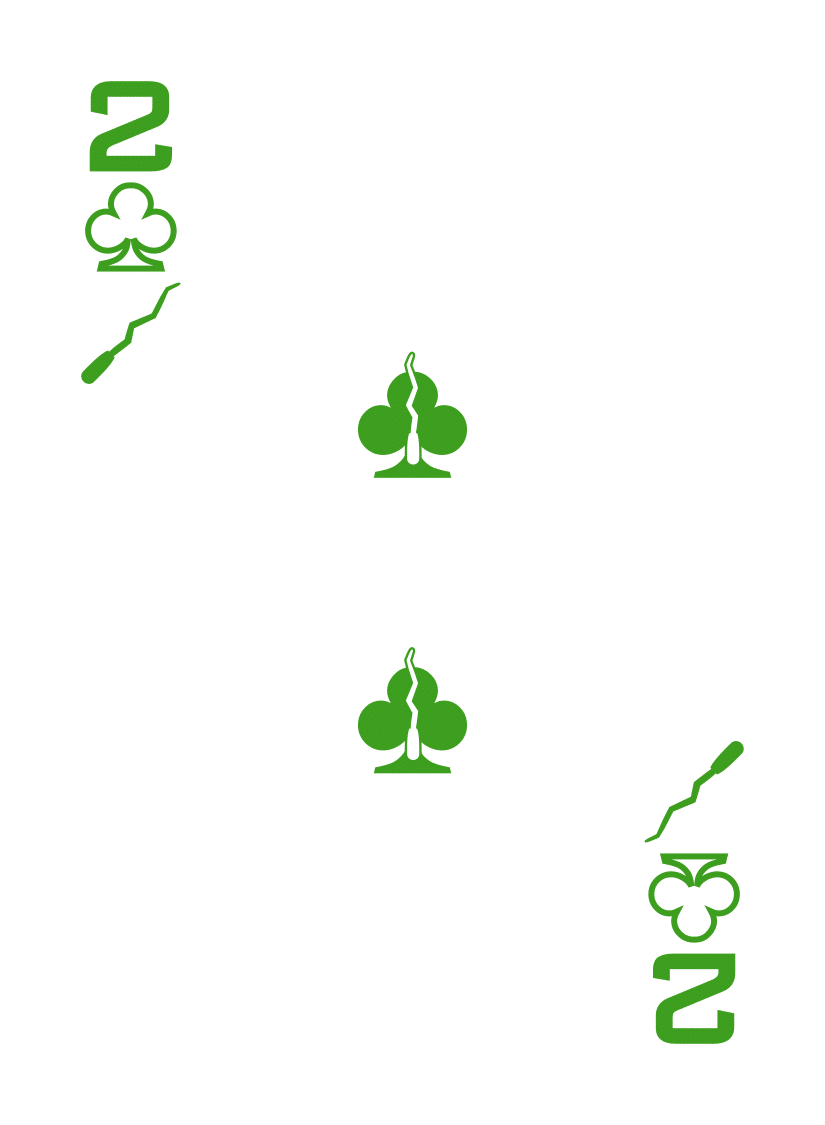
Two green clubs, each with a tiny wand inside it, stacked in a single column down the middle of the card. It's the simplest arrangement in the deck after the ace: a pair, one above the other, like two points on a map with a line yet to be drawn between them. The corner index (the 2, the club and the small wand) sits at top left and again, upside down, at bottom right.
Three of Wands (Three of Clubs)
Ships on the horizon. You sent them out; now watch them come home.
Three of Wands Upright
The Three of Wands is the card of expansion, foresight and ships coming in. The traditional image shows a figure with their back to us, standing on a cliff and
watching vessels sail across the water. They launched a venture earlier, and now they're waiting to see what returns. The booklet's number key calls three “first growth,” the point where the idea becomes real and other people get involved. In Wands it's the moment your project leaves your head and starts to travel.
In a reading, the Three says your efforts are starting to pay off, and the horizon is widening. It's a card for business growth, long-distance connections, collaboration and the satisfaction of seeing something you started take on a life of its own. It also asks for patience and foresight. The ships haven't docked yet, and the wise thing to do is to keep an eye on the water and plan for what comes in, not stand around wondering whether they're lost. Look ahead, expand a little, and trust the work you've already done.
Three of Wands Reversed
Reversed, the booklet reads obstacles, playing small and delays. The ships are late, or they've been blown off course, or you've been keeping them in the harbor out of fear. It's a card for the stalled launch, the plan that never grew past the first stage, or the cautious voice that tells you to stay within sight of the shore.
Check whether the delay is real or self-imposed. External obstacles call for patience and a new route. Playing small calls for courage. Either way, the reversed Three suggests you've done the hard part, so don't let a bit of weather decide the rest of the trip.
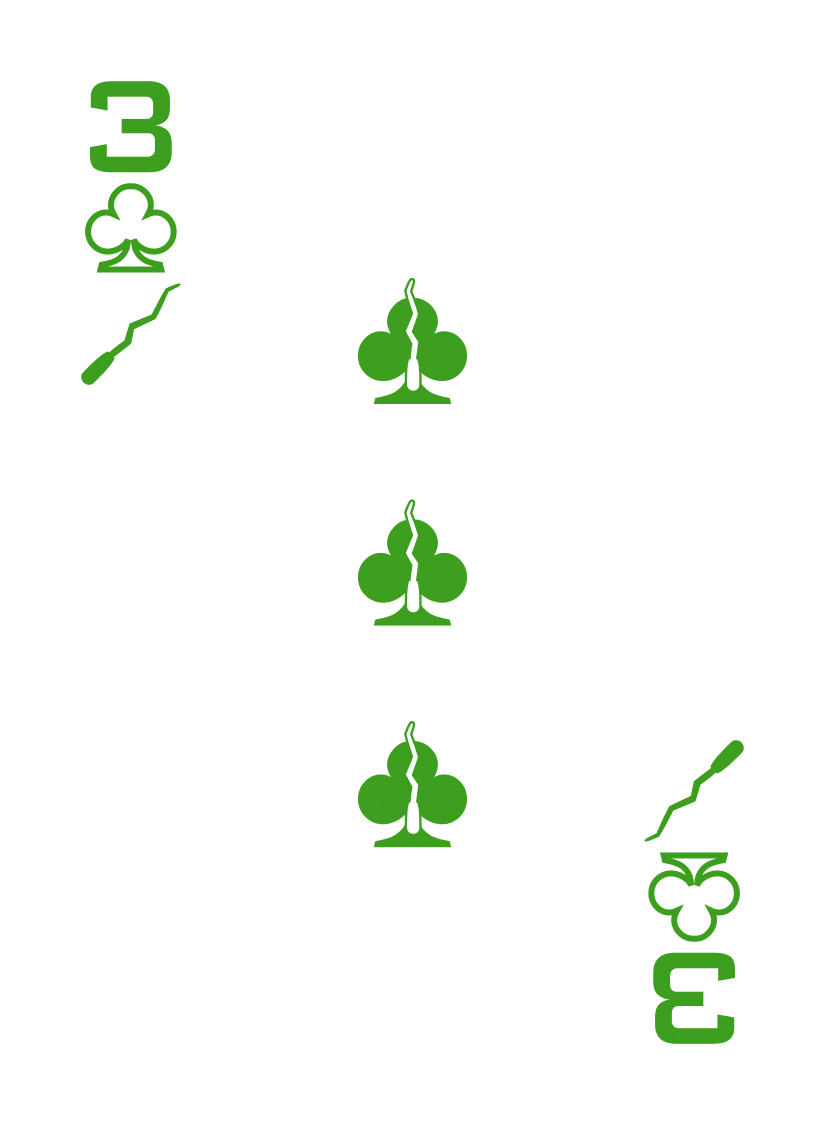
The Icon on the Three of Wands
Three green clubs, each carrying a small wand, stacked in a single column down the center of the card. The vertical line reads like a mast, or a row of sails seen from the shore, which suits a card about watching things come in. Three is the first number that makes a shape, and the shape here is a line pointing somewhere.
Four of Wands (Four of Clubs)
Come in, take your shoes off, there's cake. You've earned the party.
Four of Wands Upright
The Four of Wands is the card of celebration, homecoming and stability. The traditional picture shows four tall wands holding up a garland, with
people dancing in front of a castle. It's a party, a wedding, a housewarming, the finish of a long project marked by a proper toast. The booklet's number key calls the four “structure,” stability and the stagnation stability risks. In Wands, though, the structure is a happy one: you've built something that holds, and you're allowed to enjoy it.
In a reading, the Four of Wands points to a milestone worth celebrating. It might be a literal event, such as a wedding, reunion or move into a new home, or a more private arrival, like a project completed or a period of unrest finally settling. It's also about belonging: a place, a team or a community where you feel at home. Take the afternoon off. Invite people round. Let the work you've done be seen and enjoyed before the next challenge begins.
Four of Wands Reversed
Reversed, the booklet gives transience, unsettled home and low support. The party's off, or the building isn't quite finished. You may be between homes, between jobs or between versions of yourself, with nowhere to put your feet up. It can also mean celebrations that feel hollow, or a group that doesn't quite fit.
The card isn't a curse, just a reminder that stability is something you build deliberately. Ask what would make this place feel like home: a person, a routine, a room of your own. A reversed Four asks you to put in the foundations, and it will hold the housewarming as soon as you're ready.
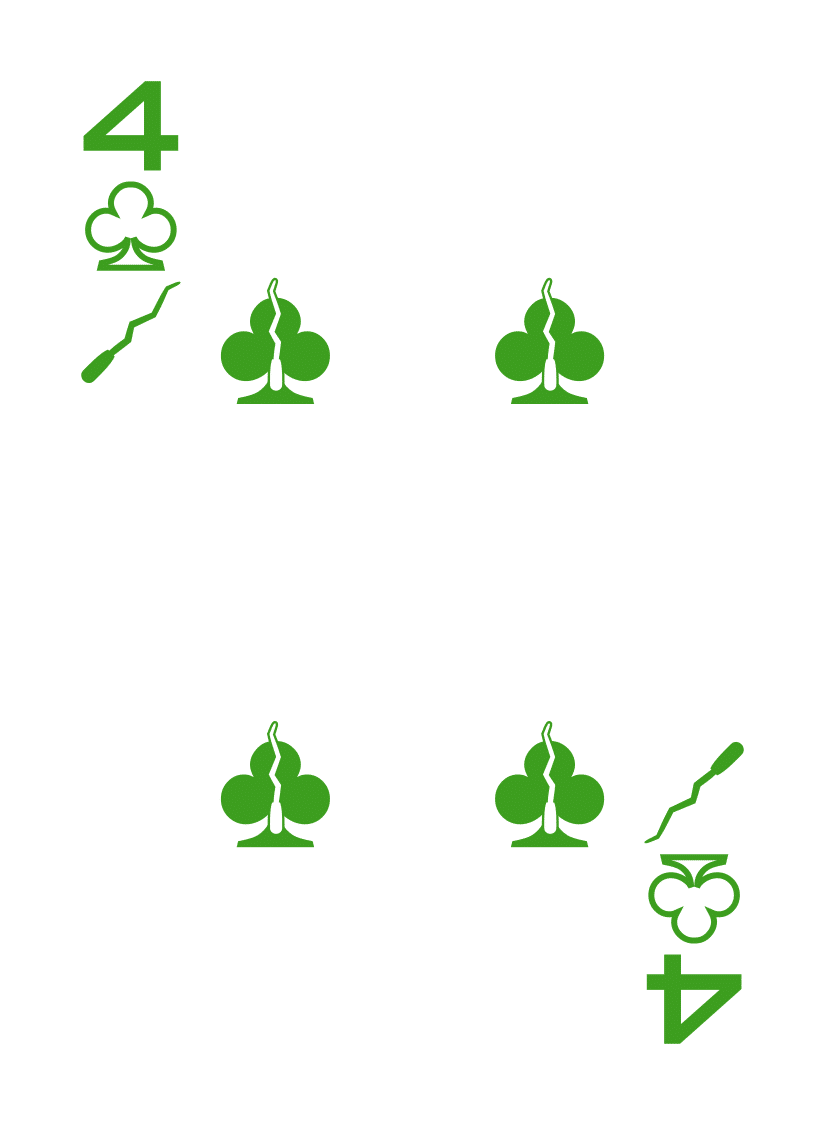
The Icon on the Four of Wands
Four green clubs, each with a wand inside, set at the four corners of an open rectangle. Four corners and a clear middle make a room, a courtyard or a gateway, and that fits the card's mood of arrival. The space in the middle is deliberate: it's where the party happens.
Five of Wands (Five of Clubs)
Everyone is right, everyone is shouting, and somehow it's productive.
Five of Wands Upright
The Five of Wands is the card of competition, friction and lively disagreement. The traditional image shows five people waving wooden staffs at each other in
what looks like a brawl and might be a game. That ambiguity is the point. The booklet's number key calls five “disruption,” the necessary breaking of the four. After the settled comfort of the Four, the Five brings a shake-up: new voices, rival ideas, competing agendas, and the sort of energetic scuffle that can either wreck a project or sharpen it.
In a reading, the Five suggests that clashing opinions or healthy rivalry are part of the picture. Think of a brainstorming session that gets loud, a sport, a competitive job market, a family argument over where to eat. It isn't necessarily a fight, and nobody is bleeding. The question is whether the friction is making things better. Healthy competition raises everybody's game. If everyone is pushing their own agenda with no way to listen, step back and set some rules.
Five of Wands Reversed
Reversed, the booklet gives conflict avoided and inner tension. The fight isn't happening, but it hasn't gone away. You're biting your tongue, dodging the awkward conversation or arguing with yourself in the shower. Avoidance feels peaceful, but the tension just goes underground and leaks out sideways.
Sometimes the reversed Five also marks the end of a conflict, with the staffs lowered and everyone a bit out of breath. Ask what needs saying and who needs to hear it. A calm, direct conversation now will take far less energy than a month of simmering. Say the thing kindly, and then let the sparks settle.
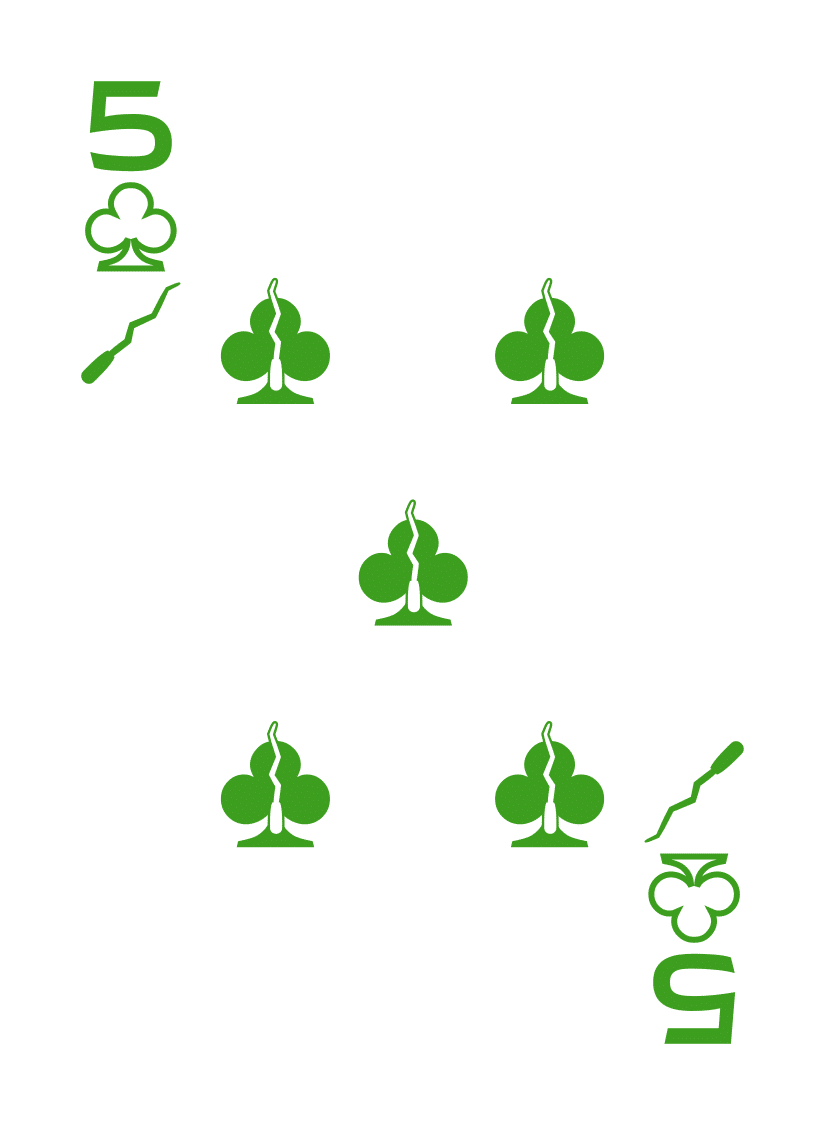
The Icon on the Five of Wands
Four green clubs at the corners and one in the center, the same arrangement as the five on a die. The middle club sits in the crowd like a fifth voice, close to all the others and in the way of all of them. It's the only pip layout in the deck where a symbol deliberately stands in the center of the others' space.
Six of Wands (Six of Clubs)
Victory lap. Wave, but don't forget who held the ladder.
Six of Wands Upright
The Six of Wands is the card of victory, recognition and public progress. The traditional image shows a rider on a horse, wearing a laurel wreath, with a crowd cheering. The booklet's number key calls six “recovery,” harmony restored and movement onward,
and in Wands that means coming through the fight of the Five and being honored for it. You did the work, you took the risk, and now people can see it.
In a reading, the Six points to a win: a promotion, a published piece, a finished race, a contract signed, an exam passed. It's also about confidence and being seen. You've earned the applause, so allow yourself to enjoy it. Accept the compliment without waving it away. At the same time, the card hints that a victory is easier to hold if you share it. The crowd that lines the road got you there in ways you probably haven't counted.
Six of Wands Reversed
Reversed, the booklet reads ego, fall from favour and private win. The laurels are on crooked. It may point to pride getting in the way of the achievement, a public embarrassment, or a success that nobody notices. It can also mean the victory happened, but quietly, with no audience and no applause.
A private win still counts, and learning to value it is its own kind of strength. If it's ego, give credit generously and keep your feet on the ground. If it's a lost audience, remember that approval is weather and the work is the climate. Stay humble and keep going.
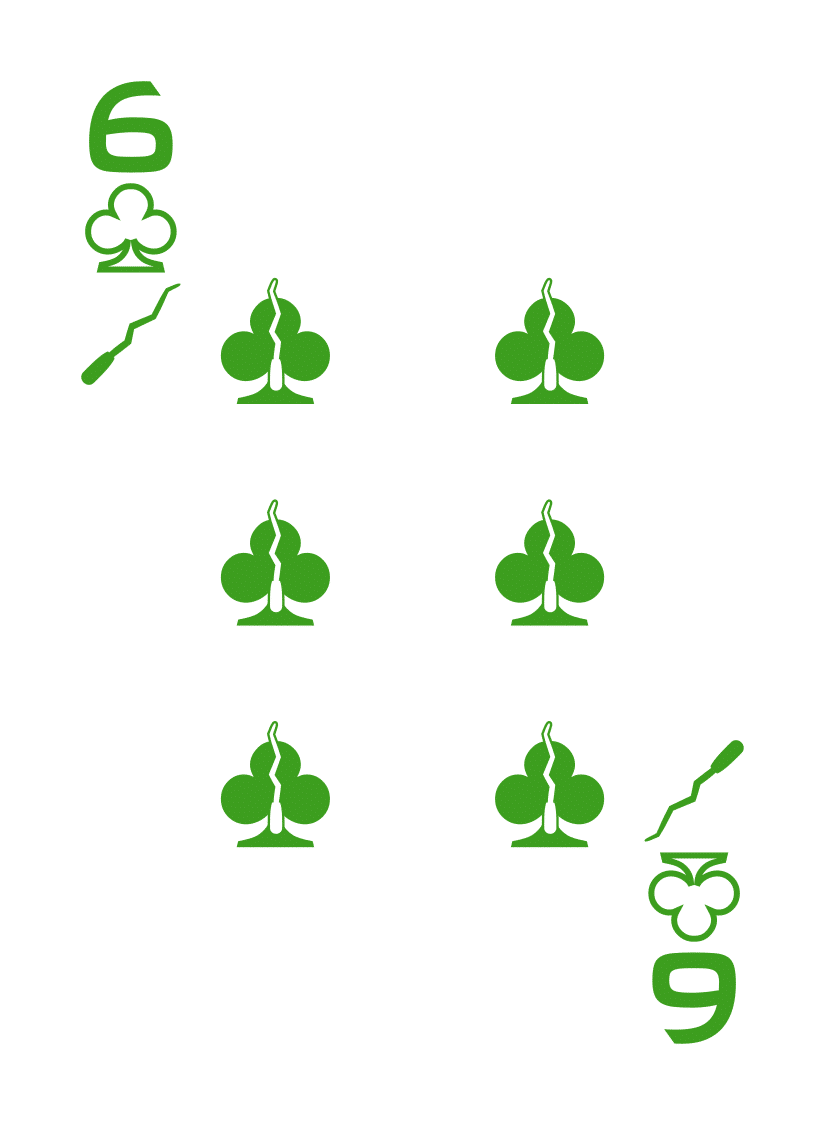
The Icon on the Six of Wands
Six green clubs in two columns of three, each marked with its small wand. The two even columns look like lines of spectators on either side of a road, and the clear space between them is the route down which the rider passes. It's an orderly, balanced layout, the calm after the scuffle of the Five.
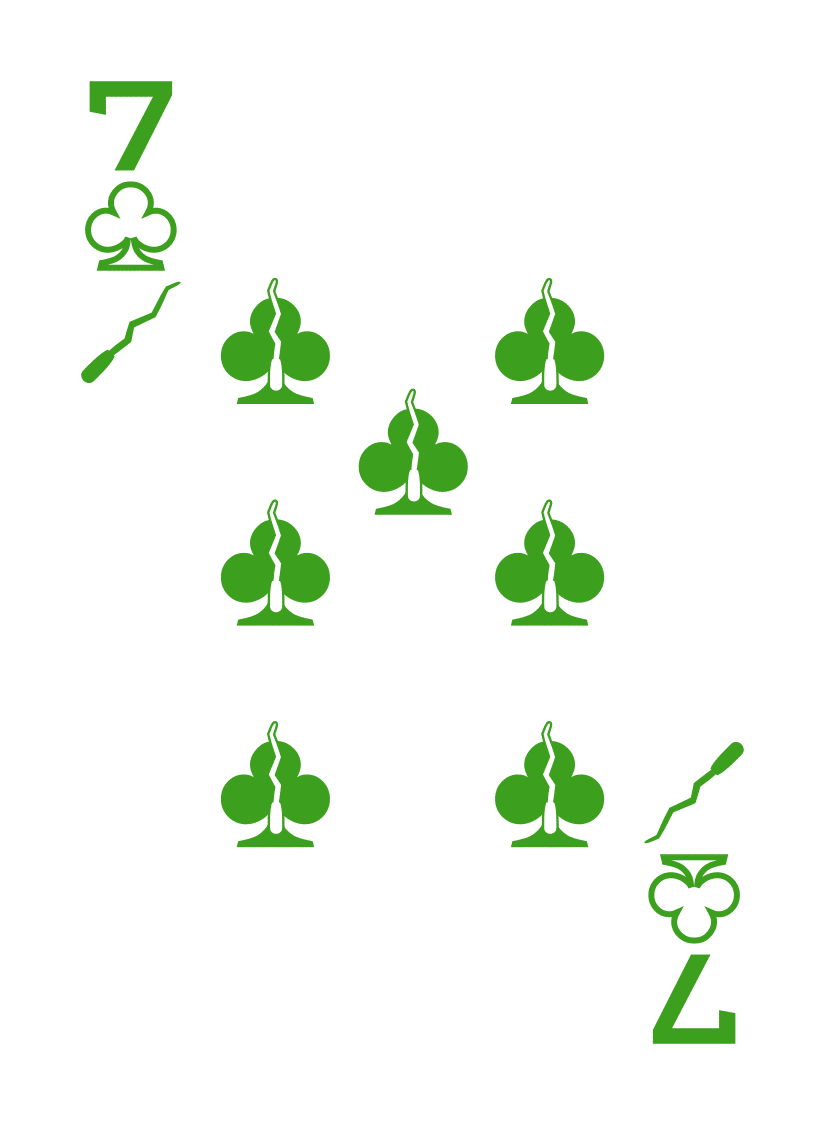
Seven of Wands (Seven of Clubs)
You're on the high ground and the whole neighborhood has opinions. Stay put.
Seven of Wands Upright
The Seven of Wands is the card of standing your ground and perseverance. The traditional image shows a figure on a hilltop, fending off six staffs rising
from below. It's a defensive position, but a strong one, since the high ground is yours. The booklet's number key calls seven “assessment,” reflection, challenge and the value of what you hold. You've got something worth defending, and now you find out how much.
In a reading, the Seven suggests that your position is being challenged, and it's worth holding. It might be a boss second-guessing your plan, a rival entering your market, or a quiet pressure to give in on something that matters to you. This card says you're in a good spot, and your conviction counts. Stand firm, stay calm and keep your reasons clear. You don't need to win the argument with everyone. You just need to keep your footing.
Seven of Wands Reversed
Reversed, the booklet gives overwhelmed, giving way and exhaustion. The challengers are many, and you're running out of steam. It can mean you've stood alone too long, or that you've been fighting the wrong battle, or that you're about to yield a position out of tiredness rather than choice.
Take stock before you surrender. Is this still a hill worth defending? If so, call for backup, rest, and pick the one argument that matters most. If not, it's fine to walk down the other side. A reversed Seven asks you to decide deliberately, not just collapse because the day was long.
The Icon on the Seven of Wands
Seven green clubs: two columns of three, with one more pip between the first and second rows, rising above the rest like a figure on high ground. The extra pip sits slightly higher than the middle row, and the others flank it. If you squint, it's a lookout on a ridge with the rest below.
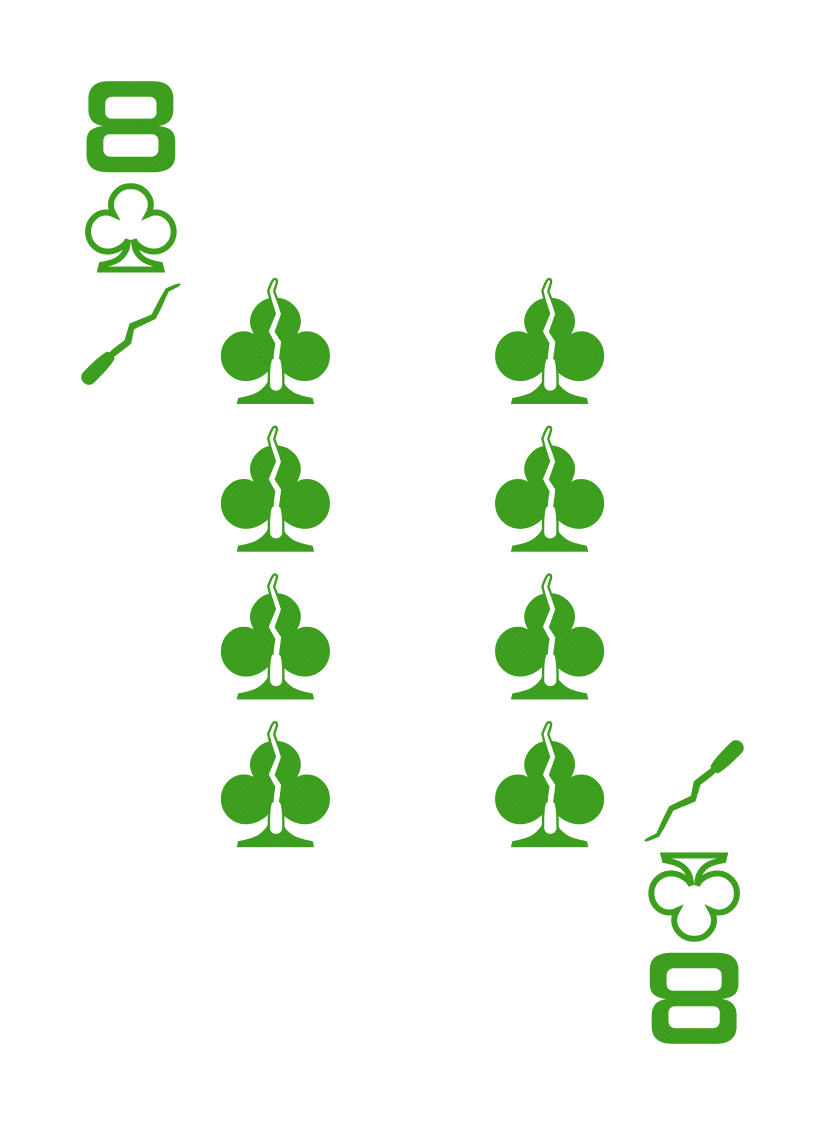
Eight of Wands (Eight of Clubs)
Messages, motion and the distinct sensation of everything happening at once.
Eight of Wands Upright
The Eight of Wands is the card of speed, movement and rapid news. The traditional picture is eight staffs flying through the air in a clear sky, all pointing the
same way, with no figure in sight. It's about momentum. After the stand-off of the Seven, things suddenly move: the email arrives, the decision lands, the flight is booked, the project accelerates. The booklet's number key calls eight “movement,” mastery through repetition or swift change forced on you.
In a reading, the Eight says to get ready, because things are about to happen quickly. It can mean travel, news, fast communication, a deadline that arrives early or an opportunity with a short window. Clear your schedule if you can, and stay flexible. This isn't the time to second-guess. The wands are in the air, all aimed at the same target, and the best thing you can do is move with them.
Eight of Wands Reversed
Reversed, the booklet reads delay, frustration and scattered effort. The wands have clattered to the floor. News doesn't come, the plane's grounded, or you've so many things moving that none of them land. It can describe the frustrating stretch where everything seems to take twice as long as it should.
If you're stuck waiting, use the time to tidy up what you can control. If your effort is scattered, choose one direction and point everything the same way. A reversed Eight is a request to slow down just enough to aim. Then let it fly.
The Icon on the Eight of Wands
Eight green clubs in two columns of four, evenly spaced, like a double row of arrows lined up and ready to launch. It's the tidiest, most regular layout in the suit, with every pip pointing along the same lines. The symmetry says “aligned,” and alignment is exactly what makes the card's speed possible.
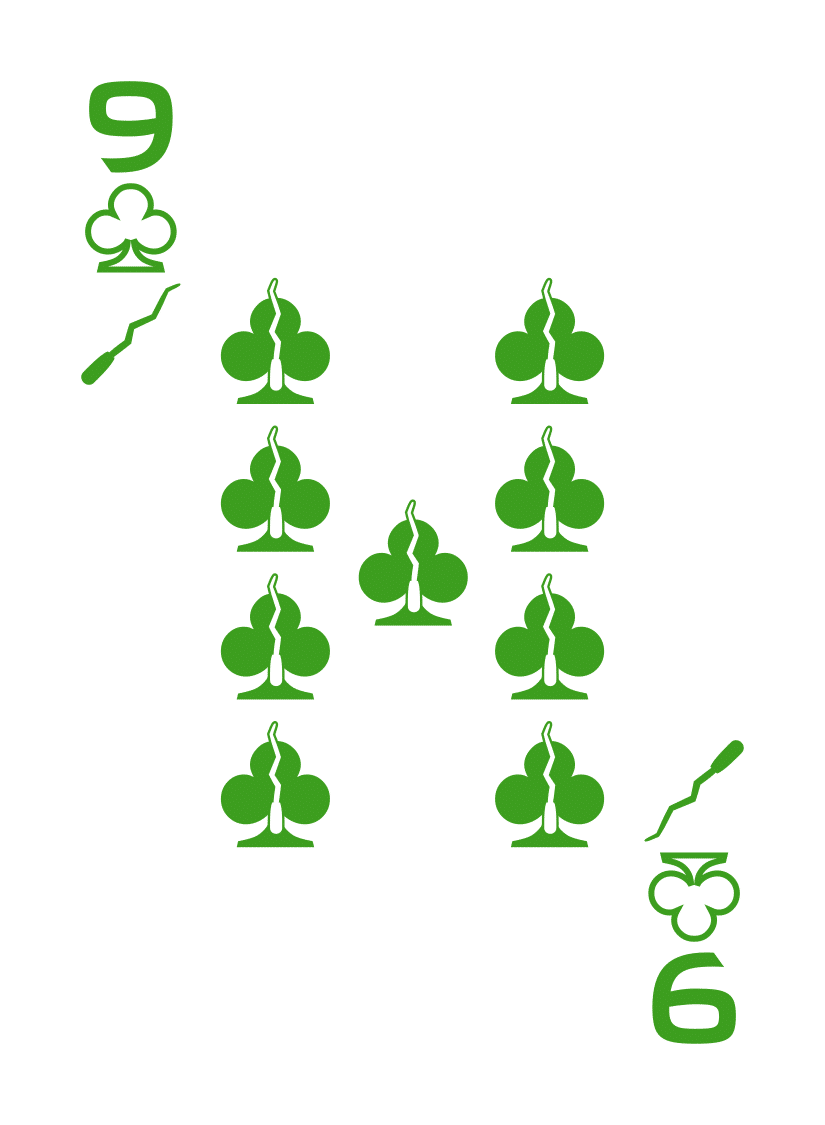
Nine of Wands (Nine of Clubs)
One more push. You've come too far to start trusting people now.
Nine of Wands Upright
The Nine of Wands is the card of resilience, the last push and wariness. The traditional picture shows a bandaged figure leaning on a staff, with eight more
standing behind like a fence, watching the horizon. They've been through the wars and they're still on their feet, but they're guarded. The booklet's number key calls nine “near completion,” the fruit of the suit felt alone. You're nearly there, and the last stretch is often the hardest.
In a reading, the Nine says to hang in there. You're tired, you're battered, and you're closer to the end than you think. It's a card of stamina and grit, and a reminder that you've survived worse. It's also a gentle warning about guardedness. After a long fight, it's easy to see enemies everywhere, and the Nine asks you to separate real threats from old habits. Rest when you can, keep the staff in hand, and finish the job.
Nine of Wands Reversed
Reversed, the booklet gives fatigue, paranoia and defensiveness. The fence has become a prison. You're so worn out and wary that you push away help, read every comment as an attack and can't see the finish line for the fog. It's a card for burnout masquerading as caution.
If you recognize it, loosen your grip for a moment. Sleep, eat, call someone you trust. Not everyone is out to get you, and the ones who aren't can help carry the load. The reversed Nine doesn't ask you to stop. It asks you to stop fighting everything.
The Icon on the Nine of Wands
Nine green clubs: two columns of four, with a single club in the center like a figure standing guard. The center club is surrounded by the others, close but not quite touching, which is the card's whole attitude. Everyone is near, nobody gets in. The corner index repeats the 9, the club and the small wand, top left and bottom right.
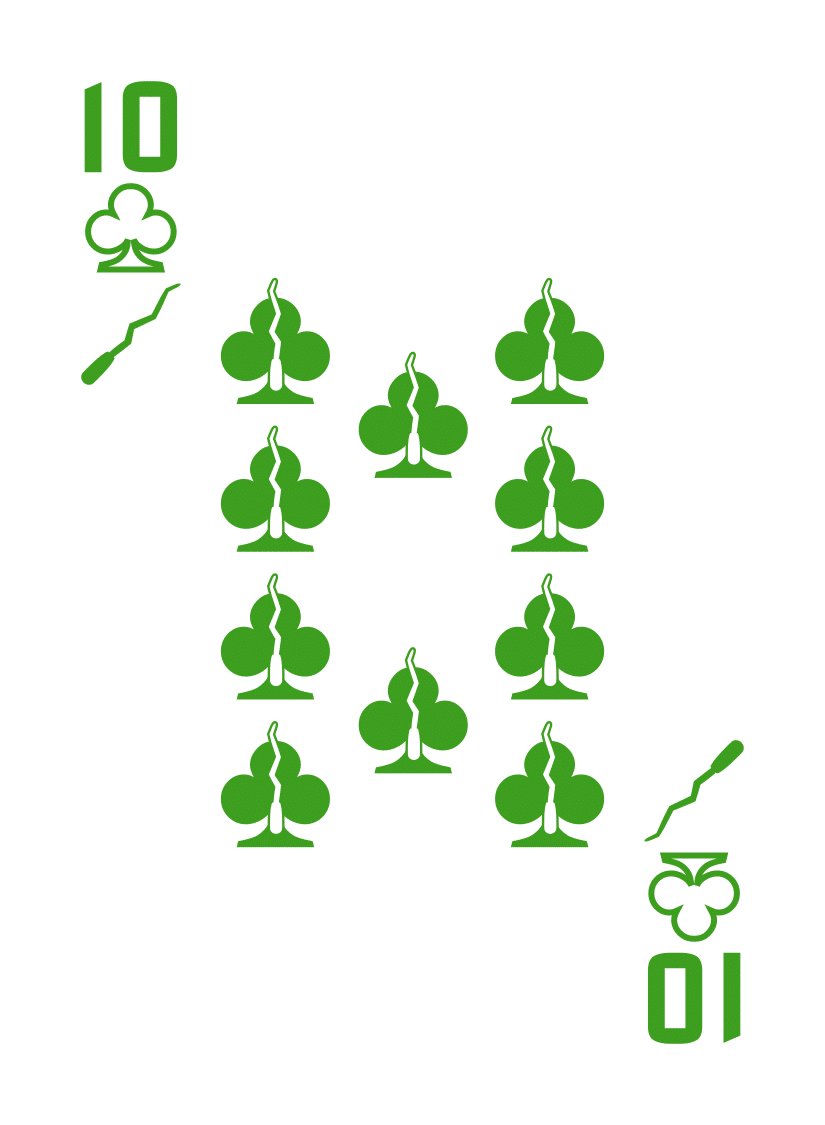
Ten of Wands (Ten of Clubs)
You have been carrying all of this by yourself. Why?
Ten of Wands Upright
The Ten of Wands is the card of burden, overload and carrying too much. The traditional picture shows a figure bent under a bundle of ten staffs, trudging toward a village in the distance. It's what happens
when a fire-suit's drive meets a lifetime of saying yes. The booklet's number key calls ten “completion and excess,” the suit at its fullest and the end of the cycle. Too many projects, too many commitments, too much responsibility, all taken on voluntarily.
In a reading, the Ten says you're overloaded, and it's time to look at what you're carrying and why. Some of it is truly yours. Some of it you picked up out of habit, guilt or pride. The village is in sight, so the work is nearly done, but the last stretch is going to feel heavy. Put down what you can, ask for help, and say no to the next thing. You don't get a prize for the biggest bundle.
Ten of Wands Reversed
Reversed, the booklet gives delegation, release and burnout. There are two faces here. In the good one, you finally put some of the load down, hand off a task, quit a commitment, and feel your shoulders drop. In the hard one, the load wins, and you hit the wall: exhaustion, resentment, the sense that you can't keep going.
If you're at the wall, you've been carrying this too long. Rest isn't a reward; it's maintenance. If you're setting things down, don't feel guilty. Anything you pass on is something you were never meant to carry alone.
The Icon on the Ten of Wands
Ten green clubs: two columns of four with two more squeezed into the middle, so that the card is packed to the edges. It's the fullest, most crowded Wands card, with barely a gap to spare, and the visual mirrors the meaning exactly. The suit at its fullest looks like a bundle you can hardly see over.
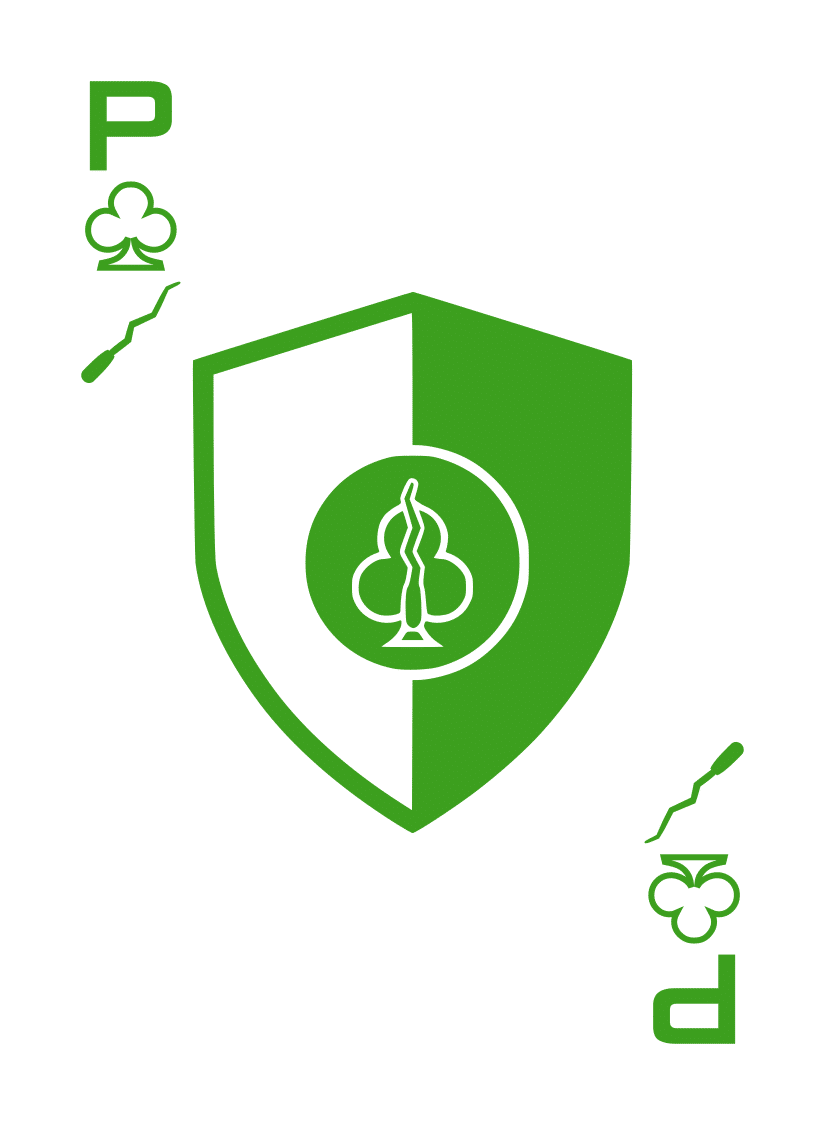
Page of Wands
Look at everything. Try everything. Ask all the questions. Worry later.
Page of Wands Upright
The Page of Wands is the student of the fire suit: enthusiasm, exploration and a free spirit. Every Page in the booklet is described as “the student,” with curiosity, a message arriving and a beginning taken
seriously, and the Wands version brings an appetite for adventure. This is the person (or the part of you) who just discovered a new passion and wants to tell everyone about it. They may not be skilled yet, and they're unafraid of that.
In a reading, the Page of Wands can be a messenger bringing exciting news, a creative newcomer, or the stirrings of a new interest in your own life. As an attitude, it asks you to try something with beginner's enthusiasm and not worry about looking foolish. Start the project, take the class, send the pitch. Skill will come later; right now you need the spark. Follow your curiosity somewhere you haven't been, and see what it lights up.
Page of Wands Reversed
Reversed, the booklet gives procrastination and aimless energy. The spark is real, but it has no target. It's the new hobby abandoned by Thursday, the great idea that never makes it past the planning stage, the friend who has big plans and never quite begins.
Reversed, the Page can also bring delayed news or a message that doesn't land. The cure is focus and a first small commitment. Choose one thing, give it a week, and see if the enthusiasm survives contact with reality. If it does, you've found something. If it doesn't, you've learned what you don't want, which is also useful.
The Icon on the Page of Wands
The Page is a shield, split down the middle into one solid green half and one outlined half, with a small roundel at the center holding the club-and-wand emblem. The half-and-half split fits a student: half formed, half still blank. A shield is also the first piece of kit given to a beginner, because it asks nothing of its owner but the willingness to carry it.
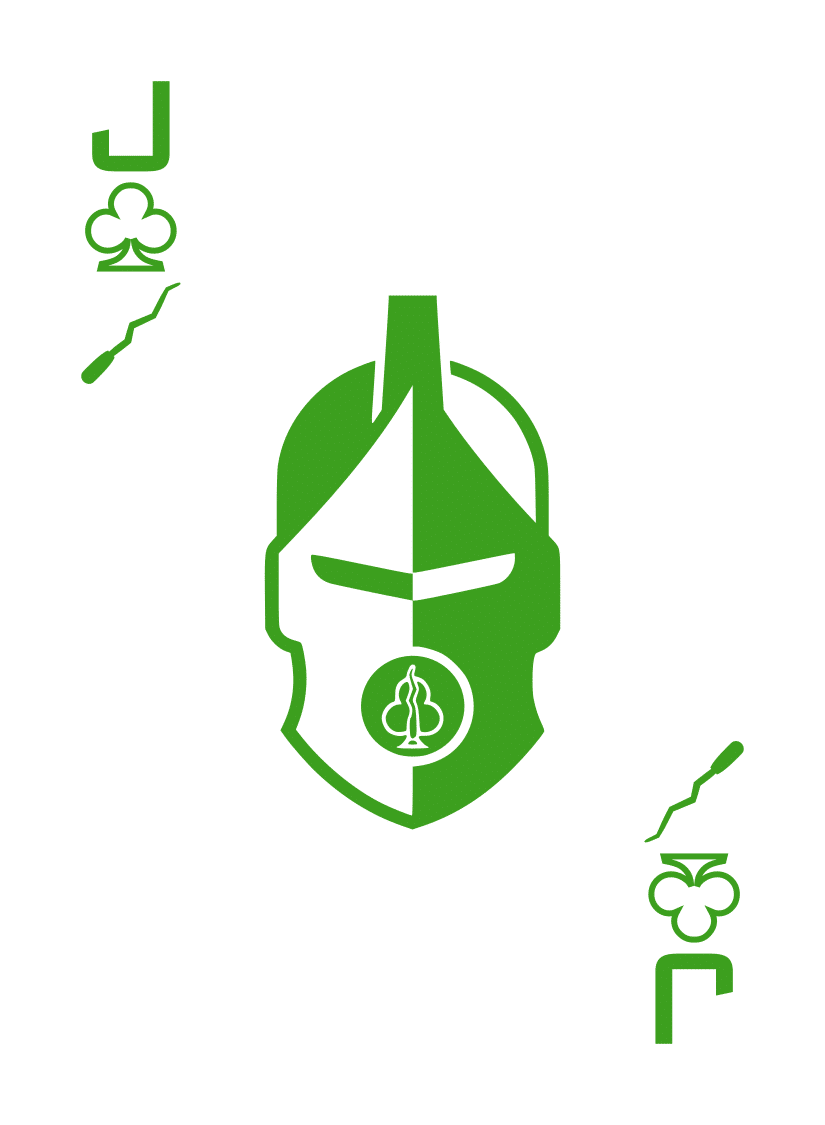
Jack of Wands (Knight of Wands)
Full gallop, no map. Excellent enthusiasm, questionable navigation.
Jack of Wands Upright
The Jack of Wands is the Knight of the fire suit: adventure, impulse and headlong action. The booklet describes the Jack as the Knight of tarot, “motion,
commitment, the suit pursued at speed,” and it adds that he's “powerful and often unbalanced.” In Wands this is the person who sets off across the world on a whim, the colleague who volunteers for everything, the part of you that wants to do the exciting thing right now.
In a reading, the Jack of Wands brings energy, charm and momentum. It's a time to move: travel, launch, relocate, start the bold project. He can also be a person: confident, restless, brilliant at beginnings and sometimes poor at finishing. The best way to ride this card is to channel the speed toward a goal. Enthusiasm is a wonderful engine, and it works better with a steering wheel. Go, but know where you're going.
Jack of Wands Reversed
Reversed, the booklet gives haste, recklessness and scattered focus. The horse has bolted. Decisions are made in a rush, promises overreach, and the rider's halfway down the road before checking the weather. It can describe an impulsive person, or a stretch of life where you're moving fast and getting nowhere.
The reversed Jack asks for a pause and a plan. Check your facts, count the cost, and finish one thing before leaping to the next. A bit of caution won't spoil the adventure. It might even let you reach the end of it.
The Icon on the Jack of Wands
The Jack is a knight's helmet in green, split in half like the Page's shield, with a visor slit, a crest running down the top and the club-and-wand emblem on the cheek guard. A helmet suits a character who charges forward first and thinks second. The half-solid, half-outlined design carries on from the Page, a sign of the same person grown into action.
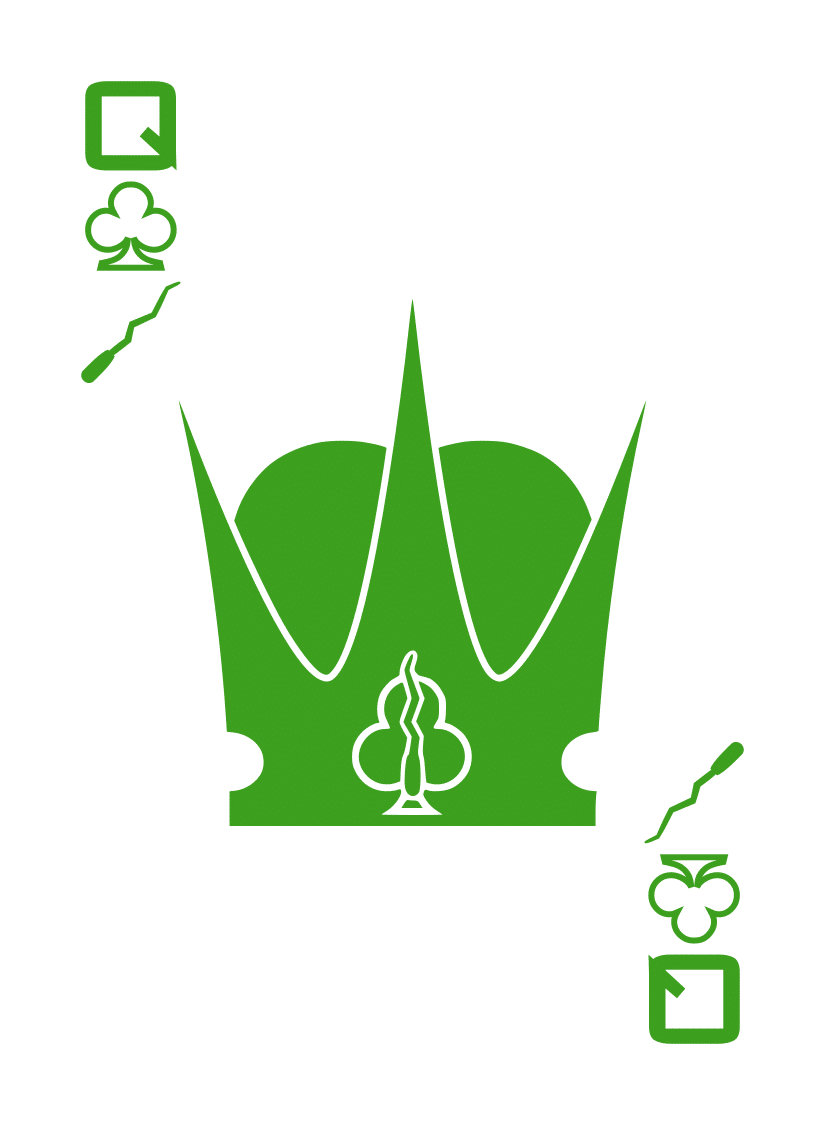
Queen of Wands (Queen of Clubs)
She walks in, and the room reorganizes itself around her. She didn't ask it to.
Queen of Wands Upright
The Queen of Wands is confidence, warmth and magnetic presence. Where the Jack burns hot and fast, the Queen has mastered the fire: she is the warm
hearth that people gather around. The booklet describes the Queens as mastery “held inwardly,” the suit understood, embodied and used with judgement rather than force. The Queen of Wands knows who she is and what she wants, and her energy is generous rather than grasping.
In a reading, she can describe a person with these qualities, such as a charismatic leader, a natural host or someone who makes a creative project look easy. Or she can describe the way you're acting: self-assured, welcoming, willing to take the lead without bulldozing anyone. She advises you to trust your own spark and to let it warm other people. Confidence isn't about being the loudest. It's about being comfortable enough to light the way for everyone else.
Queen of Wands Reversed
Reversed, the booklet gives demanding, jealous and self-doubt. The hearth has turned into a bonfire. The warmth becomes a need to be the center of attention, a jealous eye on someone else's success, or a demand that the world reflect your glow. It can also be the opposite: a crisis of confidence, with the fire turned down to embers and a voice that asks whether you were ever any good.
The remedy is the same. Remember that your light doesn't dim anyone else's, and you don't have to prove it. Spend time on what you love and let the confidence come back by itself.
The Icon on the Queen of Wands
The Queen is a green crown with a domed, rounded center between two tall points, a small notch at each side of the base, and the club-and-wand emblem set into the band. The rounded dome is the softest crown in the court, and the shape makes it feel less like a weapon than a warm lamp. It echoes the King's crown in the points but not in the temperament.
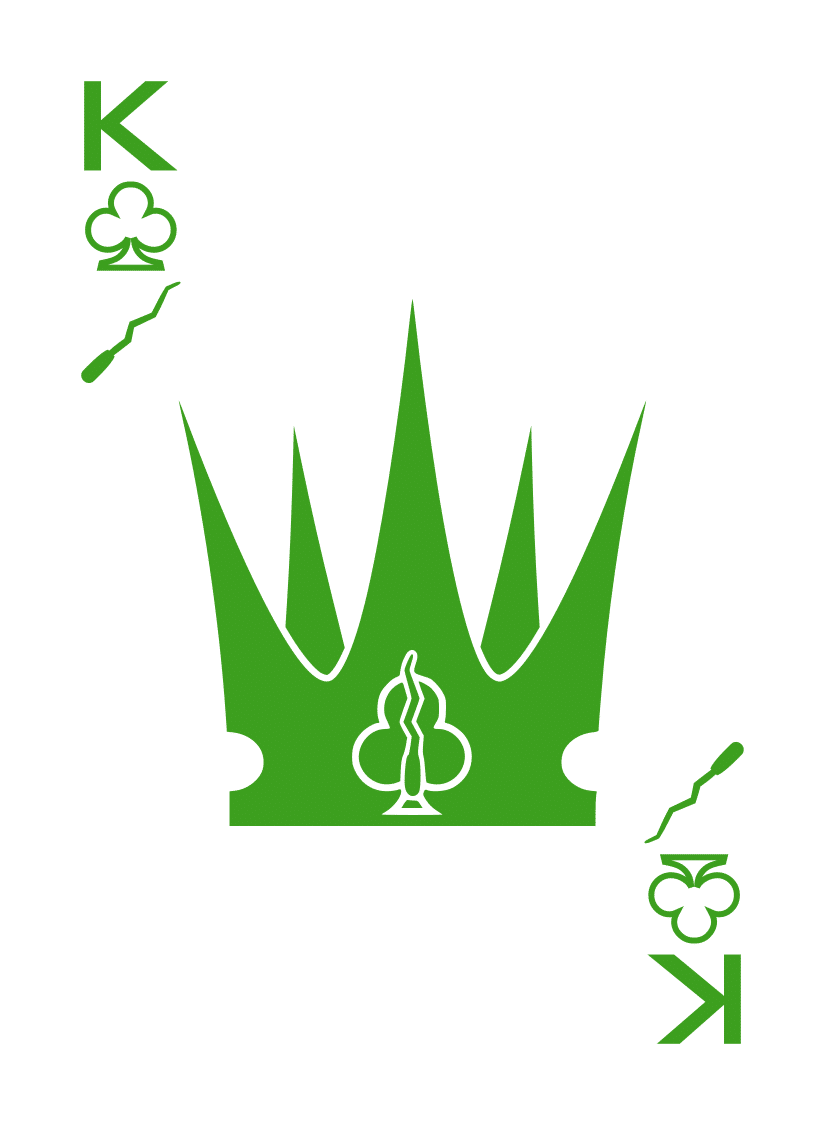
King of Wands (King of Clubs)
He's got a vision, a whiteboard and a team that would follow him anywhere. Mostly.
King of Wands Upright
The King of Wands is vision, leadership and enterprise. The booklet describes the Kings as mastery “expressed outwardly,” authority in the suit's
territory and responsibility for it. In the fire suit, that means someone who starts things on a grand scale and brings other people along: the founder, the coach, the bandleader, the person who sees the whole mountain while everyone else is looking at their boots.
In a reading, the King of Wands brings charisma, bold decisions and the willingness to take responsibility. He can describe a person with those traits, or an invitation to lead in your own way. Think big, but also take the practical steps that big plans demand. A visionary who can't carry a project to the finish line is only a dreamer in a nice coat. The King is both, and he's asking you to be.
King of Wands Reversed
Reversed, the booklet gives impulsiveness, tyranny and high expectation. The vision has outrun the people it depends on. Decisions come fast and change faster, expectations climb past what anyone can deliver, and criticism is taken as disloyalty. It describes a boss who burns through staff, or the part of you that pushes yourself well past reason.
The antidote is humility and listening. Ask the team what's realistic, check whether your pace suits other people, and recognize that leaders who can't be questioned eventually lead in circles. A good King still has a vision. He also has the sense to hear the reply.
The Icon on the King of Wands
The King is the tallest, spikiest crown in the suit: a green band with a long central spire, shorter spikes flanking it, notches at each side of the base, and the club-and-wand emblem set at its center. It's built from the same pieces as the Queen's crown but sharper, bolder and more outward-facing. If the Queen's crown is a lamp, the King's is a flare.
Where to Go From Here
The Wands are one of four suits in the Minor Arcana. For the rest of the deck, start with the twenty-two big cards of the Major Arcana, then move on to the other three suits:
- Ikonology Major Arcana meanings
- Ikonology Cups (Hearts) meanings
- Ikonology Swords (Spades) meanings
- Ikonology Pentacles (Diamonds) meanings
Frequently Asked Questions
What does the suit of Wands mean in tarot?
Wands represent fire: drive, will, creation and enterprise. They cover the work you choose rather than the work you're given, from the first spark of an idea to the ambition that carries it through. In the Ikonology deck they're the green Clubs.
Are Wands the same as Clubs in a regular deck?
Yes. In the Ikonology deck every Wands card doubles as a club when you play poker, so the same card has a tarot meaning and a poker rank. The Page has no poker equivalent and sits out of the poker deck, along with the Major Arcana.
What is the Jack of Wands?
It's the Knight of Wands. The Ikonology deck calls the Knight a Jack and marks it J, so that the deck works as a standard fifty-two-card poker deck once the Majors and Pages are removed.
Do I have to use reversed meanings?
No. Many readers never use them. Each Ikonology card reads one way up, so you can read reversals when you want them and turn every card upright when you don't.
Where can I buy the deck?
Ikonology is available from The Game Crafter. Get Ikonology here.
Check Out FatMunkey's Books
FatMunkey has a huge selection of sudoku and other puzzle books you are sure to enjoy.
Have look at this post to see all of the books and read about what FatMunkey has published so far.