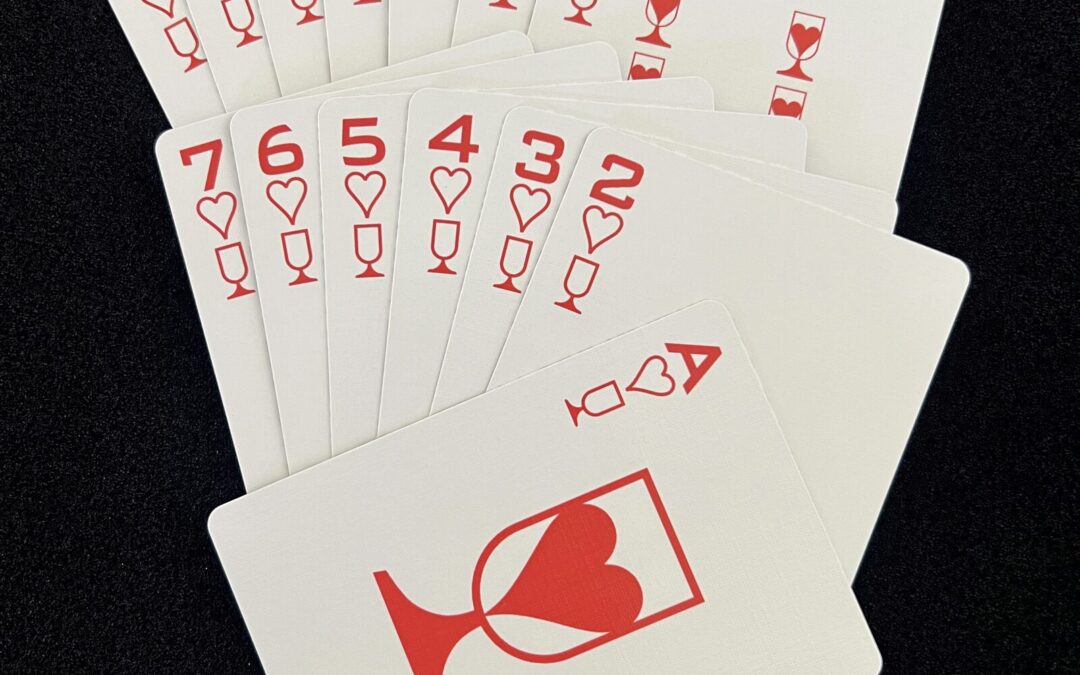
Cups are the suit of water: emotion, relationship, intuition and the inner life. They govern love in all its forms, and the moods and weather that love produces. In the Ikonology deck they are the red Hearts, so if you play poker with this deck, every Cups card is also a heart. This page covers all fourteen cards of the suit, from the Ace to the King, with a full upright meaning, a full reversed meaning and a note on the icon printed on each card.
If you own the deck, the short keyword versions of these meanings are on pages 19 to 22 of the booklet in the box. This is the longer version the booklet promised. If you don't own it yet, you can read this as a plain-spoken guide to the traditional meanings of the Cups cards, whatever deck you use. For the deck itself, see the Ikonology deck page.
Table of Contents
The Suit of Cups in Brief
The booklet sums up the suit this way: “Feeling, relationship, intuition. Love in all its forms, and the inner weather that love produces.” Before you read a single card, its suit has already told you what kind of matter you are looking at, and in a spread, a run of Cups cards suggests the question is mostly about feeling and relationship.
Each number carries its own weight whatever the suit. The Ace is the seed, the Two is duality, the Three is first growth, the Four is structure, the Five is disruption, the Six is recovery, the Seven is assessment, the Eight is movement, the Nine is near completion and the Ten is completion and excess. Read the number first, then the suit, and you have a working reading before you look anything up.
The court cards can be people, or they can be the manner in which you are acting. The Page is the student, the Jack is the Knight of tarot, the Queen is mastery held inwardly and the King is mastery expressed outwardly. In the Ikonology deck the Knight is called the Jack and is marked J, which is why a poker deck made from these cards has a full set of Jacks. Let the surrounding cards decide whether a court card is a person or an attitude.
Every Ikonology card reads one way up. The Roman numeral of a Major Arcana card sits at the top and its name at the bottom, and on the Minor Arcana the corner index sits at the top left. A card that lands the right way round is upright. A card that lands upside down is reversed, and reversed means the same energy in a different mood: blocked, delayed, turned inward or overdone. Reversals are optional, and you can turn every card upright if you prefer.
Ace of Cups (Ace of Hearts)
A cup held out to you, already full. You only have to take it.
Ace of Cups Upright
The Ace of Cups is the seed of the water suit: new feeling, love offered and an open heart. Traditionally a hand emerges from a cloud holding a chalice that overflows, with water streaming down into a pool and
a dove dropping a wafer into the cup. It's about as generous as a card gets. Something is being poured out for you, whether that's affection, inspiration, forgiveness or a sudden sense that things might be all right. The booklet's number key calls the ace “pure potential of the suit, offered but not yet taken up.”
In a reading, the Ace of Cups is a fresh emotional beginning: a new relationship, a deepening friendship, a creative surge, or the first warmth after a cold season. It asks you to be open to receiving. That can be harder than giving, because it means admitting you want something. Say yes to the invitation, let yourself feel the thing and don't try to explain it away. A full cup does no good if you keep the lid on.
Ace of Cups Reversed
Reversed, the booklet gives blocked emotion and emptiness. The cup is tipped over, or you're holding it shut. Feelings aren't getting in or out. It can describe a stretch of numbness, a relationship that has run dry, or the particular tiredness of giving to others when you have nothing left yourself.
It's worth asking what you're guarding against. Sometimes it's an old hurt, sometimes simple exhaustion. Start small: a kind word to yourself, a conversation with someone safe, an hour spent doing something you used to love. A reversed Ace doesn't mean the water is gone. It means the cup needs turning the right way up.
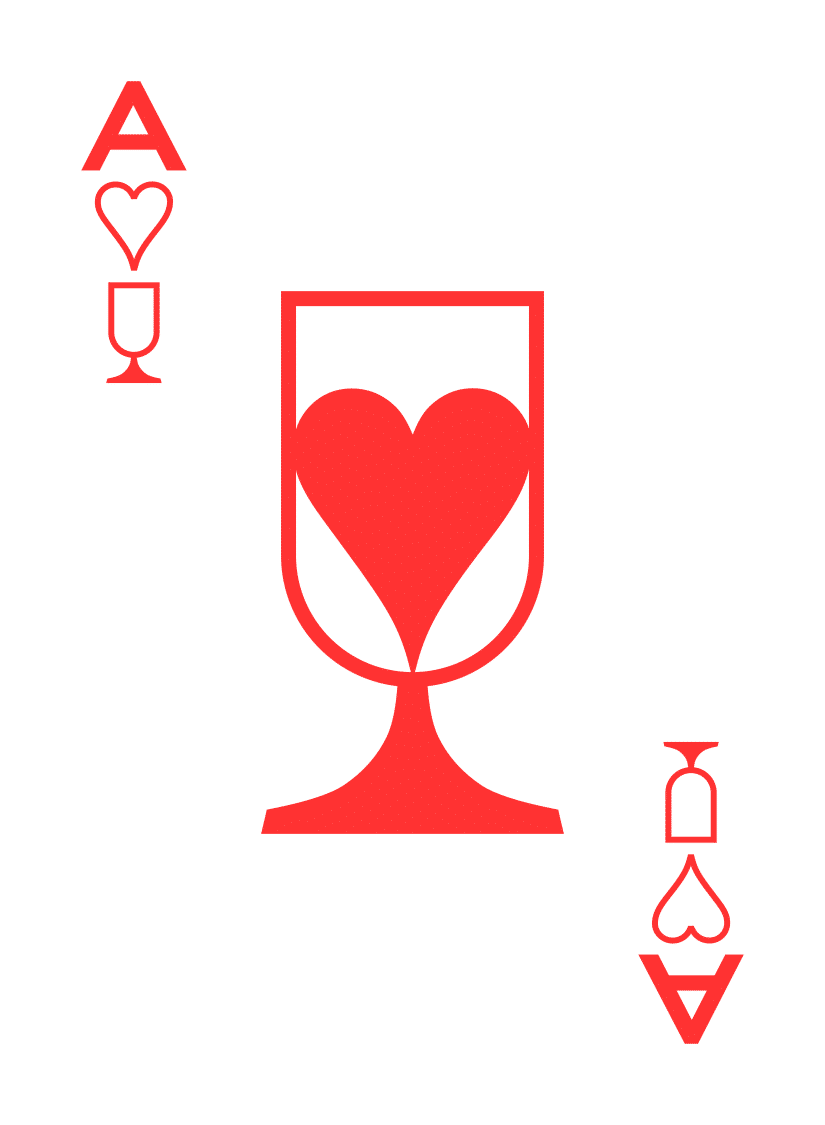
The Icon on the Ace of Cups
The Ikonology Ace of Cups is a large red chalice with a bold heart filling its bowl, the heart's point running down into the stem as though the cup were pouring it out. The heart is the poker symbol and the chalice is the tarot one, so the card is both at once. Like every ace in the deck, it stands alone on the face of the card and takes up most of it.
Two of Cups (Two of Hearts)
Two cups, two people, and one of you has just said something nice.
Two of Cups Upright
The Two of Cups is the card of partnership, attraction and mutual regard. In the traditional picture, two figures face each other and exchange cups, with a
winged lion's head above them. It's the card of the real meeting: two people who recognize something in each other and decide to find out more. The booklet's number key calls two “duality,” choice, partnership and balance held between two things, and in Cups that balance is emotional. Neither person is doing all the giving.
In a reading, the Two can point to a romance, a deep friendship, a business partnership or any bond built on mutual respect. It asks whether what you give and what you receive are in proportion. It can also be a quieter card, about reconciling two sides of yourself, such as head and heart, ambition and affection. Either way, it favors honesty and reciprocity. Say what you feel, listen to the reply, and pay attention to the person who's pouring as well as the one who's drinking.
Two of Cups Reversed
Reversed, the booklet reads imbalance and broken communication. One person is giving more than the other, or messages are crossing in the post. It describes the argument that circles round the same two sentences, the partner who has gone quiet, or a friendship that has drifted into polite small talk.
The reversed Two asks you to name what's lopsided. Who's doing the calling, the planning, the apologizing? Say it plainly, and say it kindly. It's rarely too late for a decent conversation, and the Two is usually most useful when it points out what needs saying.
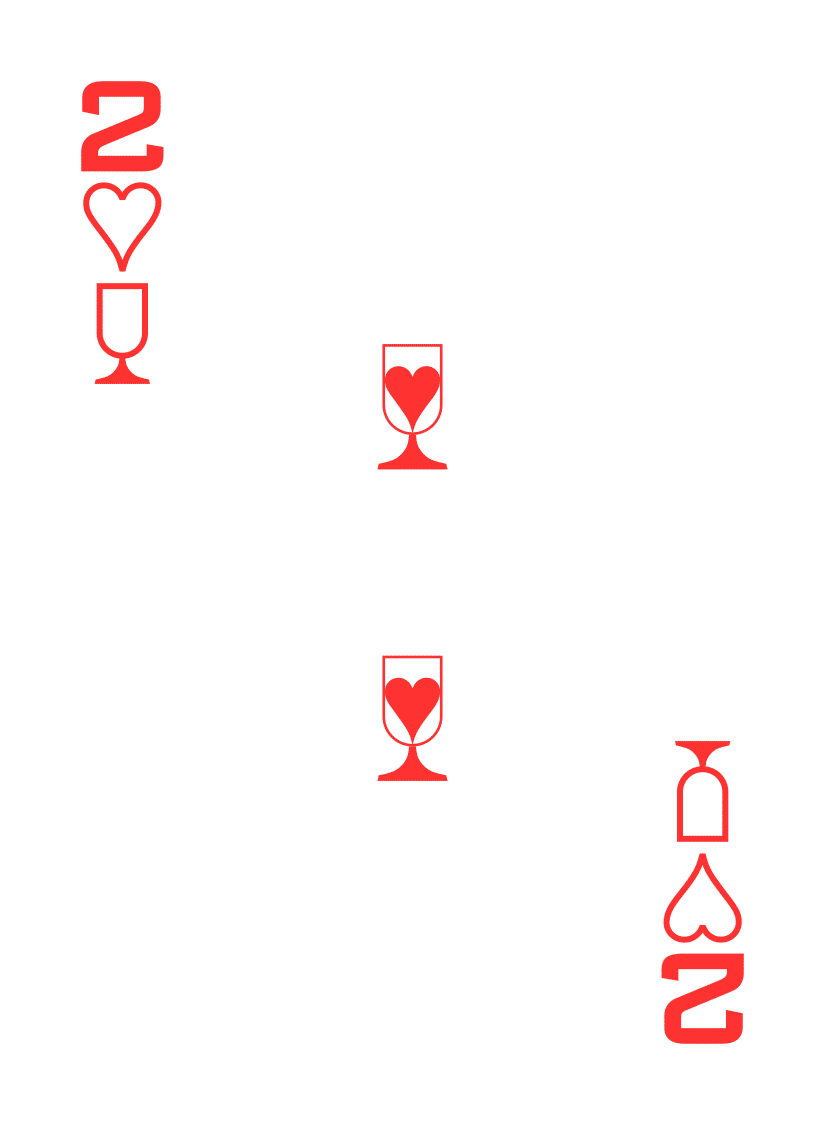
The Icon on the Two of Cups
Two red cups, each holding a heart, stacked one above the other in the center column. Two things, one above the other, is the simplest relationship you can draw: a pair facing across a gap. The corner index above (2, heart, cup) tells you it's the Two of Cups at a glance, upside down again at the opposite corner.
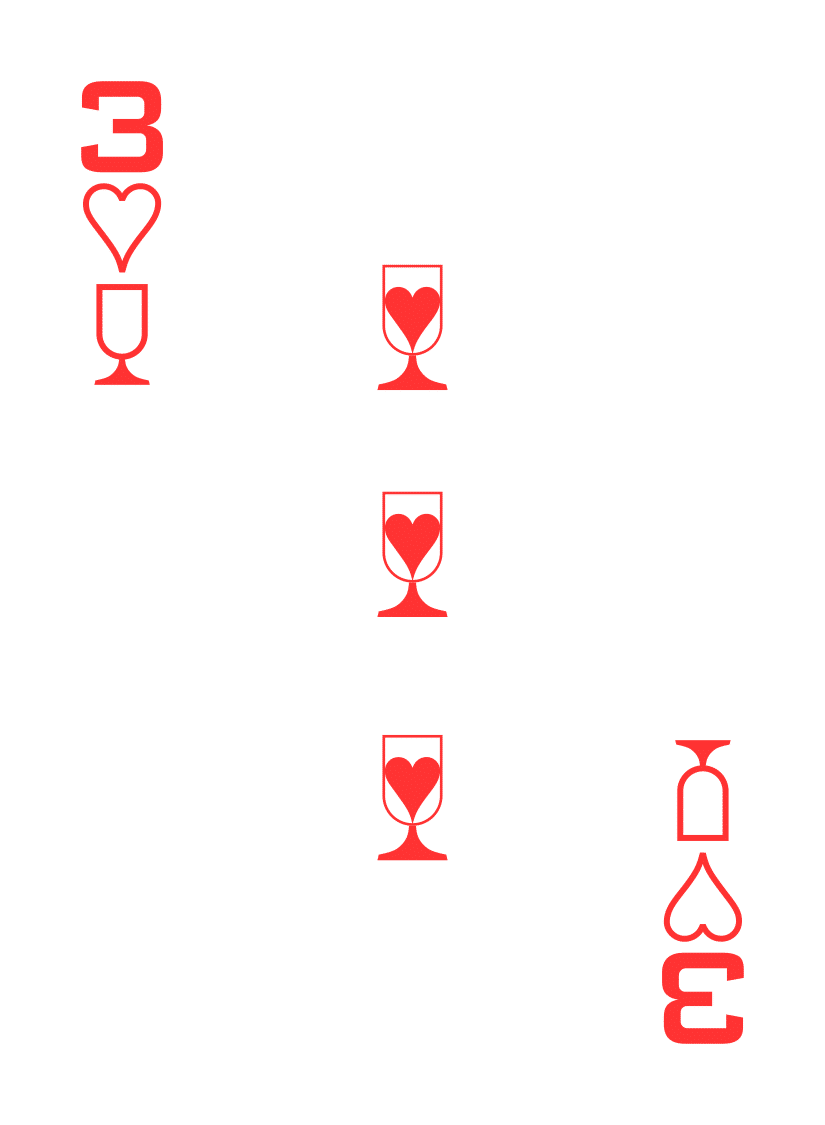
Three of Cups (Three of Hearts)
Raise your glass. The good news is best celebrated with at least two other people.
Three of Cups Upright
The Three of Cups is the card of friendship, community and shared joy. The traditional image shows three women lifting their cups in a toast,
surrounded by harvest fruit. The booklet's number key calls three “first growth,” where the idea becomes real and others are involved, and in the water suit that growth is social. Feelings that began between two people now spill into a circle of friends.
In a reading, the Three suggests celebration, reunion, a party, a wedding or simply the pleasure of being with people who like you. It reminds you that joy multiplies when it's shared, and that a support network is built by showing up. If you've been working alone for a while, this is a nudge to call your friends. Raise a glass, share the news, and let others share yours. Community is the quiet engine under every happy life.
Three of Cups Reversed
Reversed, the booklet gives excess, gossip and isolation. The party has gone a bit too far, or turned sour. It might be too much of a good thing, such as drinking, spending or socializing until nothing's left. Or the group has developed cliques, and talk behind backs has replaced talk to faces. It can also describe the reverse: you're alone, and everyone else seems to be at a party you weren't invited to.
Look at the quality of your connections. Who leaves you lighter after you've seen them, and who leaves you smaller? Spend time with the first group, and be wary of the second. And if you're lonely, send the first message. Nine times out of ten, the other person's been waiting for it.
The Icon on the Three of Cups
Three red cups with hearts in them, stacked in a single column in the middle of the card. Three in a line looks like a row of glasses held up together, at the moment of the toast. The corner index (3, heart, cup) repeats at the opposite corner, upside down.
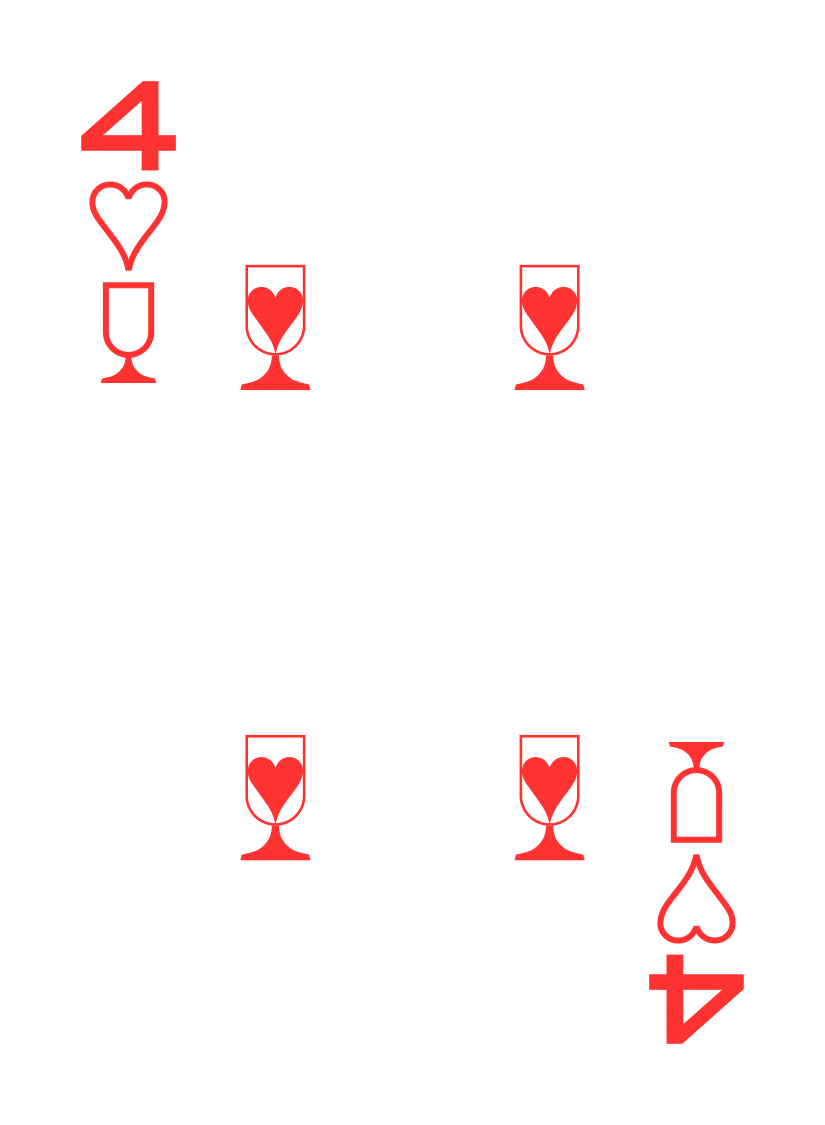
Four of Cups (Four of Hearts)
Someone is handing you a cup and you are staring at the other three. Look up.
Four of Cups Upright
The Four of Cups is the card of apathy, contemplation and an offer unseen. In the traditional picture, a figure sits under a tree with arms crossed, staring at three
cups on the ground. A hand from a cloud offers a fourth, and the figure hasn't noticed. The booklet's number key calls four “structure” and warns of the stagnation that stability risks. The water suit's version is emotional: things are fine, perhaps even good, and yet nothing's stirring.
In a reading, the Four suggests boredom, withdrawal or a period of thoughtful inward-looking. Sometimes it's necessary to sit under the tree for a while. But it also warns that you may be so wrapped up in what you already have, or what's missing, that you're missing what's on offer. An invitation, a new idea or a kind gesture may be right beside you. Look up, take a breath and ask what you'd say yes to if you were paying attention.
Four of Cups Reversed
Reversed, the booklet gives new awareness, acceptance and moving on. You've finally noticed the hand in the cloud. The fog lifts, and you see the options that were always there. It's a card of emerging from a funk, of stepping out from under the tree and reaching for the cup.
It can also mark a decision to stop brooding and start doing. Accept the feeling for what it was, thank it, and get moving. You haven't wasted the time. Sitting under the tree was part of the trip.
The Icon on the Four of Cups
Four red cups with hearts, one at each corner of an open rectangle, with a wide empty middle. The gap in the center is where the fifth, unseen cup would be, and the empty space is as much a part of the card as the pips. It's a tidy, closed layout, a figure with their arms folded and their attention elsewhere.
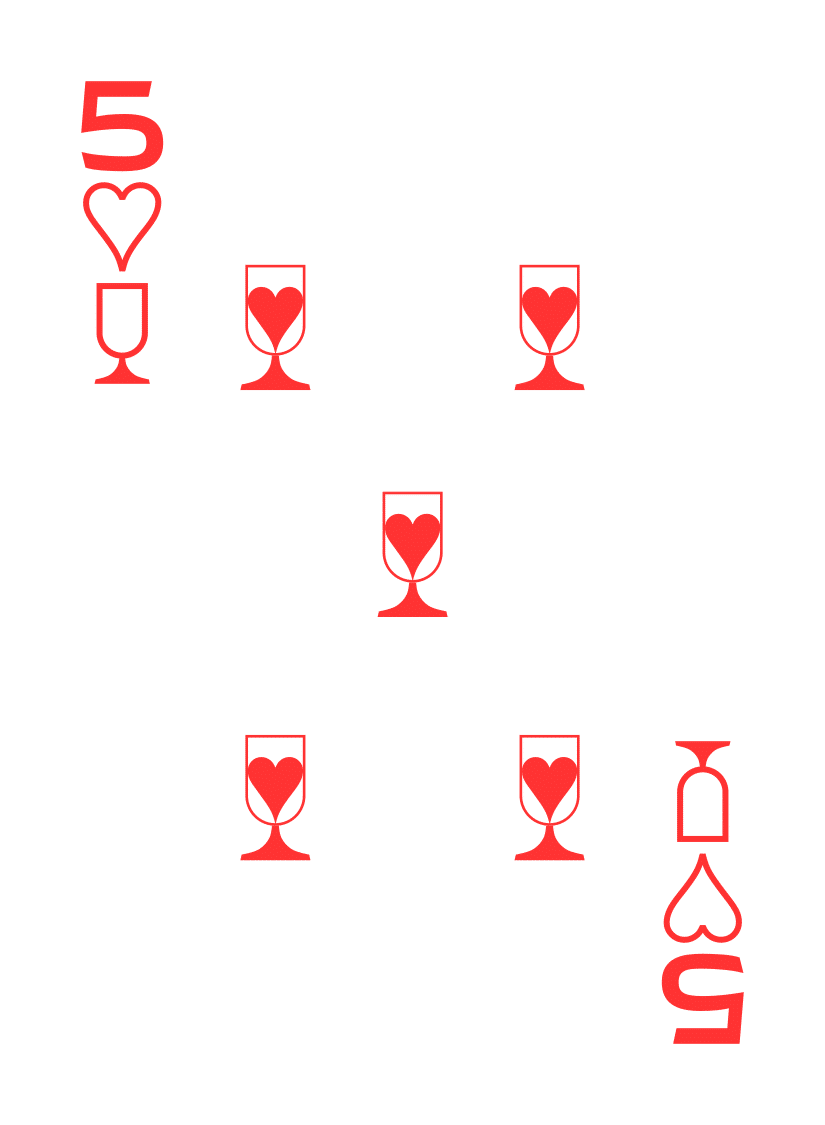
Five of Cups (Five of Hearts)
Three cups spilled, two still standing. Guess which ones you're staring at.
Five of Cups Upright
The Five of Cups is the card of loss, grief and what remains unnoticed. The traditional image shows a cloaked figure in black, hunched over three spilled
cups, with two upright cups behind them and a bridge leading away to a house. They've lost something real, and it hurts. The booklet's number key calls five “disruption,” loss, conflict and the necessary breaking of the four, and for Cups that breaking is emotional.
In a reading, the Five acknowledges grief and disappointment. It doesn't tell you to cheer up. Feelings of sorrow are valid, and often they need to be felt in full before they pass. At the same time, the card gently points out the two cups still standing. There's something left, something worth turning toward when you're ready. There is no time limit on mourning, and no shame in it. When you're able, turn around and look at what's still there.
Five of Cups Reversed
Reversed, the booklet gives forgiveness, recovery and moving on. The figure has turned around. Someone has noticed the upright cups, or crossed the bridge, or picked up what's left. It's one of the most hopeful reversals in the deck, and it takes time to get there.
It can mean forgiving someone, including yourself, and letting an old wound close. It doesn't have to mean forgetting. You can carry the memory and still walk on. If the card falls this way, trust that the worst is behind you, and move toward the house at your own pace.
The Icon on the Five of Cups
Five red cups with hearts: four at the corners and one in the center, like the five on a die. The one in the middle is the cup you can't see past when you're grieving. The four around it are the rest of life, close and still waiting. It's the same layout as the Five of Wands, here made quiet by the color and the cup.
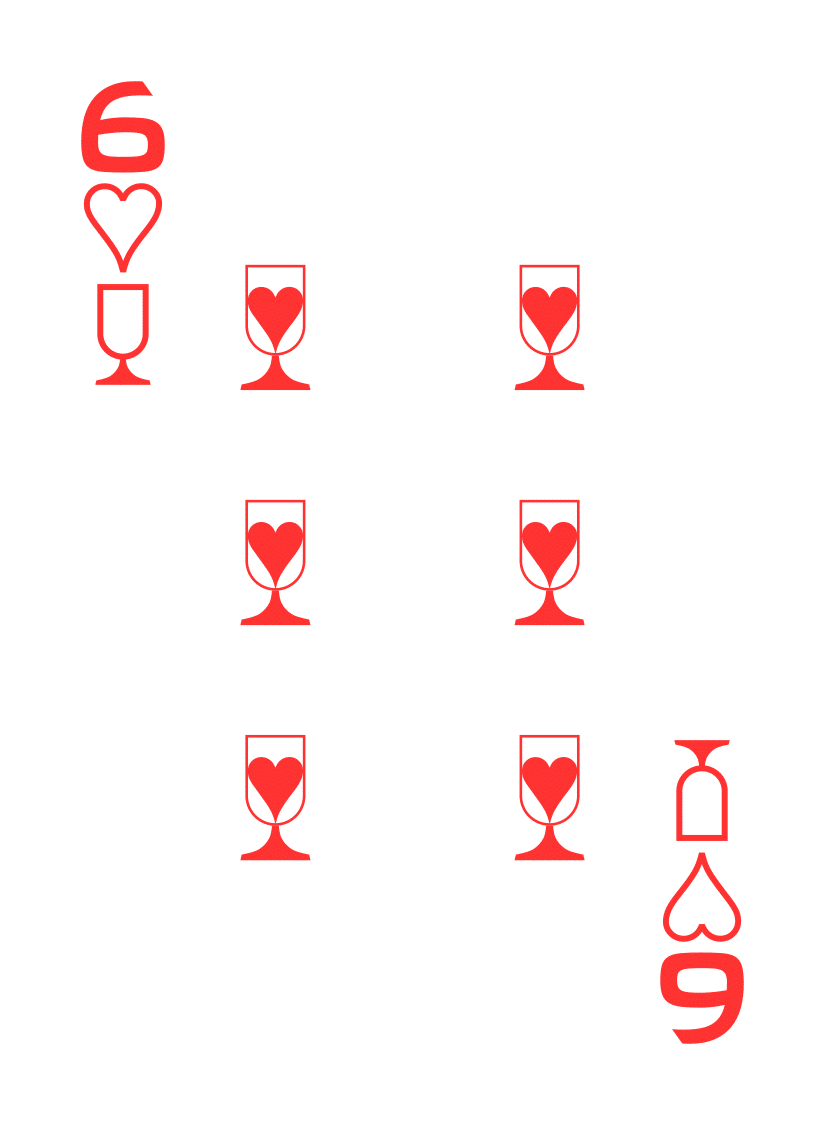
Six of Cups (Six of Hearts)
That summer. That house. That sandwich. Memory is a generous editor.
Six of Cups Upright
The Six of Cups is the card of nostalgia, innocence and old kindness. The traditional picture shows two children in a walled garden, one handing the other a cup full of flowers. It's a scene of simple generosity,
with the sweet, soft light of childhood. The booklet's number key calls six “recovery,” harmony restored, generosity and movement onward, and in the water suit that recovery often comes through memory.
In a reading, the Six can point to a reunion, a visit to somewhere familiar, an old friend getting in touch, or a long-forgotten pleasure resurfacing. It also stands for innocence: a kindness with no strings, a gift given for nothing. Let yourself enjoy it. The past can be a source of comfort and clues, as long as you remember to come back to the present. A good memory is better when it makes you kind today.
Six of Cups Reversed
Reversed, the booklet gives living in the past and unrealistic memory. The garden's lovely, and you won't leave. You're comparing every present moment unfavorably with a golden age that was, if we're being fair, probably a bit less golden than you recall. It can also mean old wounds resurfacing, or a childhood that wasn't a happy one.
Ask whether the past is feeding you or trapping you. Take what's useful (the lessons, the people, the recipes) and leave the rest. The present may not have the same light, but it has the advantage of being where you live.
The Icon on the Six of Cups
Six red cups with hearts in two even columns of three. The symmetry gives the card a gentle, ordered look, like a row of flower pots along a garden wall. It's the most settled of the Cups layouts so far, a calm picture for a card about memory.
Seven of Cups (Seven of Hearts)
Seven shiny options, none of them labelled. Choose carefully, or don't choose at all.
Seven of Cups Upright
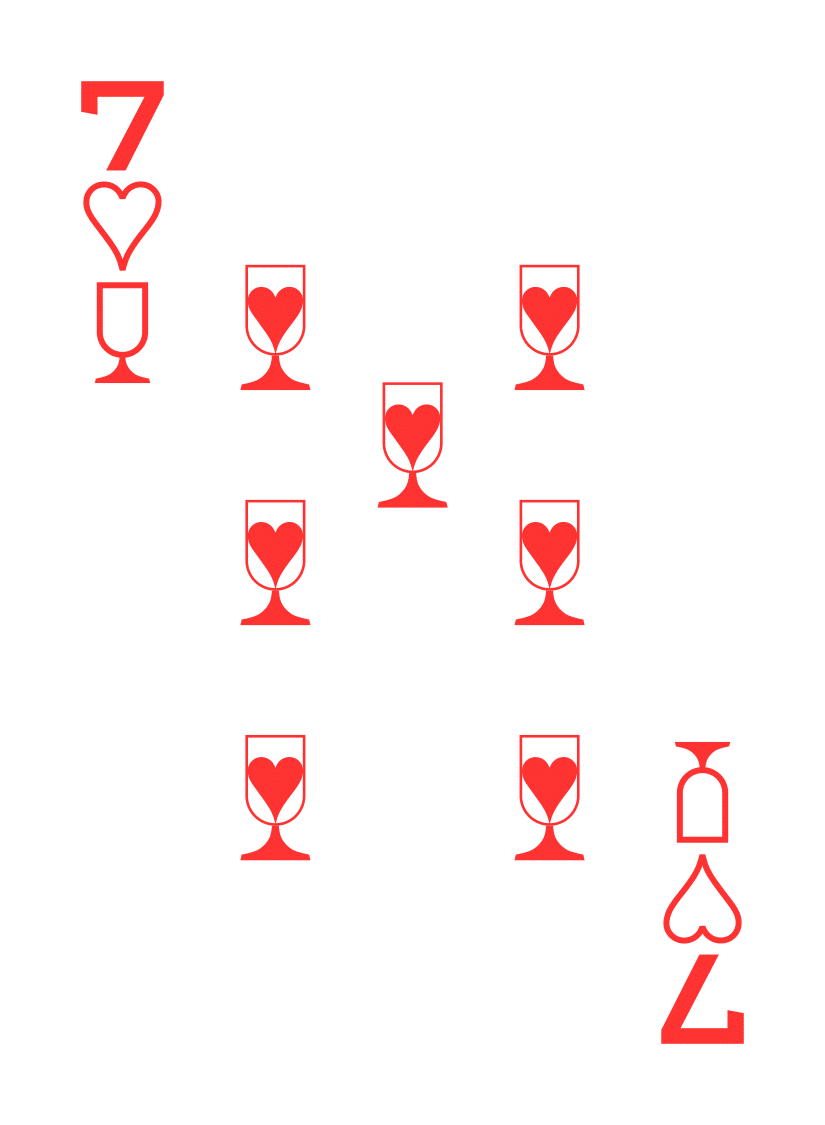
The Seven of Cups is the card of choices, fantasy and too many options. The traditional picture shows a figure looking at seven cups floating in the clouds,
each holding something different: jewels, a castle, a snake, a dragon, a laurel wreath, a shrouded figure, a glowing face. It's a daydream, and a tempting one. The booklet's number key calls seven “assessment,” reflection, challenge and the value of what you hold.
In a reading, the Seven says you've got a lot of possibilities, and not all of them are real. Some are wishful thinking, some are projections, and some might actually be opportunities in disguise. The card advises you to sort the daydreams from the doable. Write the options down, check each one against what you want, and be wary of choices that glitter. Dreaming is a fine start, but at some point, one of the cups needs picking up.
Seven of Cups Reversed
Reversed, the booklet reads clarity, decisiveness and illusion seen. The mist clears. You see through the fantasies, narrow the options and pick one. It's a card of getting real, with a sense of relief that comes from finally choosing.
It can also warn that you've been fooled, and the shiny thing wasn't what it seemed. That sting passes. Take what you've learned and make the decision you've been putting off. A good choice is rarely perfect, but it beats a dozen unchosen possibilities.
The Icon on the Seven of Cups
Seven red cups with hearts: two columns of three, with one extra between the first and second rows. The extra cup floats above the others like a vision in the clouds. It's the same pip pattern as the Seven of Wands, but here the odd one out is a daydream, not a lookout.
Eight of Cups (Eight of Hearts)
You've packed. You've gone. You haven't said where. That's fine.
Eight of Cups Upright
The Eight of Cups is the card of walking away and seeking something truer. The traditional picture shows a cloaked figure with a staff turning their back
on eight neatly stacked cups and heading up a hill, under a moon. Nothing's wrong with the cups. They simply aren't enough. The booklet's number key calls eight “movement,” mastery through repetition or swift change forced on you, and in the water suit it's an emotional departure.
In a reading, the Eight says it's time to leave something that no longer feeds you. It might be a job, a relationship, a place or a belief. It isn't necessarily dramatic or bitter. Sometimes you leave something good because you've outgrown it, and the courage lies in admitting that. Walk toward what you actually want, even if you can't name it yet. The moon is enough light to start with.
Eight of Cups Reversed
Reversed, the booklet gives stagnation, fear of leaving and drifting. You know you should go, and you can't. Or you left, but without a destination, and now you're wandering aimlessly. It can describe someone stuck in a comfortable but unfulfilling situation, putting off the hard conversation, the resignation or the move.
Ask what you're afraid of losing, and what it's costing to stay. Small steps help: update the résumé, look at flats, begin the conversation. The reversed Eight isn't asking you to run. It's asking you to decide.
The Icon on the Eight of Cups
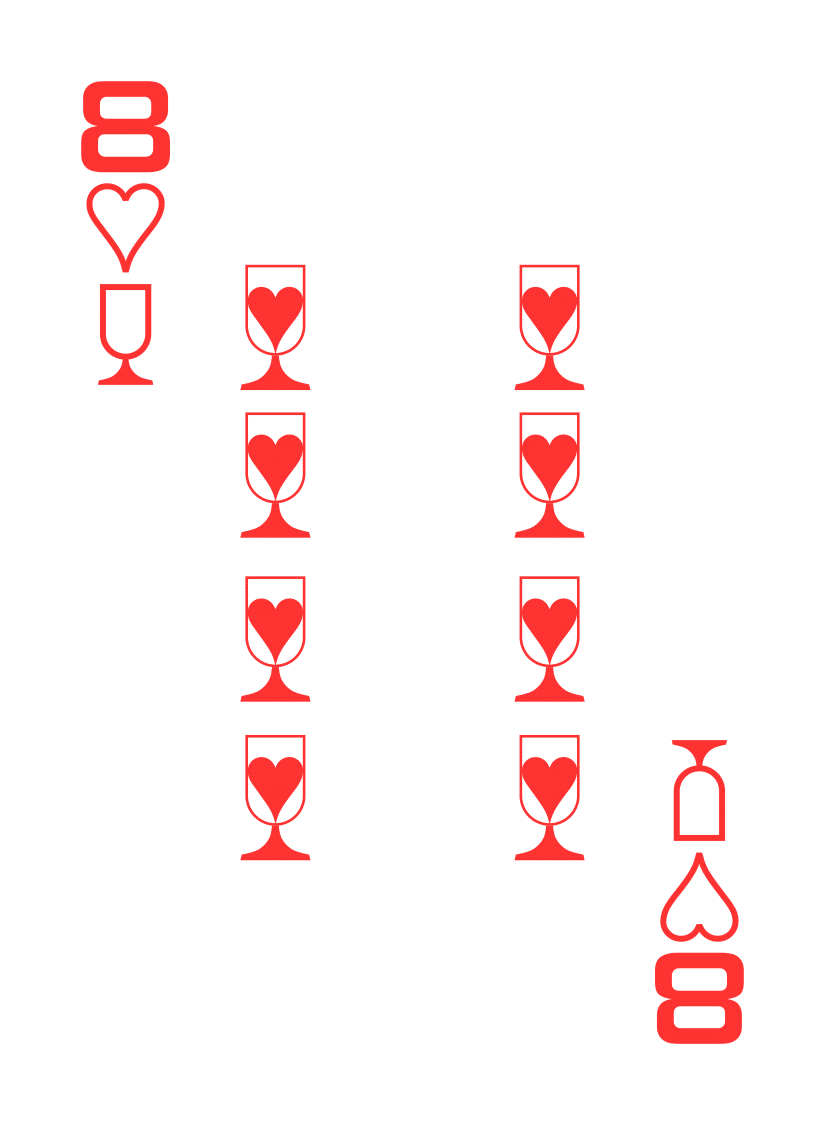
Eight red cups with hearts in two columns of four, lined up in neat rows like cups on a shelf. All of them are present and in good order, which is the point of the card: the figure's leaving a tidy, complete life. The even rows make the departure feel deliberate rather than angry.
Nine of Cups (Nine of Hearts)
You wished. It came true. Pass the snacks, and for once, savor it.
Nine of Cups Upright
The Nine of Cups is the card of contentment, satisfaction and a wish granted. It's often called the wish card. The traditional picture shows a comfortable
figure seated in front of a curved table lined with nine cups, arms crossed and looking quietly pleased. The booklet's number key calls nine “near completion,” the fruit of the suit felt alone, and here the fruit is the sweet kind.
In a reading, the Nine says you've got something to be happy about. You've worked for it, or hoped for it, and it has arrived. The card also encourages you to take pleasure in what you have: a good meal, a cozy home, a hard-earned success. Enjoy it without apology. There's a gentle caution, too. Satisfaction can be a solo sport, and the sweetest wishes are better when you share them. Invite someone to the table.
Nine of Cups Reversed
Reversed, the booklet gives smugness, materialism and hollow pleasure. The wish came true, and it doesn't feel as good as you expected. You've piled up the comforts and the satisfaction slipped away, or you're so pleased with yourself that you've stopped noticing everyone else.
If the pleasures feel hollow, ask what you actually wanted underneath the wish. A bigger house won't fix loneliness, and a pay rise won't cure a bad fit. If it's smugness, a little humility goes a long way. Either way, the reversed Nine invites you to chase something that satisfies rather than something that merely impresses.
The Icon on the Nine of Cups
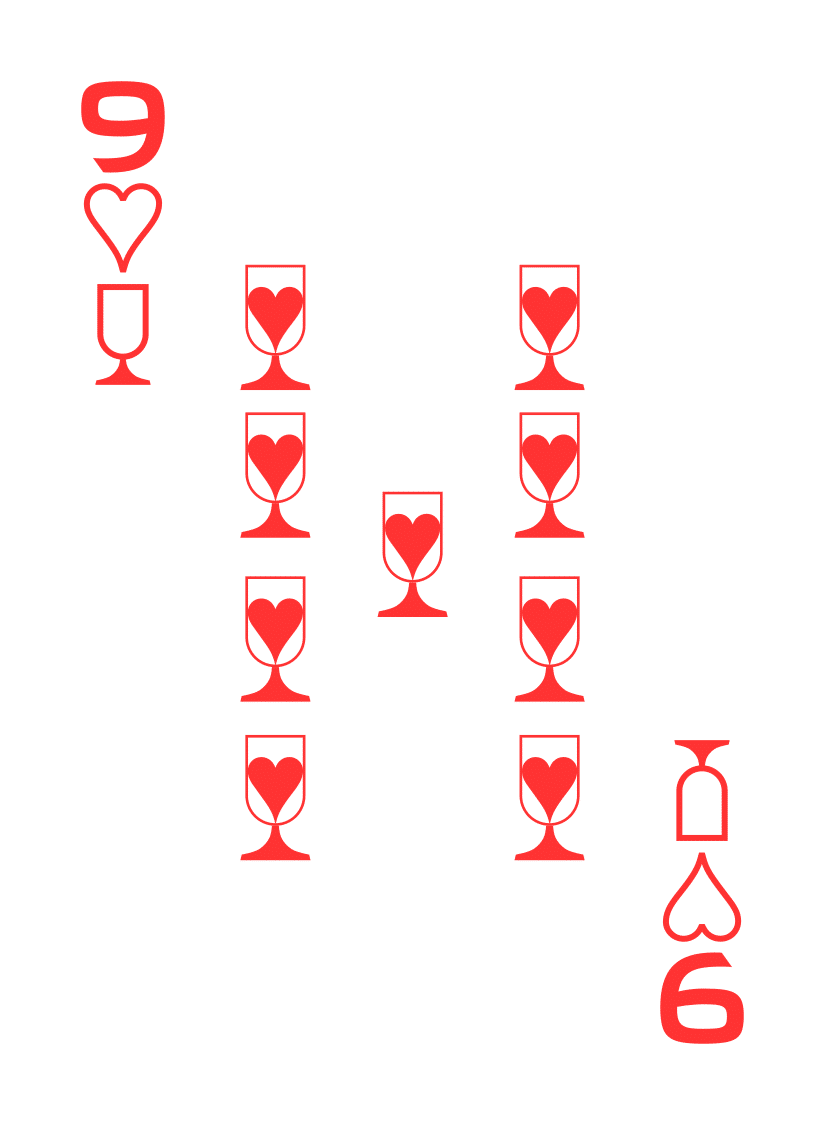
Nine red cups with hearts: two columns of four, with one in the center, like a cup placed in the middle of the table. The center cup is the one the figure has their eye on. The corner index repeats at the lower right, upside down, so that the card reads from either side.
Ten of Cups (Ten of Hearts)
Rainbow, house, dog, kids with sparklers. Yes, it really is that good. Enjoy it.
Ten of Cups Upright
The Ten of Cups is the card of harmony, family and emotional alignment. The traditional picture shows a couple with their arms around each other and two children dancing under a rainbow of ten cups, with a
modest house in the background. It's the emotional happy ending: love that has settled into a home. The booklet's number key calls ten “completion and excess,” the suit at its fullest and the end of the cycle.
In a reading, the Ten points to lasting contentment, a happy family, a close-knit group or a state of being where your outer life matches your inner values. It isn't a promise of constant bliss. It's a sense of belonging and emotional security, the kind that lets people be themselves. If you're working toward something, this card says the goal is worth it. If you already have it, it's a reminder to notice. Say thank you out loud.
Ten of Cups Reversed
Reversed, the booklet gives disconnection, broken home and false front. The picture may look perfect from outside, but it isn't what it seems. Family tensions, a distance between partners, or a happy face on an unhappy situation. It can also mean a group that's drifted apart, or an ideal that you've been chasing at the expense of the real thing.
Look beneath the surface and ask what's really going on. Honest conversations are the way back, however uncomfortable they feel. A real, imperfect home beats a flawless imitation.
The Icon on the Ten of Cups
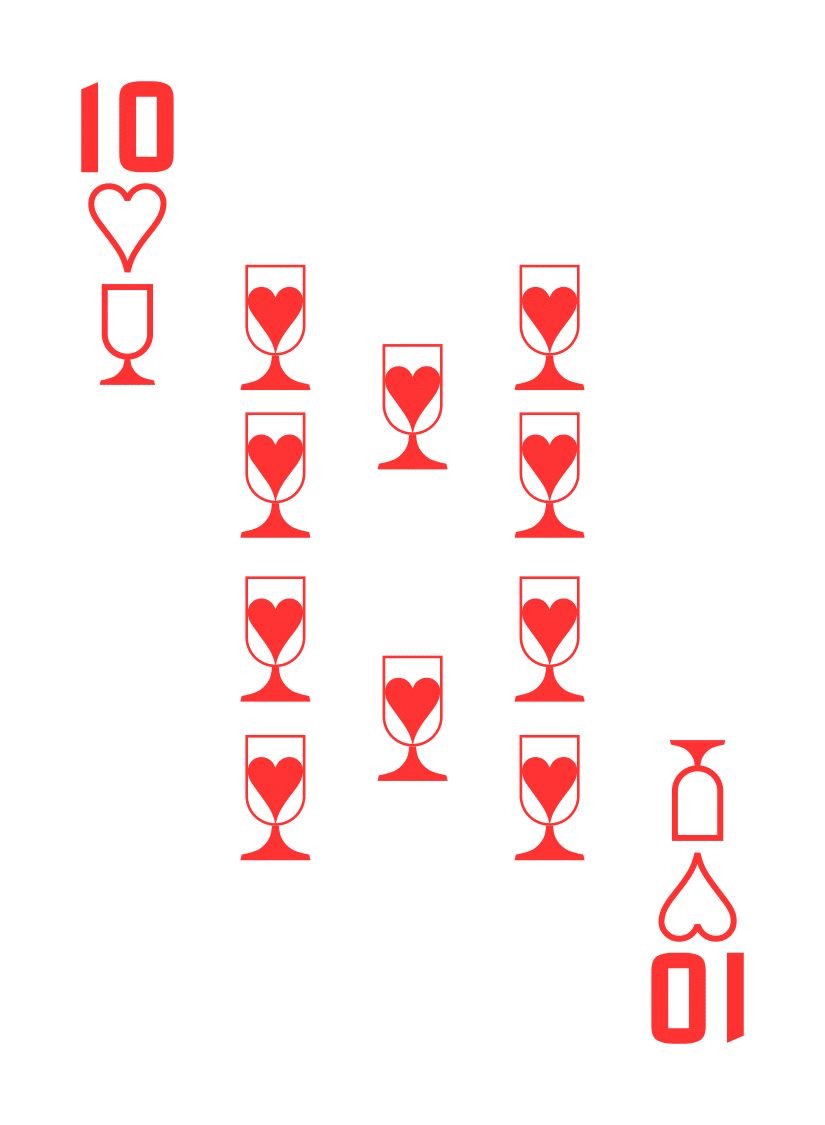
Ten red cups with hearts: two columns of four with two more in the middle column, so the card is full to the brim. The crowded face says everything the number key promises: the suit at its fullest. It also looks a bit like a family gathered round a table, with everyone pressed in close.
Page of Cups
A fish popped out of the cup and said something. Pay attention.
Page of Cups Upright
The Page of Cups is the student of the water suit: curiosity, a creative message and intuition. In the traditional picture a young person stands holding a cup from which a small fish peeks out, as if it had just
said hello. Strange things happen around this card, and they're usually friendly. The booklet describes Pages as “the student,” curiosity, a message arriving and a beginning taken seriously.
In a reading, the Page of Cups can bring a message of love or inspiration, a creative idea out of nowhere, or a sensitive person with a gentle heart. As an attitude, it invites you to explore your feelings with beginner's openness: write the poem, paint the picture, tell someone how you feel. Pay attention to your daydreams and odd little hunches. The Page doesn't need to know where it's going yet. It only needs to listen to the fish.
Page of Cups Reversed
Reversed, the booklet gives immaturity, doubt and escapism. The fish has gone quiet, or you're swimming away from something. It can describe someone who retreats into fantasy when reality gets difficult, or who's too sensitive to take any criticism. A message might not arrive, or might be misread.
Be kind to yourself, but be honest. Daydreaming is a fine hobby and a poor strategy. If you're avoiding something, take one small step toward it. Share the draft, make the call, have the difficult chat. It won't be as bad as the version in your head.
The Icon on the Page of Cups
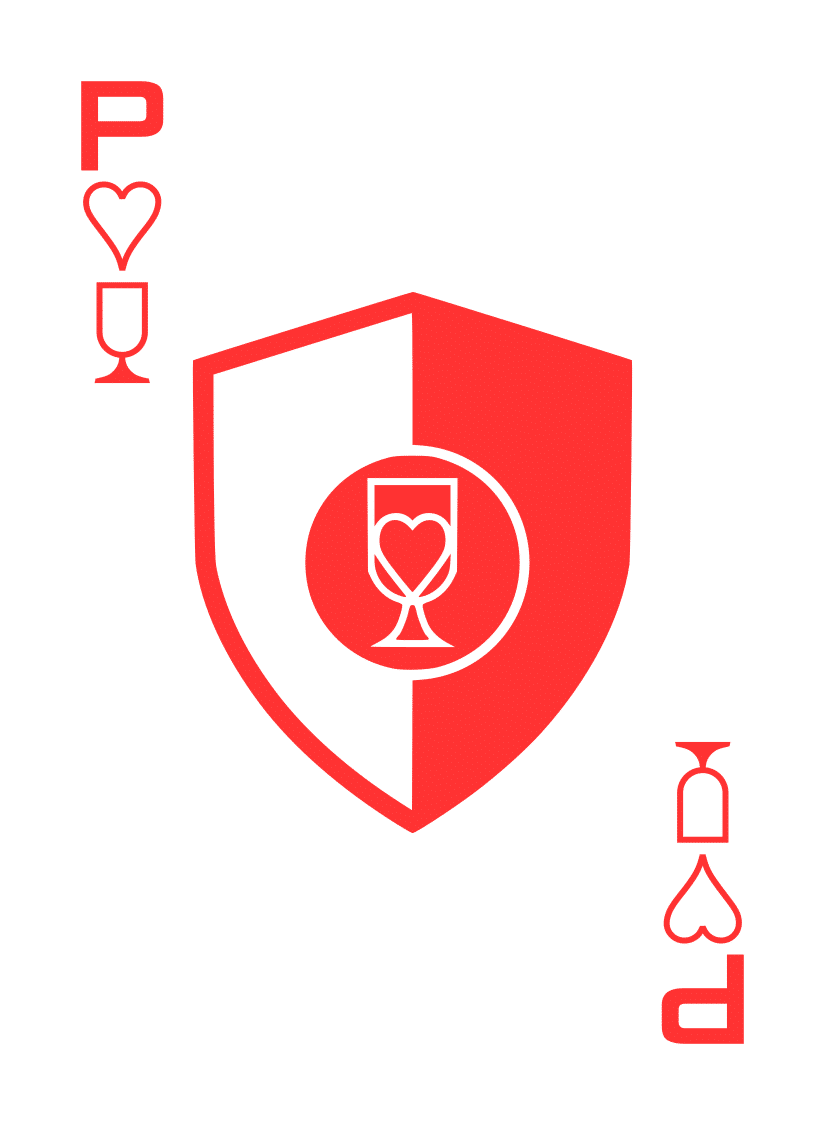
The Page is a red shield split into a solid half and an outlined half, with a round emblem at the center holding the cup-and-heart symbol. Half-and-half suits a student of feeling, still learning which half is which. The roundel is the only detail inside the shield, and it's the smallest drawing of a cup in the whole suit.
Jack of Cups (Knight of Cups)
Roses, a poem, a horse. And absolutely no plan for what comes after.
Jack of Cups Upright
The Jack of Cups is the Knight of the water suit: romance, charm and following the heart. The booklet describes the Jack as “the Knight of tarot,” motion,
commitment, the suit pursued at speed. The traditional image shows a young rider gently carrying a cup, a quiet romantic on a calm horse. He's the one who arrives with an offer, an invitation or a heartfelt confession.
In a reading, the Jack of Cups can mean a proposal, a love letter, a creative project begun out of feeling, or a person with all those qualities: sensitive, imaginative, and rather sweet. He asks you to follow your heart, and to do it with some grace. The danger is that feeling can carry you away before facts catch up. Enjoy the romance, honor the instinct, but check that the promise is something you'll be able to keep.
Jack of Cups Reversed
Reversed, the booklet gives moodiness, jealousy and empty promise. The romantic has become a sulk, or the charm is hollow. Big words with nothing behind them, an offer that never materializes, or a person who is more in love with the idea of romance than with you.
It may also describe your own sour moods, the swinging between enthusiasm and gloom. Watch for gestures that sound great and don't survive Monday. If you're the one making promises, mean them. If you're on the receiving end, believe actions.
The Icon on the Jack of Cups
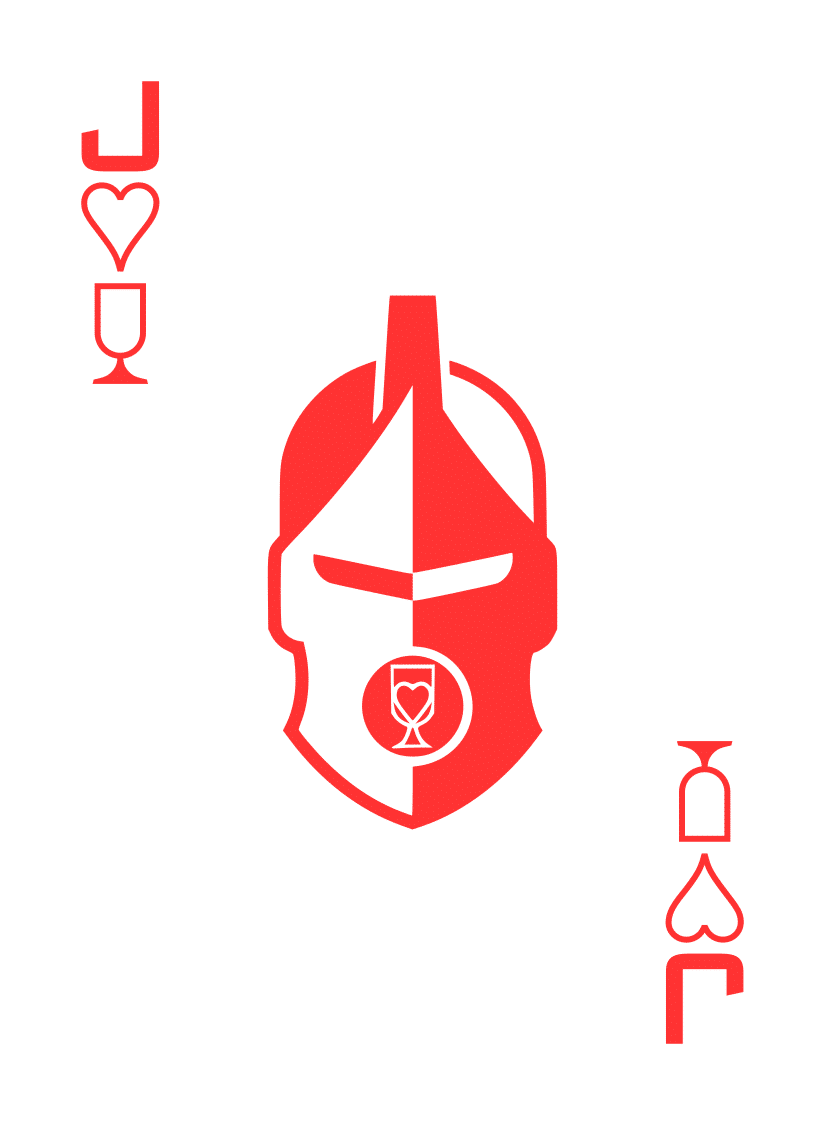
The Jack is a red knight's helmet, split half solid and half outlined, with a visor slit, a crest and the cup-and-heart emblem at the cheek. The same helmet appears on every Jack in the deck, which is exactly what you'd expect of an order of knights. The soft red color is the water suit's contribution: a knight whose armor's been dipped in feeling.
Queen of Cups (Queen of Hearts)
She listens. She actually listens. It's a little unnerving, and it's wonderful.
Queen of Cups Upright
The Queen of Cups is compassion, calm and emotional security. The booklet describes the Queens as mastery “held inwardly,” the suit understood,
embodied and used with judgement rather than force. In the water suit, that means someone who knows her own feelings and can sit with other people's without panicking. Traditionally she sits by the sea, gazing into an ornate cup, deeply intuitive and quietly in command of the tides.
In a reading, the Queen can describe a nurturing friend, a gifted listener, a counselor or a part of you that is emotionally grounded. She advises you to trust your intuition, to be gentle without being a pushover and to hold space for other people's hard moments. She also reminds you that empathy is a skill: you can feel deeply and still keep your own boundaries. Draw on that steadiness, and let it settle whatever's stormy.
Queen of Cups Reversed
Reversed, the booklet gives martyrdom, insecurity and dependence. The tide's gone out, or it's flooding. She's pouring herself into other people until there's nothing left, then resenting it. Or she's anxious and clingy, needing constant reassurance. It's the nurturer who forgets herself, or whose caring has strings attached.
Care for yourself with the same patience you'd give a friend. Boundaries aren't coldness, and saying no isn't the same as not caring. The reversed Queen asks you to refill your own cup before you offer it round.
The Icon on the Queen of Cups
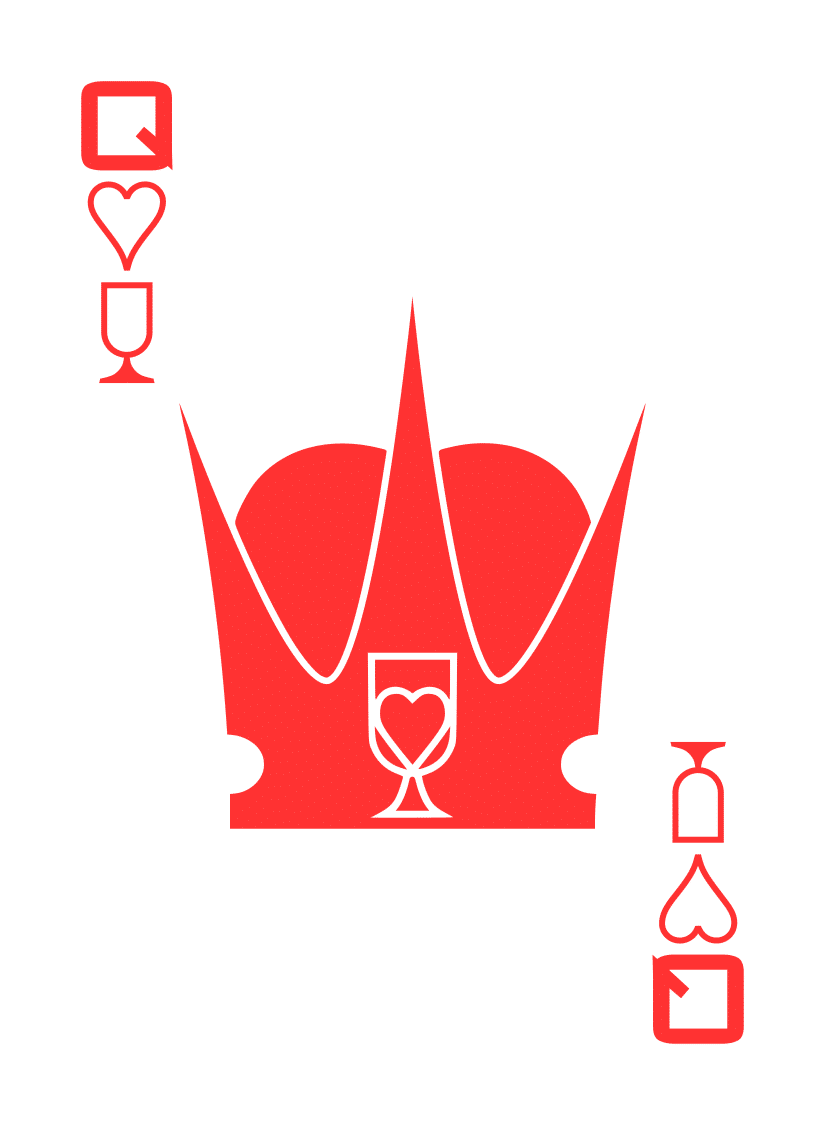
The Queen is a red crown with a rounded, domed center between two tall points, small notches at the sides and the cup-and-heart emblem set in the band. The soft dome has the look of a wave about to curl, which suits the suit. It's a gentle crown, wide in the middle and rounded at the top, the opposite of a spiked one.
King of Cups (King of Hearts)
Calm on the surface, deep underneath, and able to chair a very awkward meeting.
King of Cups Upright
The King of Cups is emotional balance, diplomacy and generosity. The booklet describes the Kings as mastery “expressed outwardly,” authority in the suit's
territory and responsibility for it. In the water suit, that means someone who has mastered their emotions, not by suppressing them, but by understanding them well enough to lead with them. Traditionally he sits on a throne amid rolling waves, composed and unbothered.
In a reading, the King of Cups describes a wise, kind and steady person: a mentor, a mediator, a leader who can keep a team calm in a crisis. Or he invites you to be that person, to respond rather than react and to use feeling as a source of insight rather than a source of chaos. He's the card of the calming word at the right moment, and of generosity that doesn't need an audience. Be the still point in somebody else's storm.
King of Cups Reversed
Reversed, the booklet gives volatility, manipulation and coldness. The surface cracks. The calm was suppression, and now it's leaking out as moods, or the emotional intelligence is being used as a tool to steer other people. It can describe a person who's warm when they want something and cold when they don't, or your own habit of swallowing feelings until they burst.
The way back is honesty: with yourself first, then with others. Feelings that are named lose much of their power to surprise you. A reversed King asks for authentic calm, the kind that comes from understanding the waves instead of pretending they aren't there.
The Icon on the King of Cups
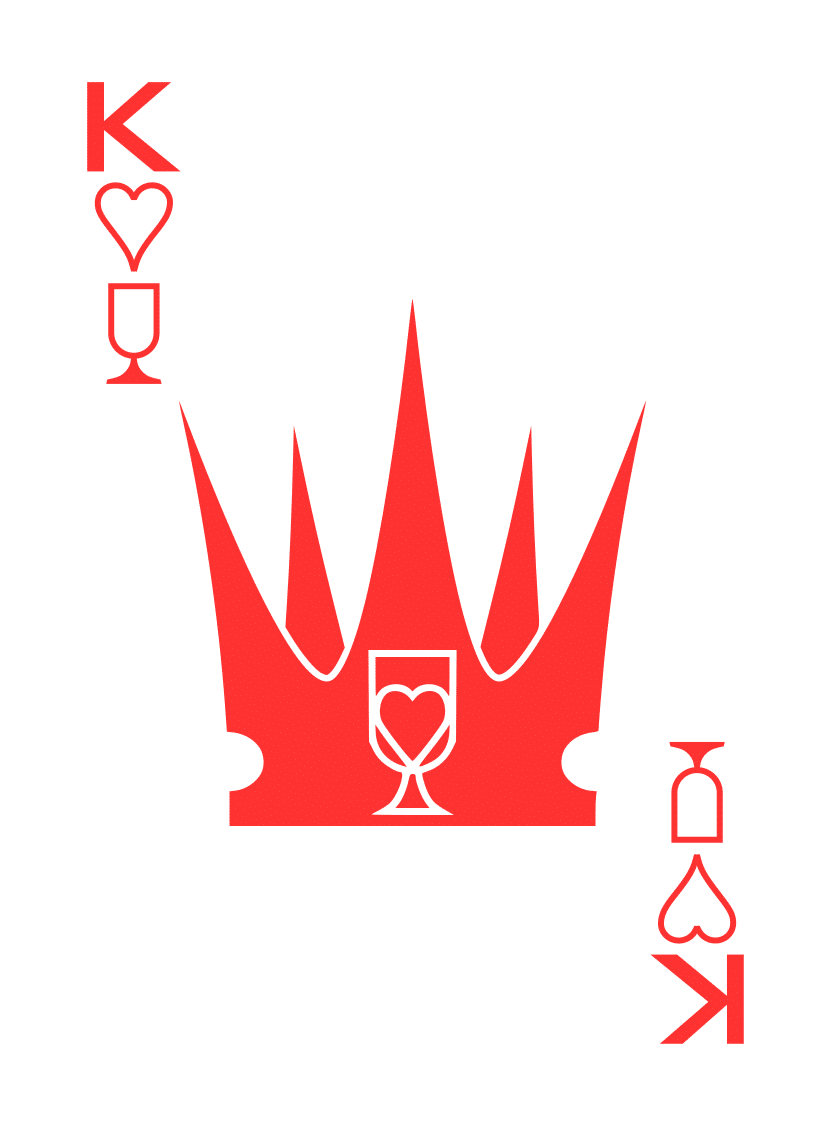
The King is a tall red crown with a long central spire, shorter spikes on either side, notches at the base and the cup-and-heart emblem at the center. It's the same crown pattern as the other three Kings, and the red is the only thing that says water. The spikes are sharper than the Queen's dome, which is how you can tell who's holding the authority and who is holding the room.
Where to Go From Here
The Cups are one of four suits in the Minor Arcana. For the rest of the deck, start with the twenty-two big cards of the Major Arcana, then move on to the other three suits:
- Ikonology Major Arcana meanings
- Ikonology Wands (Clubs) meanings
- Ikonology Swords (Spades) meanings
- Ikonology Pentacles (Diamonds) meanings
Frequently Asked Questions
What does the suit of Cups mean in tarot?
Cups represent water: feeling, relationship and intuition. They cover love in all its forms and the inner weather that love produces. In the Ikonology deck they're the red Hearts.
Are Cups the same as Hearts in a regular deck?
Yes. In the Ikonology deck every Cups card doubles as a heart when you play poker, so the same card has a tarot meaning and a poker rank. The Page has no poker equivalent and sits out of the poker deck, along with the Major Arcana.
What is the Jack of Cups?
It's the Knight of Cups. The Ikonology deck calls the Knight a Jack and marks it J, so that the deck works as a standard fifty-two-card poker deck once the Majors and Pages are removed.
Do I have to use reversed meanings?
No. Many readers never use them. Each Ikonology card reads one way up, so you can read reversals when you want them and turn every card upright when you don't.
Where can I buy the deck?
Ikonology is available from The Game Crafter. Get Ikonology here.
Check Out FatMunkey's Books
FatMunkey has a huge selection of sudoku and other puzzle books you are sure to enjoy.
Have look at this post to see all of the books and read about what FatMunkey has published so far.