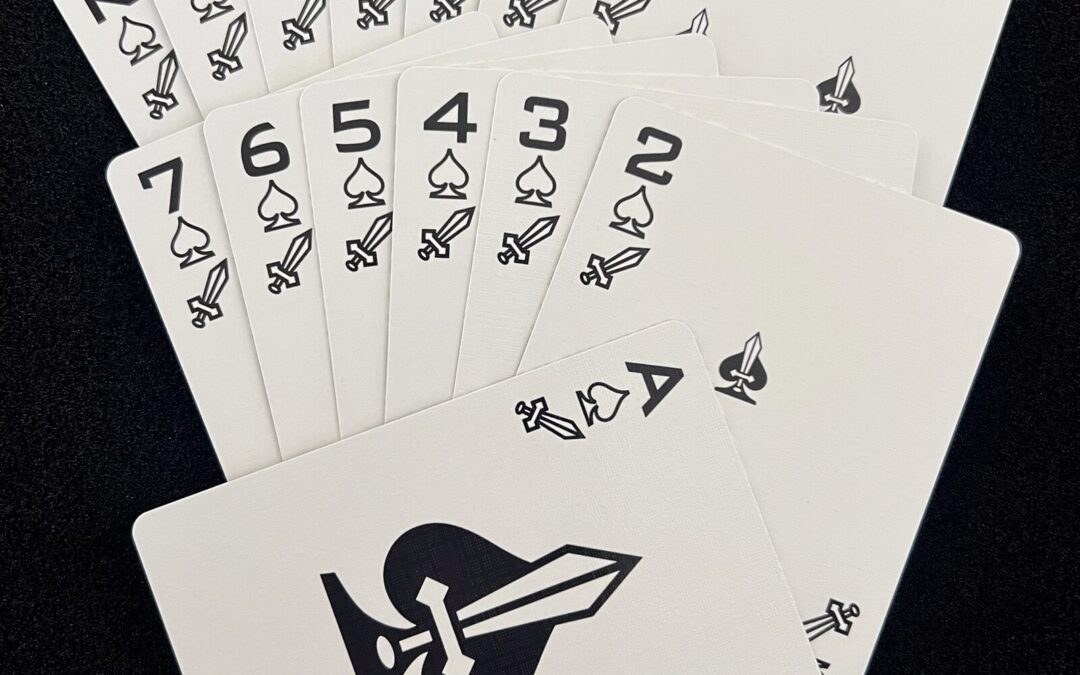
Swords are the suit of air: thought, communication, conflict and truth. They govern the mind at work, and the trouble the mind can make. In the Ikonology deck they are the black Spades, so if you play poker with this deck, every Swords card is also a spade. This page covers all fourteen cards of the suit, from the Ace to the King, with a full upright meaning, a full reversed meaning and a note on the icon printed on each card.
If you own the deck, the short keyword versions of these meanings are on pages 23 to 26 of the booklet in the box. This is the longer version the booklet promised. If you don't own it yet, you can read this as a plain-spoken guide to the traditional meanings of the Swords cards, whatever deck you use. For the deck itself, see the Ikonology deck page.
Table of Contents
The Suit of Swords in Brief
The booklet sums up the suit this way: “Thought, conflict, truth. The mind at work, and the trouble the mind makes. Communication, decision, and the cost of both.” Before you read a single card, its suit has already told you what kind of matter you are looking at, and in a spread, a run of Swords cards suggests the question is mostly about thought, conflict and truth.
Each number carries its own weight whatever the suit. The Ace is the seed, the Two is duality, the Three is first growth, the Four is structure, the Five is disruption, the Six is recovery, the Seven is assessment, the Eight is movement, the Nine is near completion and the Ten is completion and excess. Read the number first, then the suit, and you have a working reading before you look anything up.
The court cards can be people, or they can be the manner in which you are acting. The Page is the student, the Jack is the Knight of tarot, the Queen is mastery held inwardly and the King is mastery expressed outwardly. In the Ikonology deck the Knight is called the Jack and is marked J, which is why a poker deck made from these cards has a full set of Jacks. Let the surrounding cards decide whether a court card is a person or an attitude.
Every Ikonology card reads one way up. The Roman numeral of a Major Arcana card sits at the top and its name at the bottom, and on the Minor Arcana the corner index sits at the top left. A card that lands the right way round is upright. A card that lands upside down is reversed, and reversed means the same energy in a different mood: blocked, delayed, turned inward or overdone. Reversals are optional, and you can turn every card upright if you prefer.
Ace of Swords (Ace of Spades)
One clear thought, sharp enough to cut through a very foggy week.
Ace of Swords Upright
The Ace of Swords is the seed of the air suit: clarity, breakthrough and truth cutting through. Traditionally a hand reaches from a cloud and grips an upright sword crowned with a laurel wreath, with bare mountains in the distance. It's the moment the fog parts. You finally see the situation as it is, you find the right words for a problem, or a long-standing confusion resolves itself into a single, plain sentence. The booklet calls the ace potential “offered but not yet taken up,” and here that potential is mental: an idea, a decision, a truth.
In a reading, the Ace of Swords says that a new level of understanding is available, and it favors direct, honest thinking. Say what's true. Write down the real question. Make the decision you've been circling. Clarity is a powerful tool, and like any blade it needs a steady hand. Use it to cut away what's false, not to wound anyone, and you'll find the world a good deal simpler than it looked.
Ace of Swords Reversed
Reversed, the booklet gives confusion, brutality and misinformation. The sword has gone dull, or it's being swung without care. You may be wading through contradictory advice and half-truths, unable to see what's real. Or the truth is arriving, but with more force than the situation can bear: honesty used as a weapon rather than a tool.
Slow down and check your sources. Whose information are you relying on, and what's your own part in the confusion? If you're the one holding the blade, aim for accuracy rather than damage. Truth delivered kindly is still the truth, and a lot easier to hear.
The Icon on the Ace of Swords
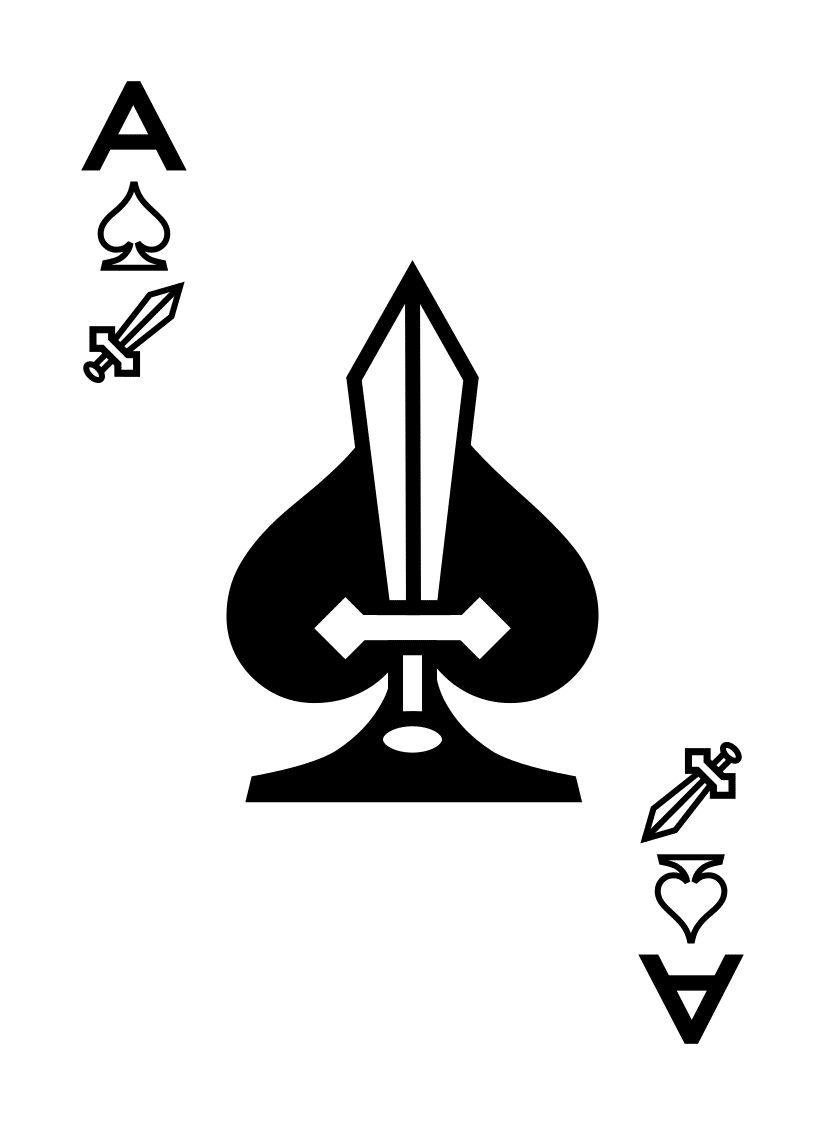
The Ikonology Ace of Swords is a bold black spade with an upright, double-edged sword running up through its center, the crossguard sitting in the middle of the shape and the blade rising above the spade's point. The spade is the poker symbol and the sword is the tarot one, and here they fuse into a single image, as with every ace. It's the cleanest, sharpest ace in the deck, appropriately.
Two of Swords (Two of Spades)
Arms crossed, eyes covered, and the decision still unmade. Classic.
Two of Swords Upright
The Two of Swords is the card of stalemate, a difficult choice and avoidance. The traditional picture shows a blindfolded figure on a bench by the sea, holding two swords crossed over the chest. The water's calm, the moon is up, and nobody's moving. The booklet's number key calls two “duality,” choice, partnership and balance held between two things, and in the air suit the balance is a mental one: two arguments, evenly matched, and no way to settle them.
In a reading, the Two says you're caught in a decision you can't, or won't, make. The blindfold suggests you may be shutting out information you don't want to see. The card isn't a criticism. Sometimes a pause is wise, and a truce can buy time. But it can't last. Eventually the blindfold needs to come off, the swords have to move, and one of the choices has to be made. Gather what you need to know, listen to your gut, and decide.
Two of Swords Reversed
Reversed, the booklet reads indecision, overload and truth faced. There are two ways it can go. Either you're drowning in conflicting information and can't decide, or the blindfold's finally off, and you can see what you've been avoiding. Both can feel uncomfortable, but the second is progress.
If you're overloaded, limit your options and set a deadline. If the truth has landed, give yourself a moment before you act. A reversed Two says it's time to stop pretending a stalemate is peace. Pick up one of the swords and move.
The Icon on the Two of Swords
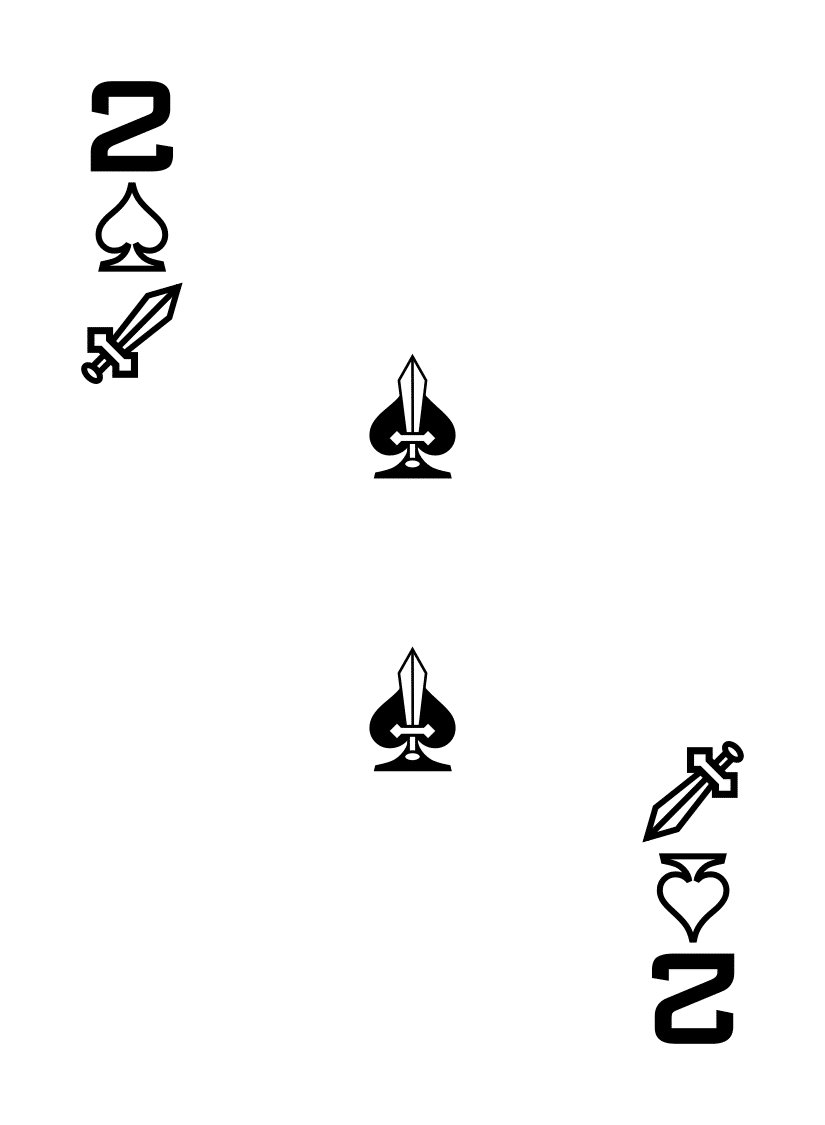
Two black spades with a small sword inside each, stacked in the center column. Two points on a line, one above the other, is a good picture of two options facing each other without moving. The corner index shows the 2, the spade and a small sword at top left, mirrored upside down at the opposite corner.
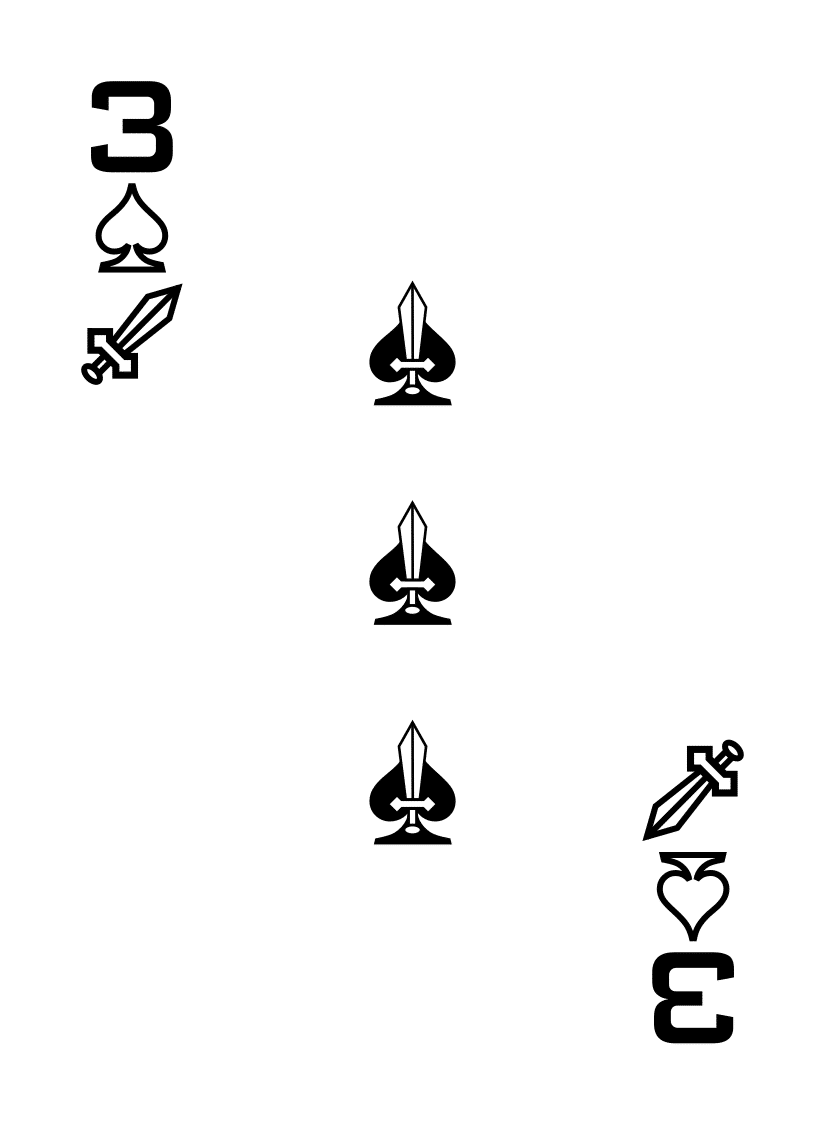
Three of Swords (Three of Spades)
Rain, a heart, three blades. Nobody said swords would be gentle.
Three of Swords Upright
The Three of Swords is the card of heartbreak, painful truth and sorrow. The traditional image shows a heart pierced by three swords, set against a stormy sky and falling rain. It's one of the tarot's most direct pictures, and it means what it looks like: grief, betrayal, an honest-but-hurtful conversation. The booklet's number key calls three “first growth,” where the idea becomes real and others are involved, and in the air suit what becomes real is a painful fact.
In a reading, the Three of Swords doesn't soften the blow, and it isn't trying to scare you either. It acknowledges that something hurts. A relationship ended, a hope collapsed, or a truth landed that you can't unhear. The card asks you to feel it rather than rush past it. Pain that's acknowledged moves through. Pain that's buried tends to move sideways. Give yourself time, find someone to talk to and be as gentle with yourself as you'd be with a friend.
Three of Swords Reversed
Reversed, the booklet gives recovery, forgiveness and pain released. The swords are being drawn out, one at a time. The rain's easing. It doesn't mean the hurt didn't happen, only that it's beginning to heal. Forgiveness, of others or of yourself, may be starting to look possible.
Healing isn't a straight line, so expect some bad days even now. Be patient with the process. A reversed Three is a sign that the worst of it is behind you, and the scar will be something you can live with.
The Icon on the Three of Swords
Three black spades, each with a small sword inside, stacked in a single column through the middle of the card. Three swords in a vertical row is the closest the pip layout gets to the traditional picture of three blades through a heart. The card is stark and orderly, with nothing else on its face.
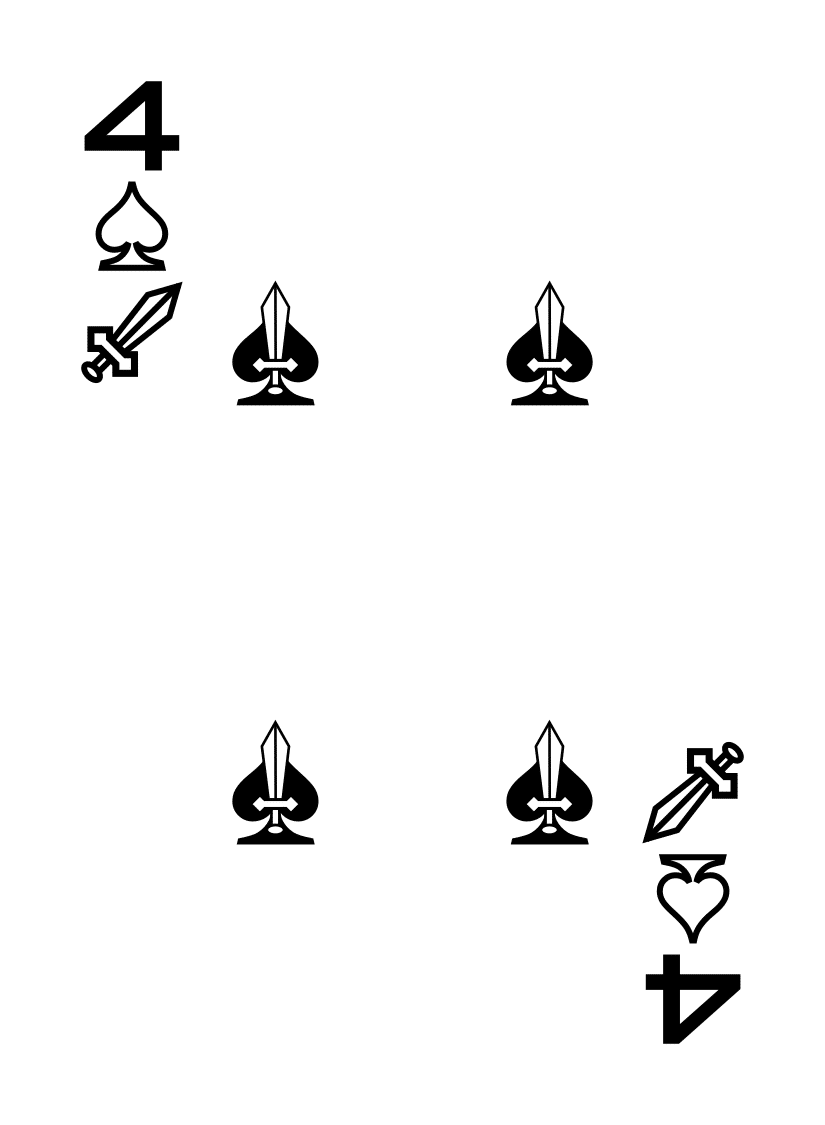
Four of Swords (Four of Spades)
Put down the sword. Lie down. This is not a drill, and it's not laziness.
Four of Swords Upright
The Four of Swords is the card of rest, retreat and restoration. The traditional picture shows a stone effigy of a knight lying on a tomb, hands in prayer, with three swords on the wall above and one beneath. It's a figure at rest, safely away from the battle. The booklet's number key calls four “structure,” stability and the stagnation that stability risks, and in the air suit that stability is a deliberate pause for the mind.
In a reading, the Four tells you to rest. It's the card of the sick day, the sabbatical, the quiet weekend, the meditation retreat and the nap. The mind has been working overtime, and it needs time to recover. Retreating isn't giving up. It's how you stay in the fight for the long run. Turn off the notifications, let someone else carry the load for a while and trust that the world will still be there when you come back.
Four of Swords Reversed
Reversed, the booklet gives burnout, restlessness and return too soon. You couldn't rest, or you tried to go back before you were ready. Perhaps your mind won't switch off, or the guilt of stopping is louder than the exhaustion. It can also be the aftershock of pushing through a hard stretch, when the body finally sends the bill.
Take the rest seriously. Recovery has no shortcut, and it doesn't care about your schedule. If you can't rest, ask what's keeping you awake. A little time spent on that is far cheaper than another collapse.
The Icon on the Four of Swords
Four black spades, each with a small sword inside, at the four corners of an open rectangle. The empty middle is a quiet space, which seems right for a card about rest. The even, balanced shape reads like a bed, a tomb or a room, depending on your mood.
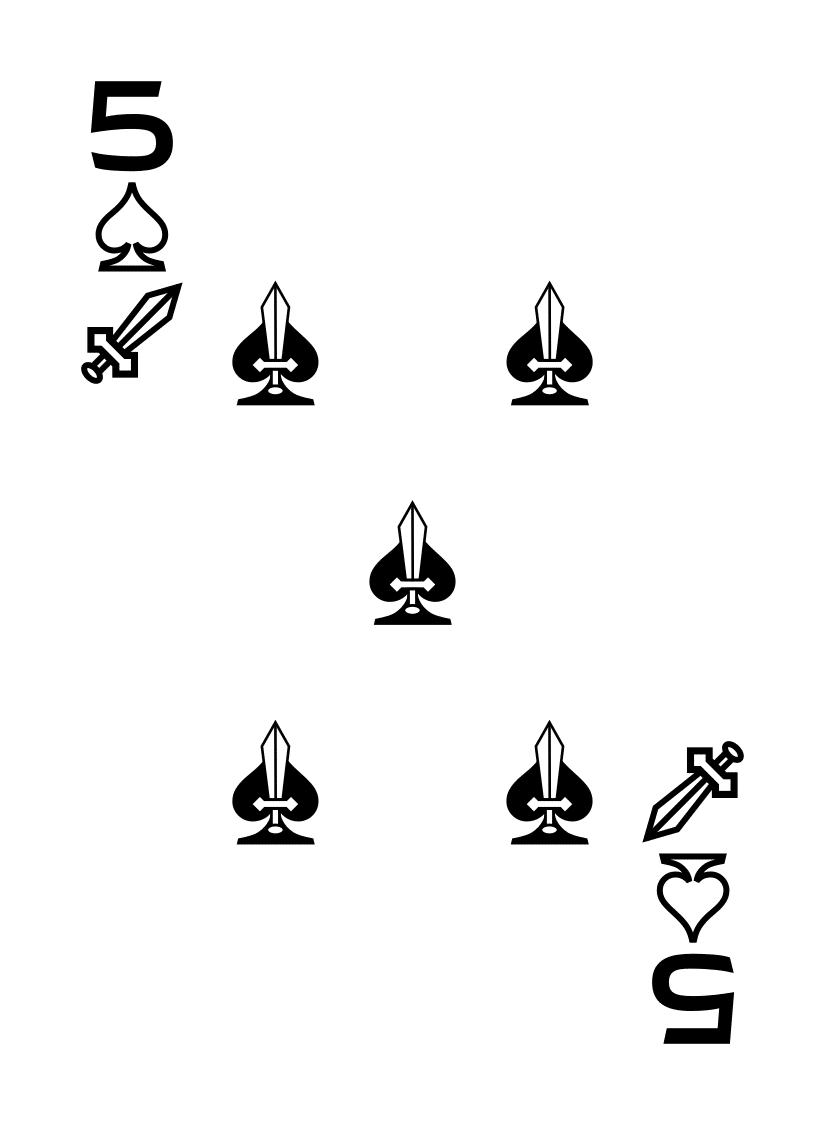
Five of Swords (Five of Spades)
You won the argument. Look around. Where did everyone go?
Five of Swords Upright
The Five of Swords is the card of conflict, hollow victory and defeat. The traditional picture shows a smirking figure holding three swords, with two more on the ground, while two others walk away dejected in the background. Someone won, but at what cost? The booklet's number key calls five “disruption,” loss, conflict and the necessary breaking of the four, and in the air suit the disruption is a battle of wills.
In a reading, the Five asks whether the fight is worth it. It can describe a conflict where winning means damaging a relationship, a petty dispute that has gone too far or a situation in which you're being outmaneuvered. It's a card of consequences. Even a victory can leave you with fewer friends and less peace of mind. Before you press your point, ask what you actually want. If it's to be right, you may get your wish. If it's to be happy, you might need a different plan.
Five of Swords Reversed
Reversed, the booklet gives amends, reconciliation and old resentment. The fight is over, and now come the repairs. It's a chance to make peace, apologize or finally let a grudge go. It can also mean that old resentment is still festering, and it's time to deal with it.
Reconciliation needs humility from at least one side, and it's often more satisfying than winning. If you're holding on to an old hurt, ask what it's costing you to carry it. You can forgive without forgetting, and you can set a boundary without staying angry.
The Icon on the Five of Swords
Five black spades, each with a small sword inside, with four at the corners and one in the middle. The crowded center suggests a tangle: everyone in everyone else's way. It's the same five-pip pattern as the other suits, but here the sharp little swords make it look like a skirmish.
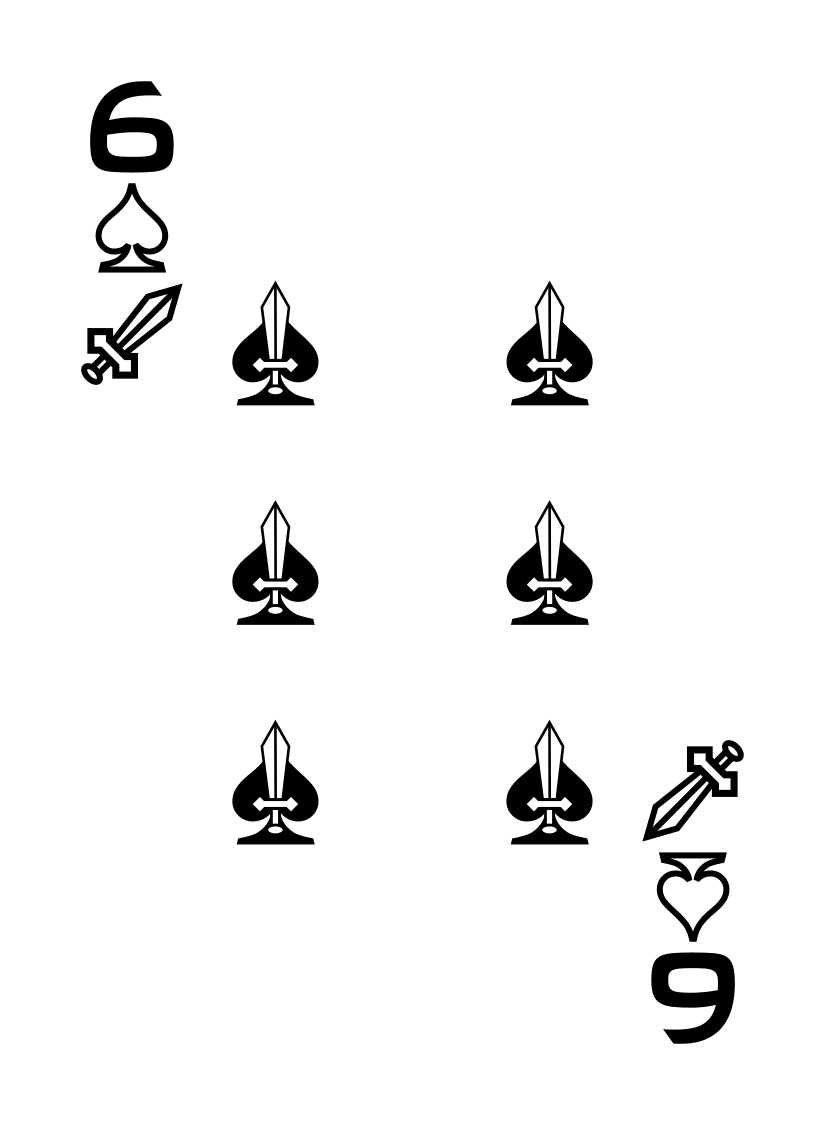
Six of Swords (Six of Spades)
The ferry is leaving. You don't have to like it, but you do have to be on it.
Six of Swords Upright
The Six of Swords is the card of transition, moving on and passage. The traditional picture shows a boatman poling a small ferry across calm water, carrying a hunched figure and a child, with six swords standing upright in the hull. Behind them the water is choppy, ahead it's smooth. The booklet's number key calls six “recovery,” harmony restored, generosity and movement onward, and in the air suit that means leaving troubles behind with a quiet, deliberate crossing.
In a reading, the Six says you're moving from a difficult situation toward something calmer. It might be a literal journey, a change of scene or a mental shift. The swords go with you, since you carry your troubles across, but the water ahead is easier. It's a card of gentle, unglamorous progress. You're not galloping off to victory, only leaving the rough stretch behind. Pack what you need, trust the boatman and let the shore get smaller.
Six of Swords Reversed
Reversed, the booklet gives unfinished business and resisting the move. You can't quite get on the boat, or you've left things behind that keep pulling you back. It may be an unresolved argument, a loose end, or a reluctance to accept that the old situation is over.
Ask what you haven't finished, or what you haven't forgiven. Sometimes tidying a small piece of business lets the larger journey begin. And sometimes you have to leave without a neat ending. The reversed Six helps you tell the difference.
The Icon on the Six of Swords
Six black spades with small swords inside, in two even columns of three. The tidy parallel columns look like two banks of a river, with an open channel between them. It's a calm, balanced layout for a card about a smooth crossing.
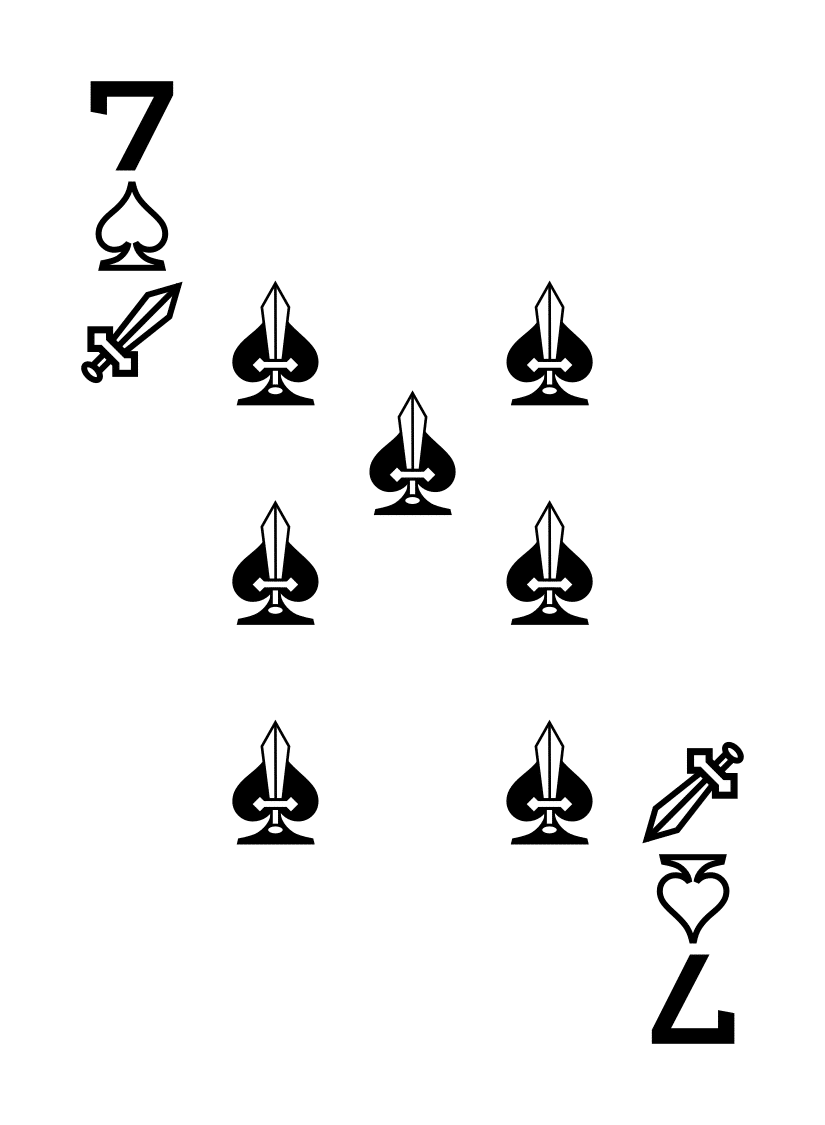
Seven of Swords (Seven of Spades)
Tiptoe. Quietly. Don't look back. Is that a tent? That's a tent.
Seven of Swords Upright
The Seven of Swords is the card of strategy, deception and quiet manoeuvre. The traditional picture shows a figure creeping away from a camp with five swords in their arms, looking over their shoulder and leaving two behind. It's a heist, or a clever bit of tactical retreat, depending on your point of view. The booklet's number key calls seven “assessment,” reflection, challenge and the value of what you hold, and in the air suit that assessment is cunning.
In a reading, the Seven suggests a need for tactics rather than brute force: a creative workaround, a quiet exit, a careful plan. It can also point to dishonesty, either in someone around you or in yourself. Is someone taking more than they've declared? Are you telling the whole truth? The card is morally flexible, so its message depends on the context. Be smart, be careful, and notice whether the cleverness you're relying on is the kind you'd be comfortable explaining out loud.
Seven of Swords Reversed
Reversed, the booklet gives exposure, conscience and confession. The game's up. The sneaking's been spotted, or your conscience has caught up with you, and you're ready to own up. It can be a relief: the secret's out, and the weight comes off.
If you've been hiding something, consider telling it yourself, on your terms. It almost always lands better than being found out. If someone else's secret is surfacing, don't rush to judge. Ask for the whole story first.
The Icon on the Seven of Swords
Seven black spades with small swords, in two columns of three with one extra pip tucked between the two columns, just below the top row. That extra pip looks like someone slipping out between the others, which suits a card about leaving quietly. Every pip is the same size, and every one is armed.
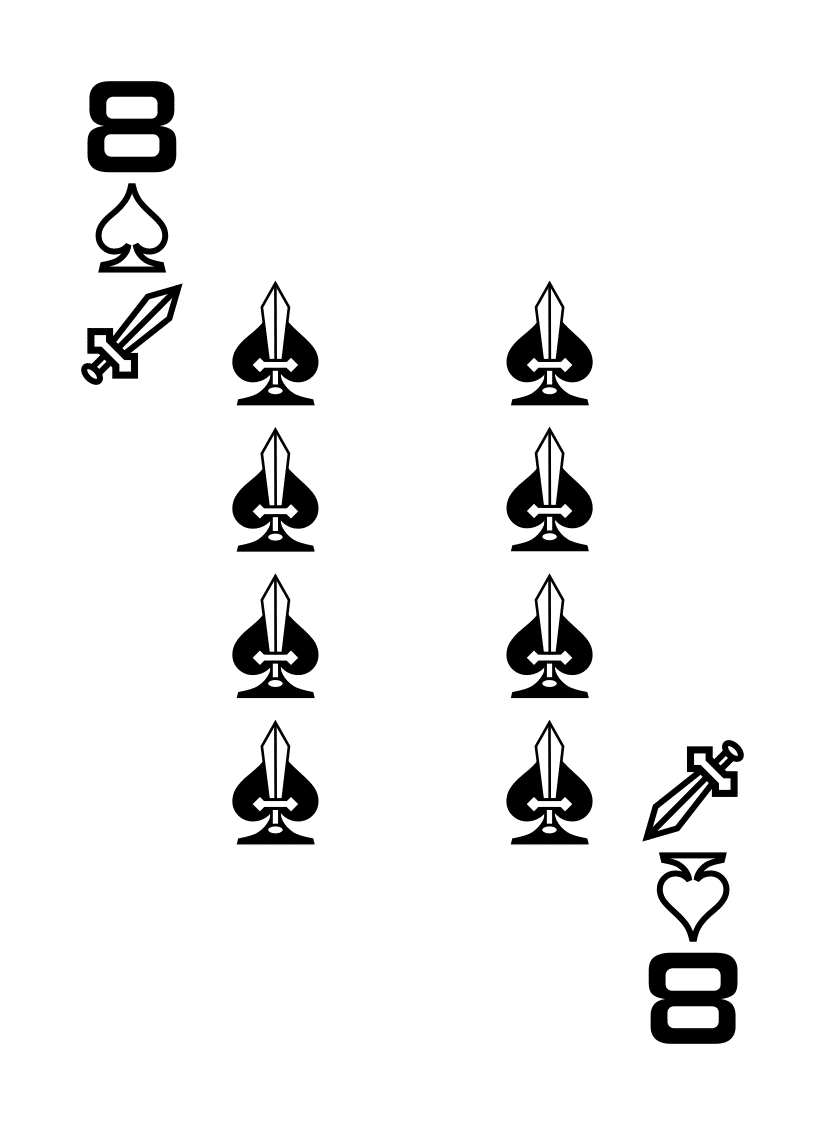
Eight of Swords (Eight of Spades)
Look closely. The ties are loose, and the blindfold has a gap.
Eight of Swords Upright
The Eight of Swords is the card of restriction and self-imposed limits. The traditional picture shows a figure bound loosely with cloth, blindfolded, standing amid eight swords stuck upright in the ground, with water at their feet and a castle in the distance. Look carefully, and you'll see the ties are loose and the cage has gaps. The booklet's number key calls eight “movement,” mastery through repetition or swift change forced on you, and here the movement is blocked by the mind.
In a reading, the Eight points to a situation that feels like a trap, and asks how much of the trap is real. Some limits are external, and some are stories you tell yourself: “I can't,” “I'm stuck,” “there's no other way.” The card isn't dismissing your difficulties, only noting that the thing holding you may be thinner than it looks. Take off the blindfold and test the ties. You may find you have more room to move than you thought.
Eight of Swords Reversed
Reversed, the booklet gives limits released and new perspective. The blindfold's off, and the swords look different from this side. You see the way out, perhaps one you've been walking past for a long time. There's relief in it, and a touch of embarrassment too, which is normal.
Walk out slowly. It can take a moment to trust your own legs. A reversed Eight says the situation is changing because you are, so don't be surprised if the world seems larger and a lot less frightening.
The Icon on the Eight of Swords
Eight black spades, each with a small sword inside, in two neat columns of four, like a fence or a row of bars. The regular rows look like the cage the card describes, and the gap down the middle is the path out. It's a tidy arrangement and a slightly claustrophobic one.
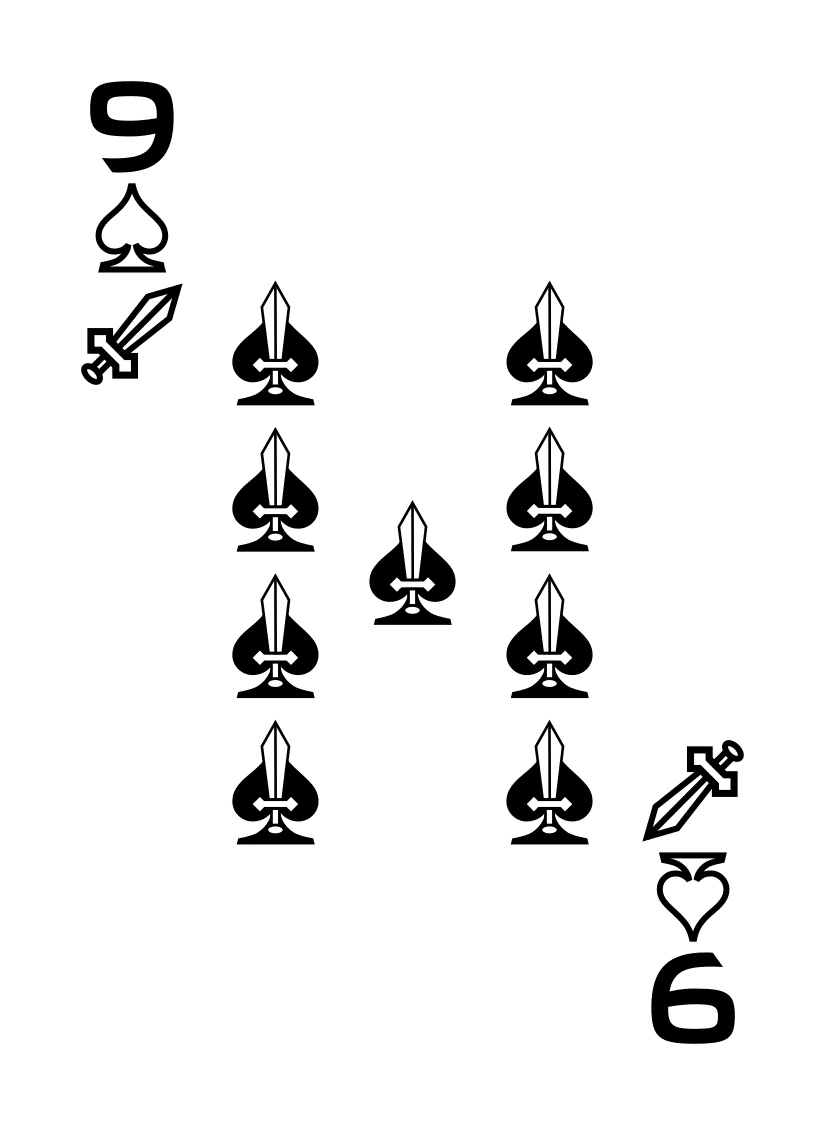
Nine of Swords (Nine of Spades)
It's 3 a.m. Every worry you have is now the size of a mountain. It isn't.
Nine of Swords Upright
The Nine of Swords is the card of anxiety, worry and sleepless nights. The traditional picture shows a figure sitting up in bed with their face in their hands, nine swords hanging on the wall behind them in the dark. It's what the mind does at three in the morning: take a few ordinary worries and make them enormous. The booklet's number key calls nine “near completion,” the fruit of the suit felt alone, and in the air suit the fruit is dread.
In a reading, the Nine acknowledges that you're troubled and probably haven't been sleeping. It doesn't say the fears are baseless, but it does suggest they've grown in the dark. Worries tend to look smaller in daylight and smaller still when said aloud. Write them down, tell someone you trust, and tackle the one thing you can do something about. If the anxiety is constant or heavy, speaking to a doctor or counselor is a sensible step, not a failure.
Nine of Swords Reversed
Reversed, the booklet gives hope returning and worry released. The morning light has arrived. You've talked it through, slept at last or realized that the thing you feared isn't going to happen. The swords are still on the wall, but they've stopped looking so sharp.
It's a good time to build a few habits that protect your peace: a bedtime routine, a walk, a standing chat with a friend. The reversed Nine says you can put the weight down. Let yourself.
The Icon on the Nine of Swords
Nine black spades with small swords, in two columns of four, with one in the center like a lone figure awake in the middle of the night. The surrounding pips stand around the center like the swords on the wall. The corner index is repeated at the opposite corner, upside down.
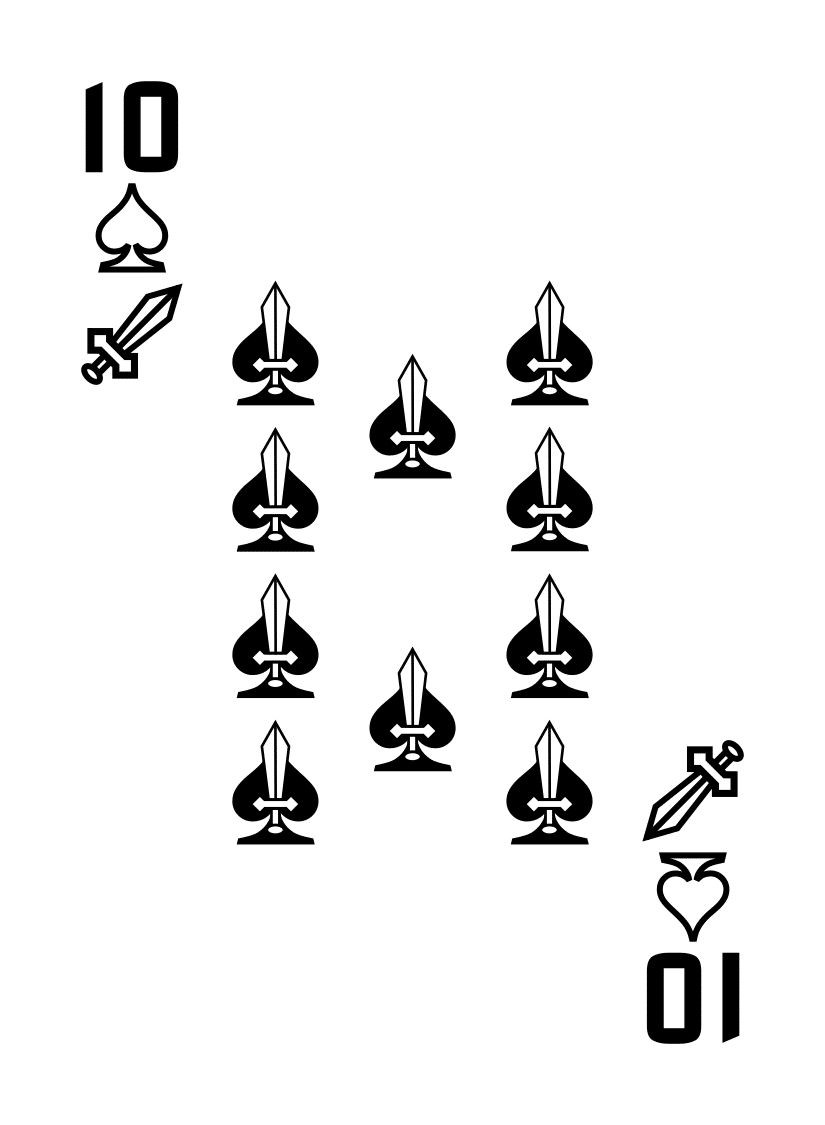
Ten of Swords (Ten of Spades)
Well, that's definitely the bottom. The good news is that it has a floor.
Ten of Swords Upright
The Ten of Swords is the card of painful endings, betrayal and rock bottom. The traditional picture shows a figure lying face down with ten swords in their back, under a black sky, while the first light of dawn glows on the horizon. It looks gruesome, and it's meant to be exaggerated. The booklet's number key calls ten “completion and excess,” the suit at its fullest and the end of the cycle. It is the worst version of the air suit: too many cuts, all at once.
In a reading, the Ten says something has ended painfully: a job, a relationship, a plan or a belief. It may feel like a betrayal, or like the last straw. But look at the horizon. It's the lowest point of the suit, and there's nowhere further to fall. The card says you've survived the worst of it, and things will get better from here, even if the first step is just breathing. Rest, accept help, and let the sun come up in its own time.
Ten of Swords Reversed
Reversed, the booklet reads recovery, relapse and an end resisted. The swords are coming out, and the healing's begun. Or the old pain flares up just when you thought it was done, or you refuse to accept that something's over.
Recovery rarely moves in a straight line. Be patient with the bad days and measure progress in weeks. If you're resisting an ending, consider what you'd gain by letting it be over. It's easier to rise when you've stopped trying to stand on ground that's already gone.
The Icon on the Ten of Swords
Ten black spades with small swords inside, in two columns of four with two more in the middle column. It's the most crowded Swords card, with barely a gap to be found, and the visual weight matches the meaning. Ten is the suit at its fullest, and for the air suit that's a lot of sharp edges.
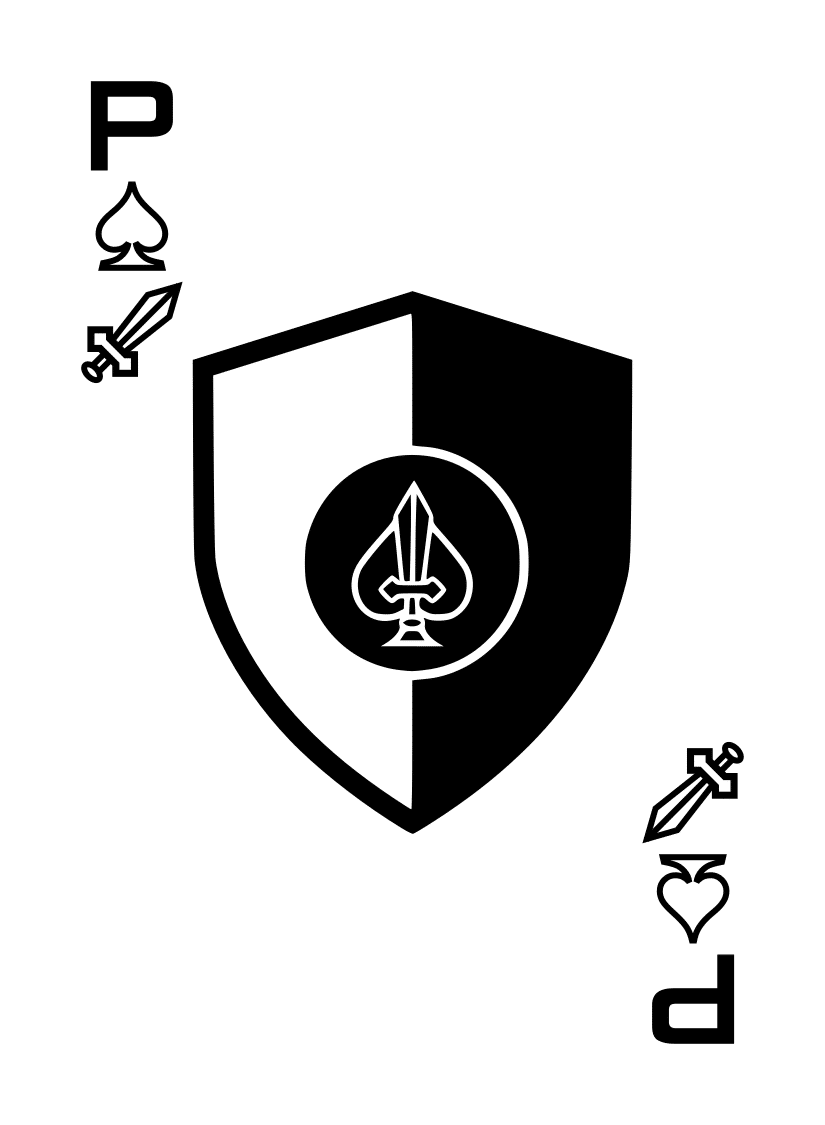
Page of Swords
Eyes everywhere, ears open, and a very busy mind. Possibly too busy.
Page of Swords Upright
The Page of Swords is the student of the air suit: vigilance, curiosity and a restless mind. The booklet describes Pages as “the student,” curiosity, a message arriving and a beginning taken seriously. In the traditional picture, a youth stands on windy ground, sword raised, looking sharply to one side. They notice everything, and they want to know how it all works.
In a reading, the Page of Swords can be a person with a quick, curious mind, or a message and a piece of news arriving. As an attitude, it suggests you ask questions, study a subject, look closely at a problem and stay alert. It's a card for learning, researching and thinking aloud. Keep your wits about you and your sword pointed at the facts. You don't have to be an expert yet. Being observant and willing to ask is enough.
Page of Swords Reversed
Reversed, the booklet gives haste, gossip and careless words. The sharpness has become a habit of cutting remarks, or the curiosity has turned into nosiness. Information is flying around faster than it can be checked, and someone's saying something they'll regret.
Before you speak, pause. Is it true, is it kind, and is it yours to say? Words, once out, don't come back. Use the Page's quickness to check your facts first, and save the clever remark for something that deserves it.
The Icon on the Page of Swords
The Page is a black shield split into one solid half and one outlined half, with a circular emblem at the center holding the spade-and-sword symbol. The half-and-half look suggests a mind still sorting what it knows from what it's guessing. It's the same shield as the other three Pages, and here in black.
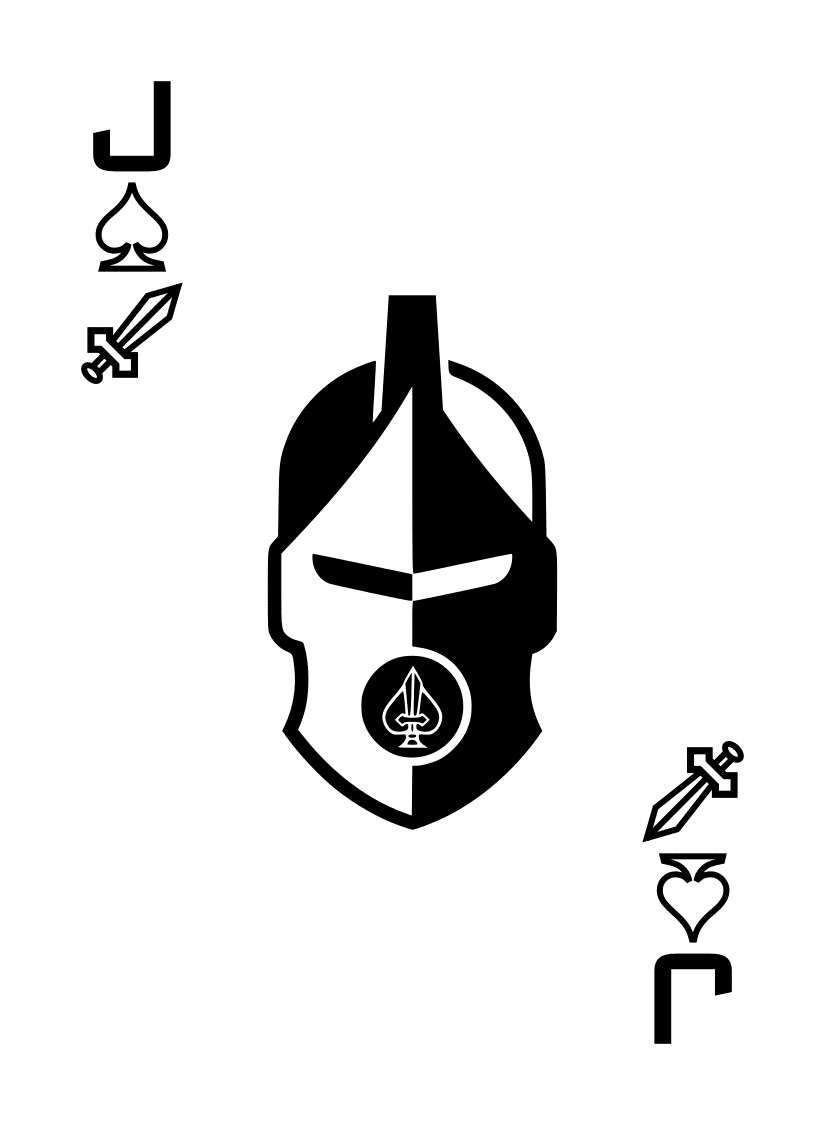
Jack of Swords (Knight of Swords)
He's decided. He's drawn. He's three towns away before you finish the sentence.
Jack of Swords Upright
The Jack of Swords is the Knight of the air suit: drive, directness and fast action. The booklet describes the Jack as “the Knight of tarot,” motion, commitment, the suit pursued at speed, powerful and often unbalanced. The traditional picture shows a rider charging into the wind, sword out, hair streaming. He's the quickest mind in the room and the least likely to wait for a committee.
In a reading, the Jack of Swords brings decisive energy: a bold move, a sharp argument or a rapid change of direction. It can describe a person who says exactly what they think, or invite you to act with the same clarity. The upside is honesty and speed. The downside is that you can cut through things you meant to keep. Aim before you ride. A well-aimed charge changes things. An unaimed one just makes noise.
Jack of Swords Reversed
Reversed, the booklet gives recklessness, impatience and burnout. The charge has gone off in all directions. Fast words, rash decisions and a refusal to listen. After the dust settles, you may find you've burned a bridge you needed, or run yourself ragged.
Slow it down. Wait the extra day before sending the email. Ask one more person's opinion. The reversed Jack isn't telling you to stop. It's asking you to stay on the horse.
The Icon on the Jack of Swords
The Jack is a black knight's helmet with a visor slit and a crest, split half solid and half outlined, with the spade-and-sword emblem on the cheek. It's the same helmet as the other suits' Jacks, which is only right for a rank. In black, it's the most fitting of the four for a rider that cuts.
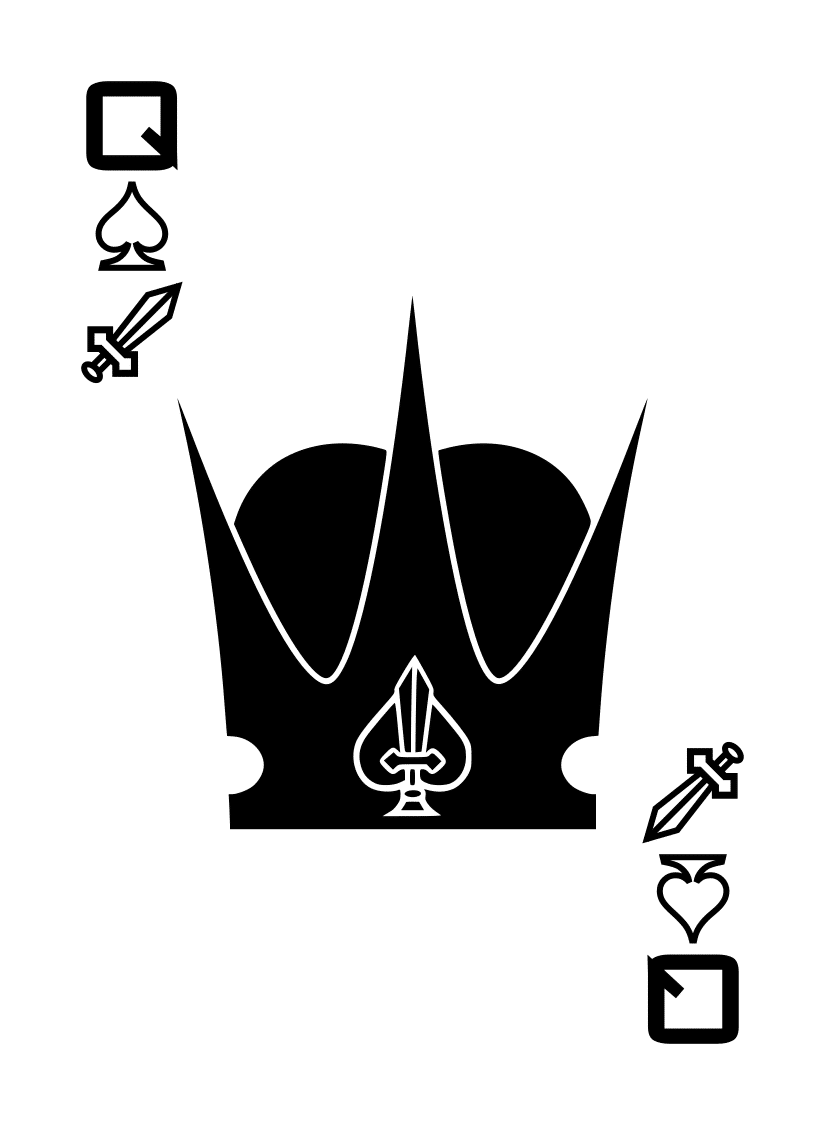
Queen of Swords (Queen of Spades)
She says what she means, and then she means what she said. Both are rare.
Queen of Swords Upright
The Queen of Swords is independence, clear judgement and honesty. The booklet describes the Queens as mastery “held inwardly,” the suit understood, embodied and used with judgement rather than force. In the air suit, that means a keen mind that has learned to be fair. Traditionally she sits on a throne high in the wind, one hand raised, sword upright, looking directly at you.
In a reading, the Queen of Swords describes a clear-thinking, plain-speaking person who has been through some hard times and come out wiser. Or she invites you to be that person: to see the situation without sentiment, to say what needs saying and to keep your own counsel. She values truth over comfort, but she's not cruel. Her honesty is a form of respect. Trust your own judgement, and be willing to say the difficult thing clearly.
Queen of Swords Reversed
Reversed, the booklet gives coldness, bitterness and harsh words. The clarity has hardened. Old hurts have become a wall, and the sharp tongue is aimed at anyone who gets close. It describes someone who uses wit as armor, or your own habit of pre-emptive criticism.
Ask what the sharpness is protecting. A little warmth wouldn't dull your judgement, and it might make people more willing to hear it. The reversed Queen is a gentle request to put the sword down for a moment, and say something kind.
The Icon on the Queen of Swords
The Queen is a black crown with a rounded, domed center between two tall points, small notches at the base and the spade-and-sword emblem set into the band. The same crown design appears across all four suits, and in black this one has a clean, severe look. The dome is a quiet detail: even the sharpest suit can have a soft curve.
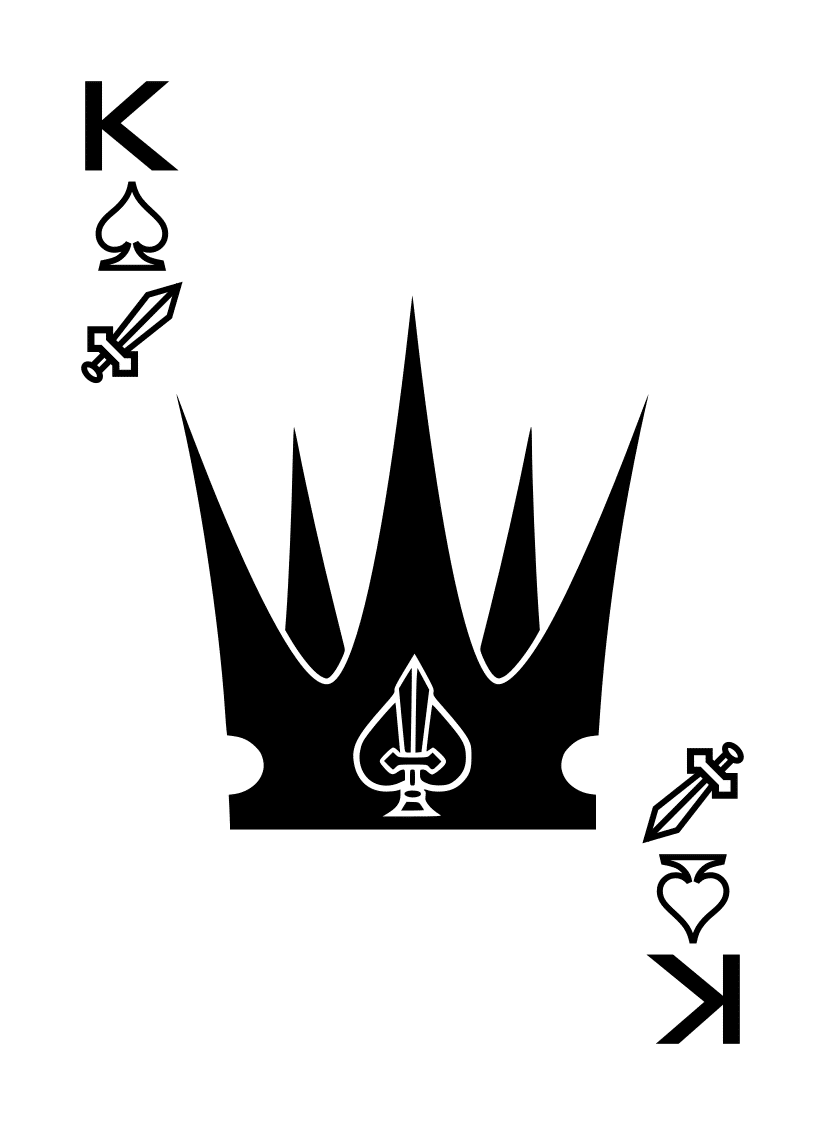
King of Swords (King of Spades)
The law, the logic and the long pause before he speaks. Prepare accordingly.
King of Swords Upright
The King of Swords is authority, ethics and intellectual power. The booklet describes the Kings as mastery “expressed outwardly,” authority in the suit's territory and responsibility for it. In the air suit, that means someone whose command comes from thought: a judge, a lawyer, a scientist, a mentor whose standards are exacting and whose reasoning is sound. Traditionally he sits in full view, sword raised, as the final arbiter.
In a reading, the King of Swords can describe such a person, or invite you to bring that kind of rigor to a problem. Think it through. Check the facts. Apply the same standard to yourself as you do to everyone else. He brings fairness, clear communication and decisions made with the head. He also asks you to remember what the rules are for. Authority works best when it's rooted in ethics, and it needs to be explained, not just announced.
King of Swords Reversed
Reversed, the booklet gives manipulation, tyranny and cruelty. The intellect has been put to the wrong use. Clever arguments built to win, rules applied to others and not to oneself, or a mind so sharp that it cuts everyone nearby. It describes the bully with a good vocabulary.
If you're facing someone like that, document things and keep your calm. If you recognize the tendency in yourself, ask what you'd say if you had nothing to prove. The reversed King of Swords asks you to bring a conscience back into the room.
The Icon on the King of Swords
The King is the tallest, sharpest crown in the black suit: a long central spire, shorter spikes on either side, notches at the base and the spade-and-sword emblem in the center. It's the same crown pattern as the other Kings, and in black it looks particularly formidable. Compare it to the Queen's rounded dome, and you can read the difference between judgement and command.
Where to Go From Here
The Swords are one of four suits in the Minor Arcana. For the rest of the deck, start with the twenty-two big cards of the Major Arcana, then move on to the other three suits:
- Ikonology Major Arcana meanings
- Ikonology Wands (Clubs) meanings
- Ikonology Cups (Hearts) meanings
- Ikonology Pentacles (Diamonds) meanings
Frequently Asked Questions
What does the suit of Swords mean in tarot?
Swords represent air: thought, conflict, truth, communication and decision, and the cost of all of them. They're often the most challenging suit to draw, and also the most clarifying. In the Ikonology deck they're the black Spades.
Are Swords the same as Spades in a regular deck?
Yes. In the Ikonology deck every Swords card doubles as a spade when you play poker, so the same card has a tarot meaning and a poker rank. The Page has no poker equivalent and sits out of the poker deck, along with the Major Arcana.
What is the Jack of Swords?
It's the Knight of Swords. The Ikonology deck calls the Knight a Jack and marks it J, so that the deck works as a standard fifty-two-card poker deck once the Majors and Pages are removed.
Do I have to use reversed meanings?
No. Many readers never use them. Each Ikonology card reads one way up, so you can read reversals when you want them and turn every card upright when you don't.
Where can I buy the deck?
Ikonology is available from The Game Crafter. Get Ikonology here.
Check Out FatMunkey's Books
FatMunkey has a huge selection of sudoku and other puzzle books you are sure to enjoy.
Have look at this post to see all of the books and read about what FatMunkey has published so far.