You can purchase a copy of Ikonology here.
Ikonology is a 78-card tarot deck drawn entirely as icons and cut to standard poker size, so one deck does three jobs. Set aside the Major Arcana and the four Pages and you are holding a complete four-color poker deck. Shuffle all 78 and you can play an original tarot solitaire designed for it. Or keep all 78 together and read it as an oracle, with a 40-page booklet to get you started.
$53.99 – includes the 78-card deck, the 40-page booklet and a custom tuck box. Coming soon to The Game Crafter.
Table of Contents
What Is Ikonology?
We live surrounded by icons. A tiny picture on a button tells you what it does before you have read a word, and once you know what an icon means, you never have to think about it again. Traditional tarot works the opposite way. A Rider-Waite-Smith or Aquarian card is dense with symbols, and that density is the point: you sit with a card and build your own meaning from it.
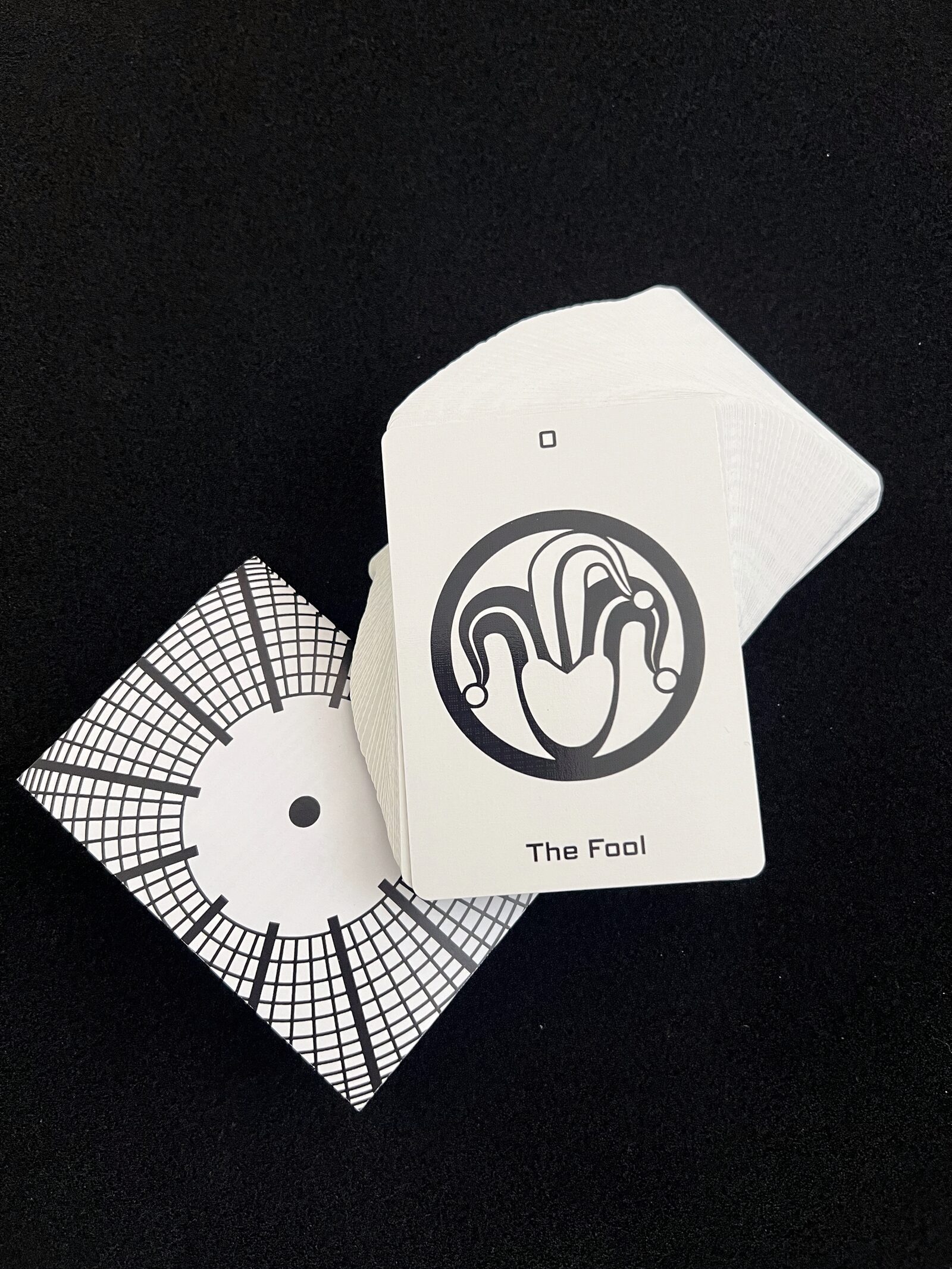
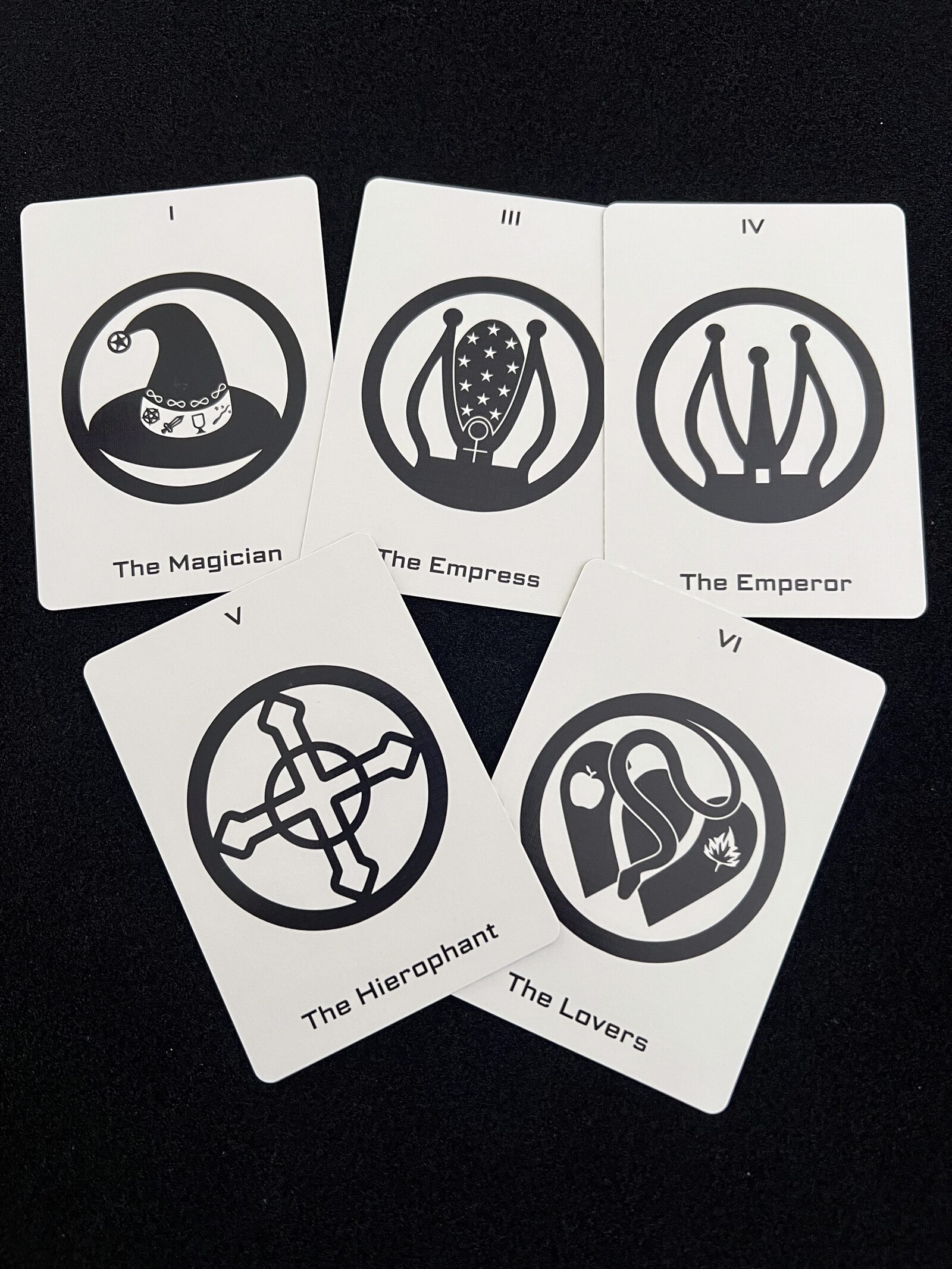
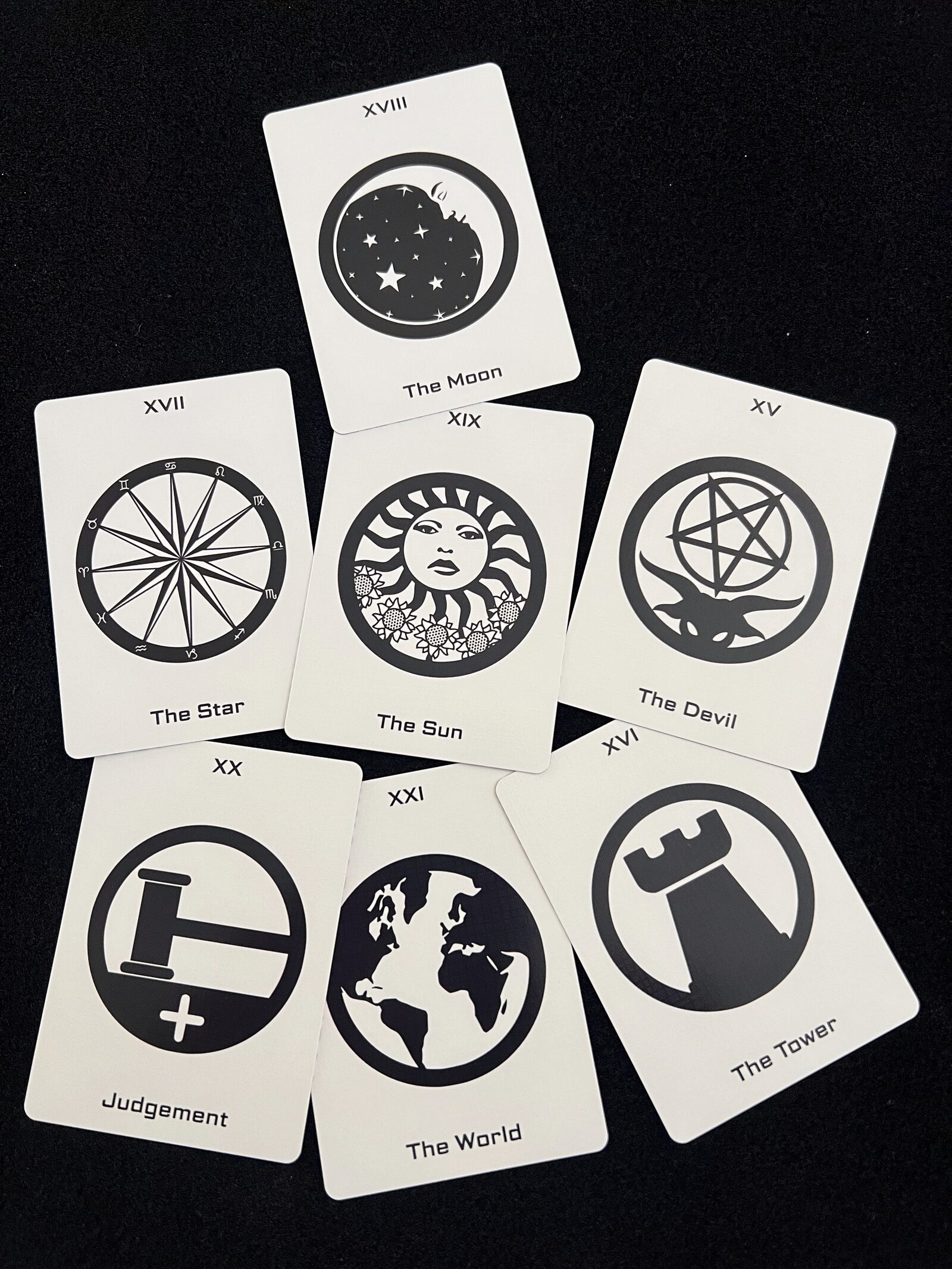
Ikonology asks a different question: what does tarot look like translated into the most modern visual language we have? Each Major Arcana card is a single bold icon inside a circle. The Fool is a jester’s cap, Justice is a sword and a pair of scales, Death is a skull, Judgement is a gavel. Every card was drawn as vector artwork and printed in flat color, with no gradients, no shading and no photographic elements.
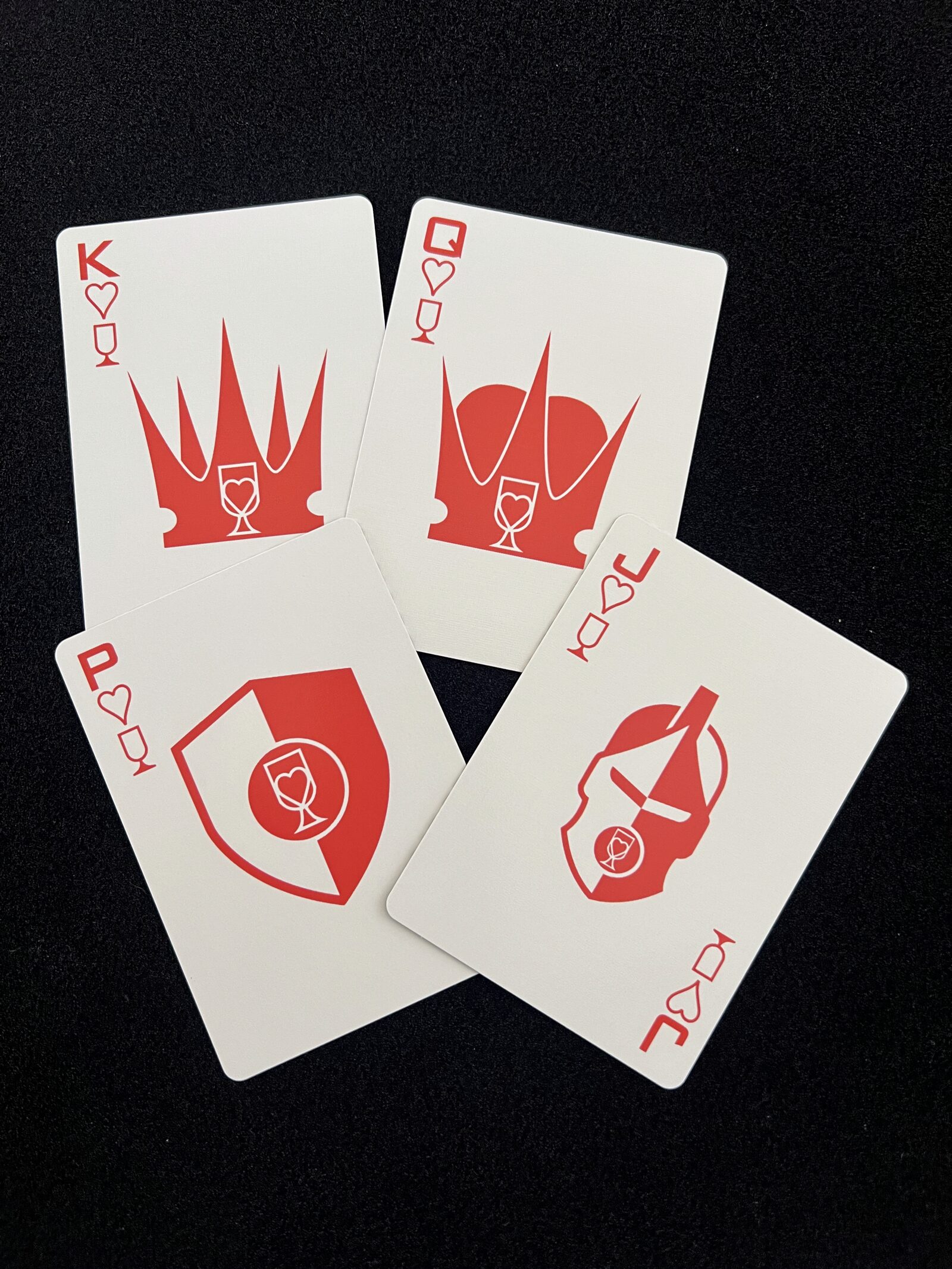
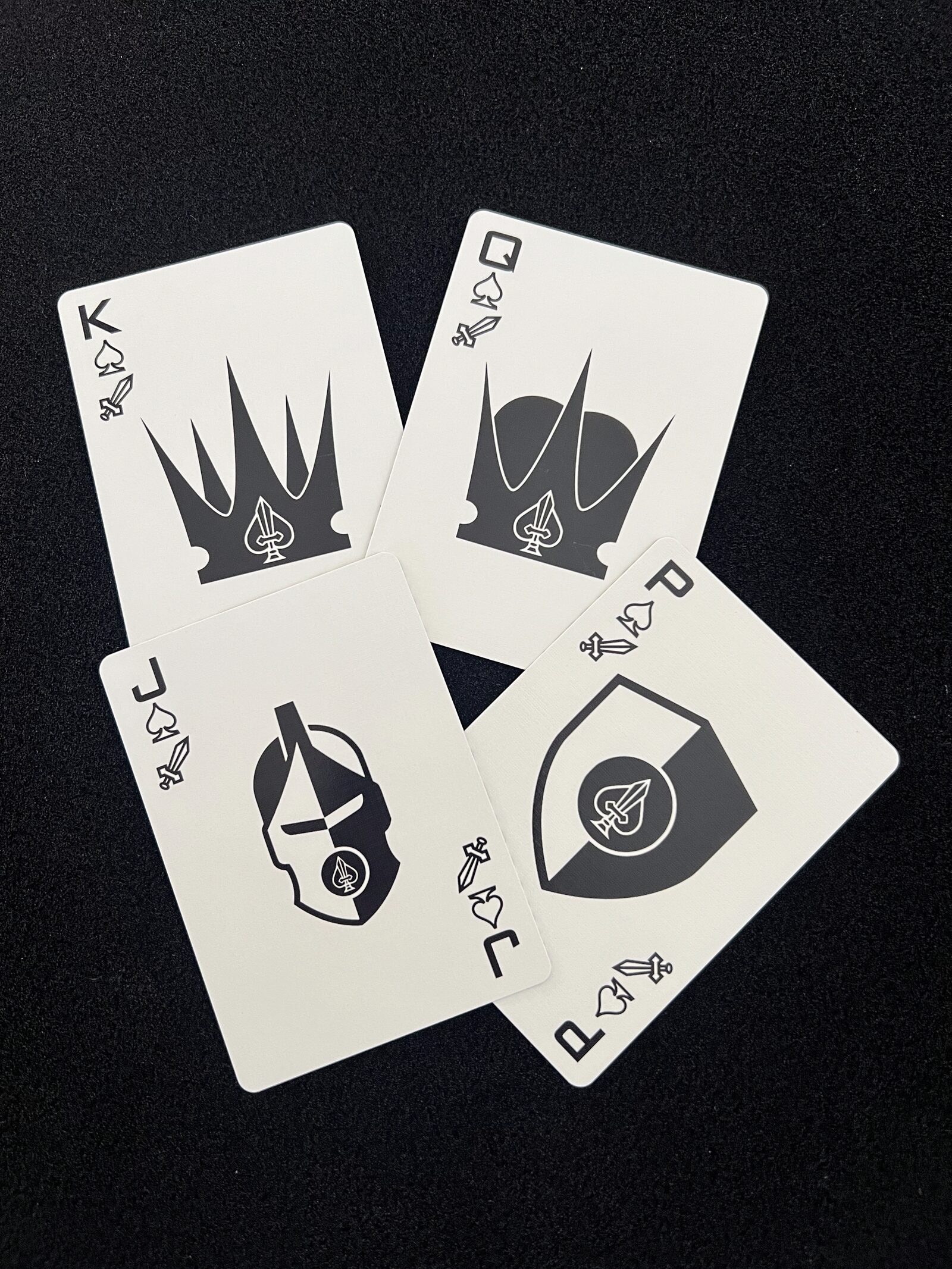
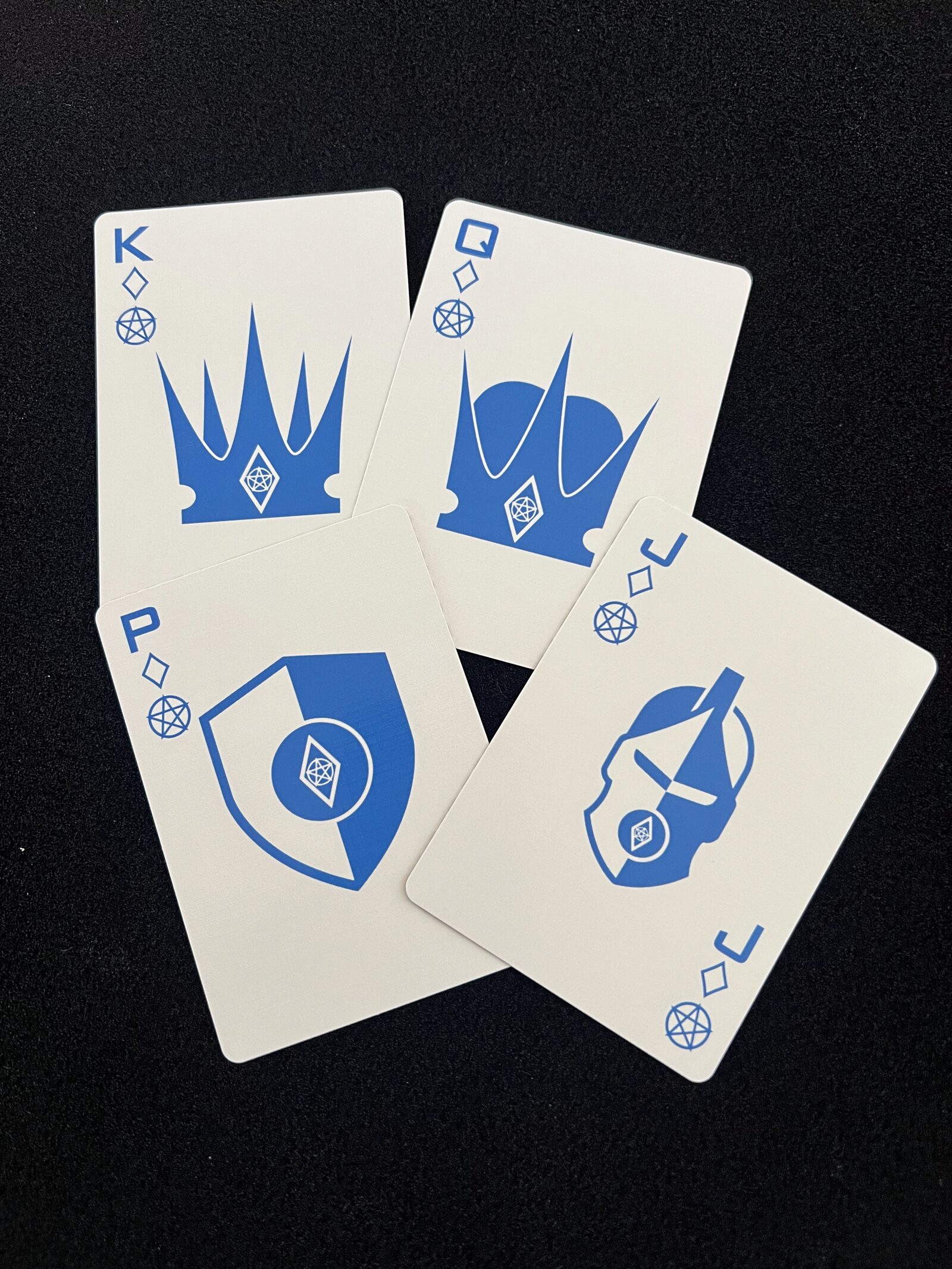
The Minor Arcana are built like playing cards, with large suit pips and a rank in the corner. The court cards get their own icons: crowns for the Kings and Queens, a shield for the Page and a helmet for the Jack, which is the tarot Knight.
The name comes from combining icon with -ology, the study of something, then swapping the C for a K so it stands apart from the thousands of other decks out there. If you want the whole story of how the deck came about, read
IKONOLOGY’s 3 Way Design – A Modern Tarot – Oracle, Solitaire, and Poker
Built at Poker Size, on Purpose
Ikonology is cut to standard poker size, 2.5 × 3.5 inches, not the 2.75 × 4.75 inches of most tarot decks. That choice is what makes the three uses practical instead of just clever.
- It shuffles like a normal deck. Tarot-sized cards are awkward to riffle, which is why most readers overhand-shuffle or spread the cards on a table. At poker size, Ikonology shuffles the way any deck does.
- Poker only works at poker size. Tarot-sized cards do not fit a hand or standard poker equipment.
- The solitaire layout fits an ordinary table. Laid out at poker size, the full game takes roughly 20 × 25 inches. At tarot size it would need about 21 × 34 inches, more than 40 percent more table.
- It works with standard accessories. Off-the-shelf tuck boxes, sleeves, cases and card clips fit.
Application 1: A Four-Color Poker Deck
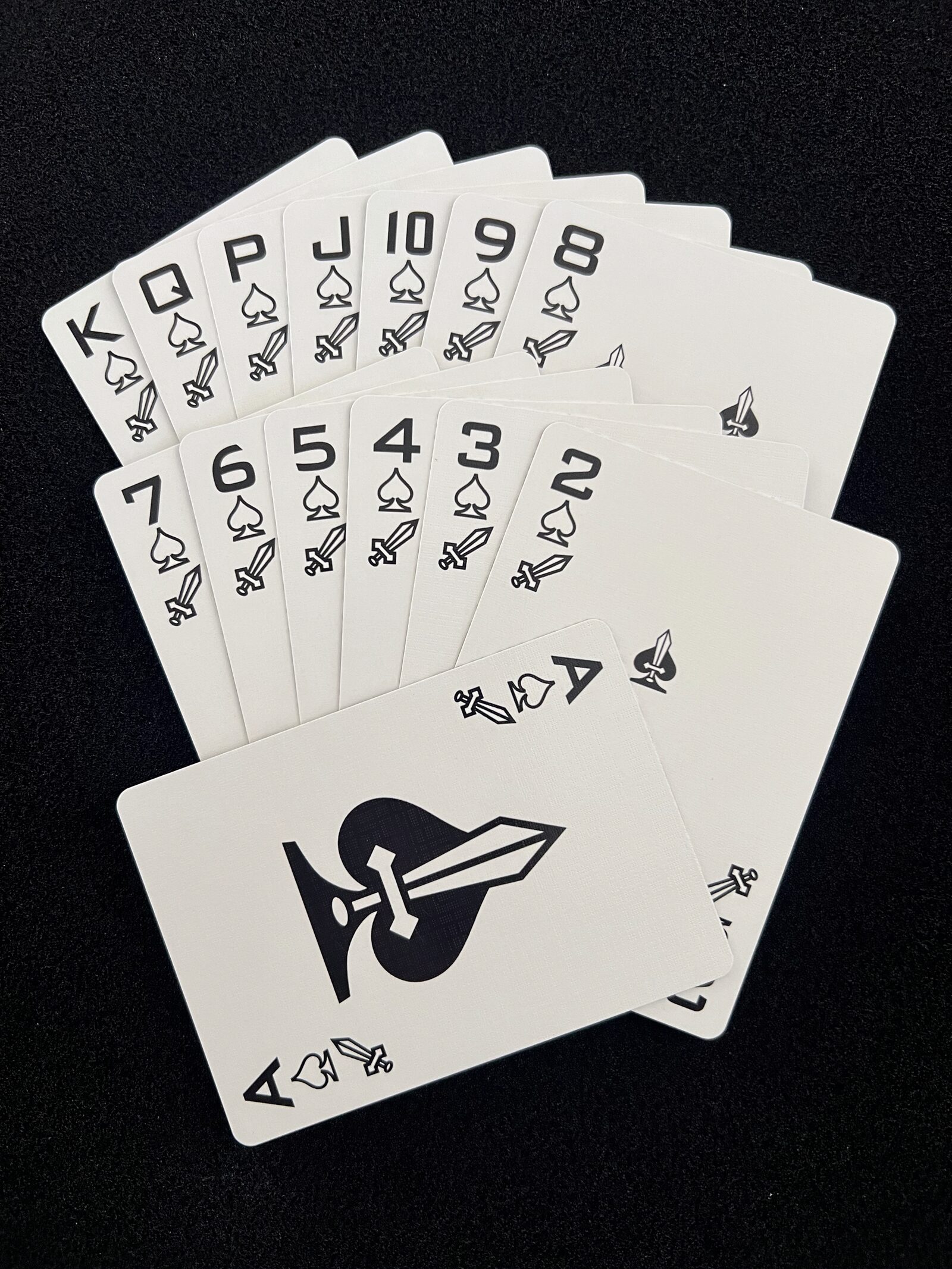
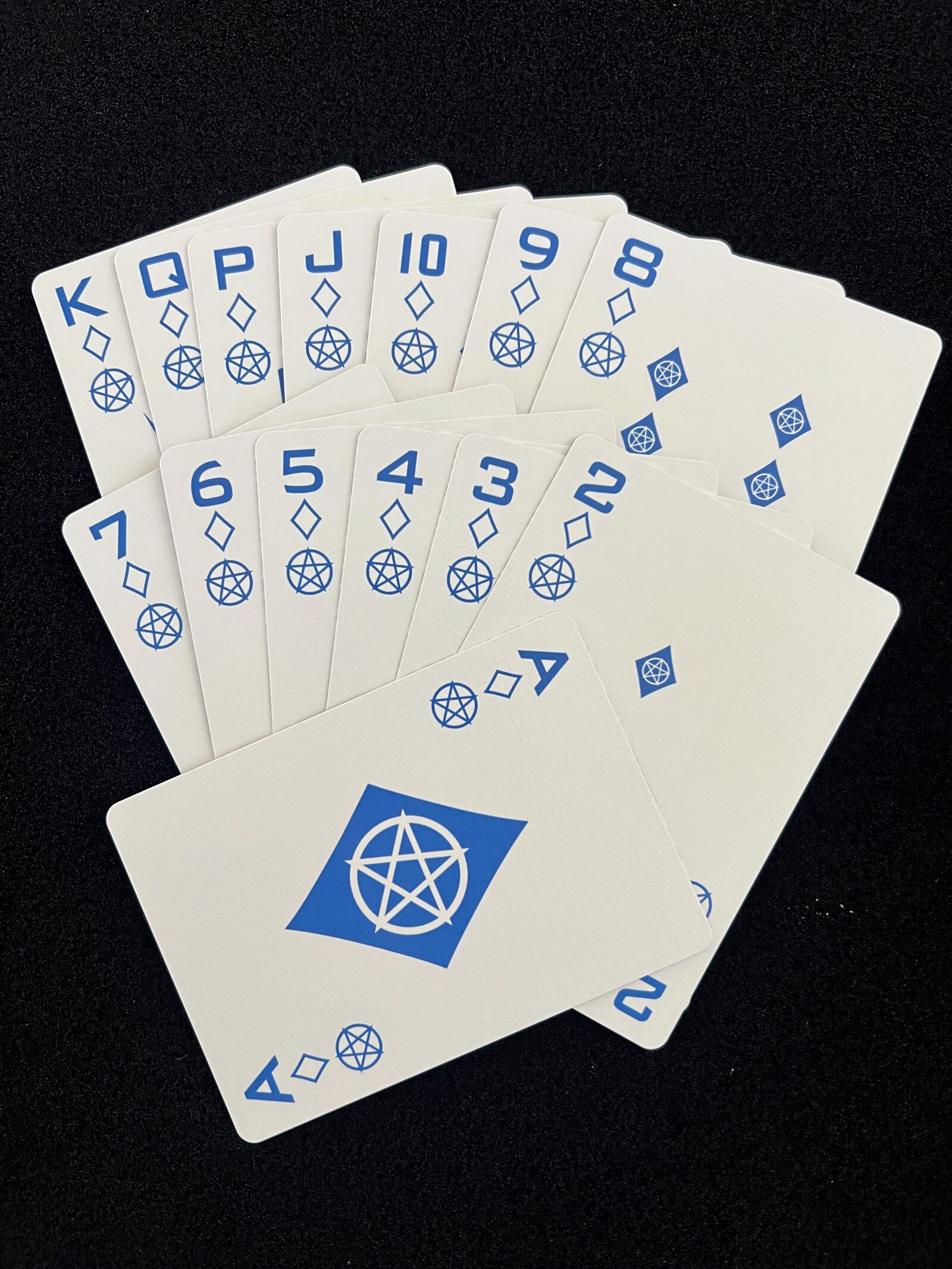
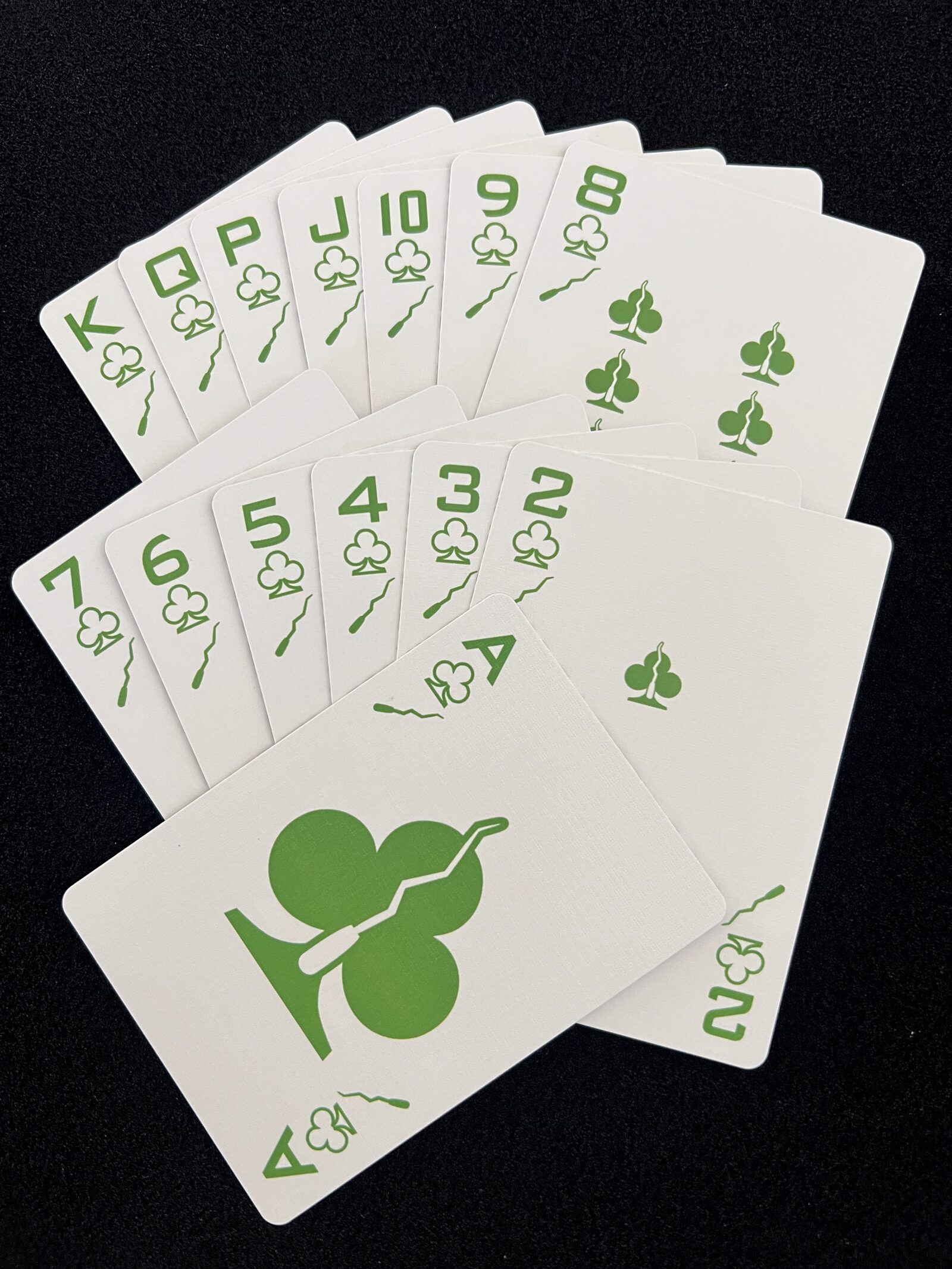
Take the 22 Major Arcana out of the deck, then remove the four Pages (the P of Wands, Cups, Swords and Pentacles). What remains is a complete 52-card poker deck. The tarot Knights are your Jacks, and they are marked J on the card because that is what they do in play: a Knight of Cups is a Jack of Hearts.
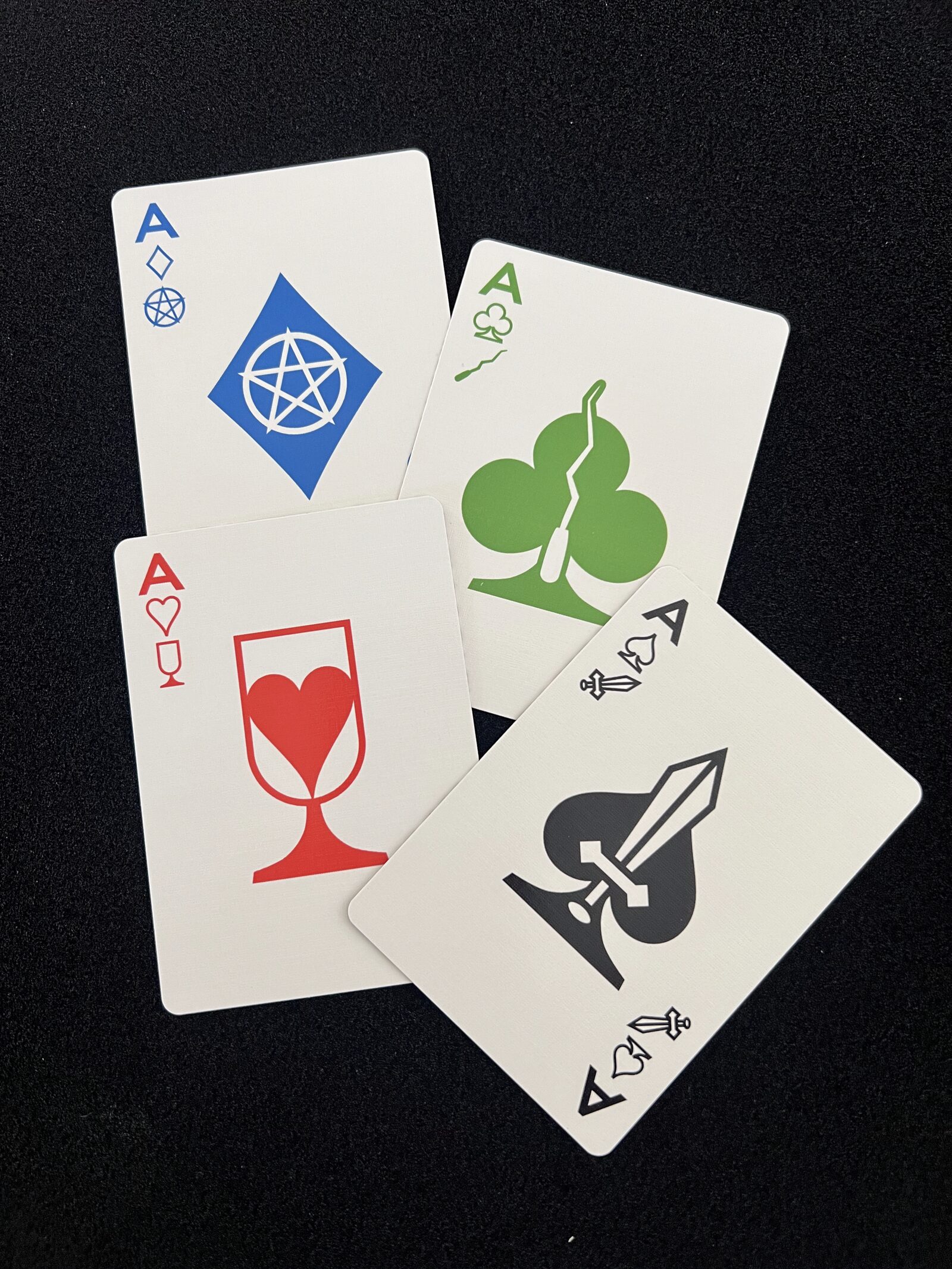
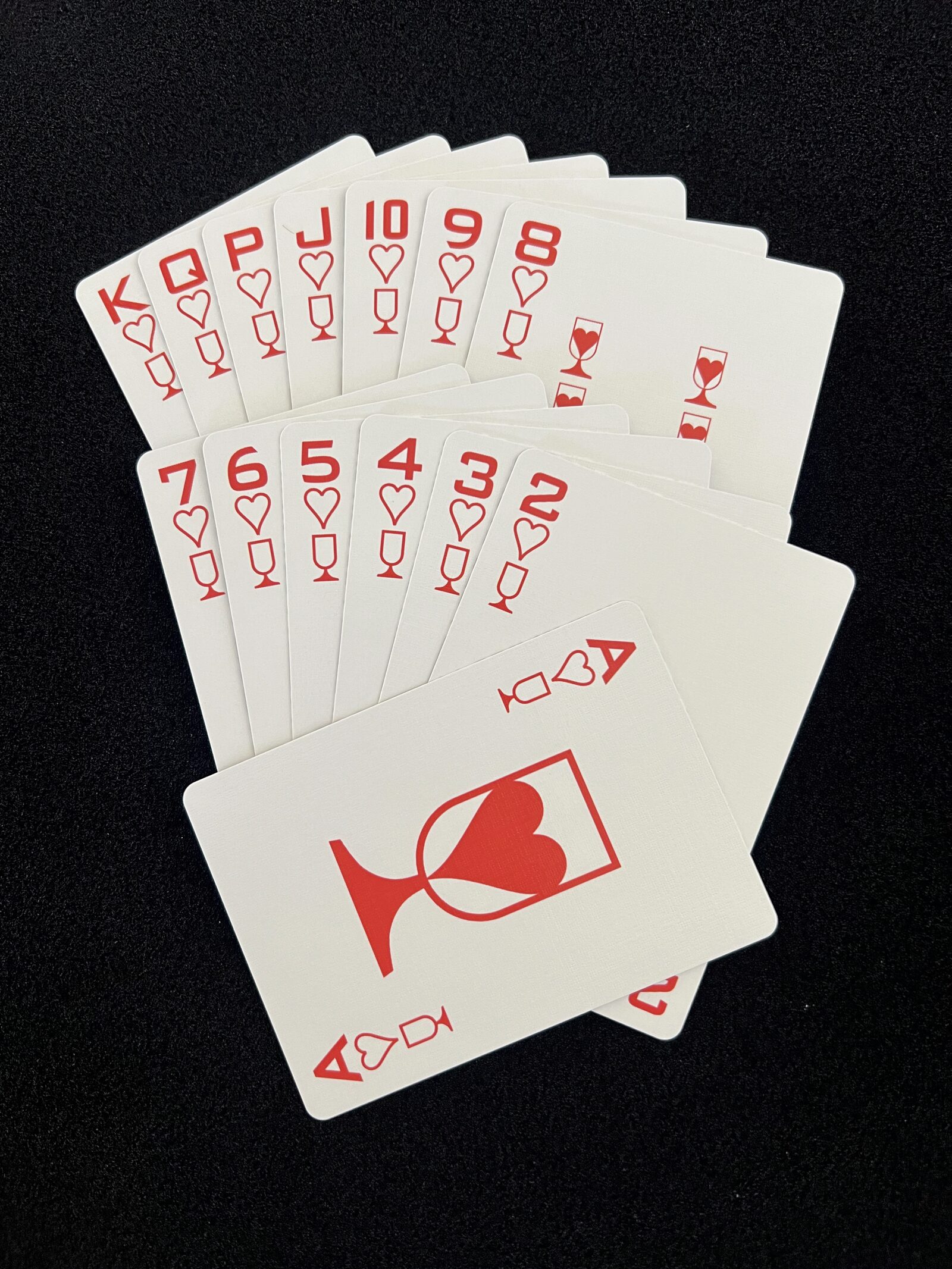
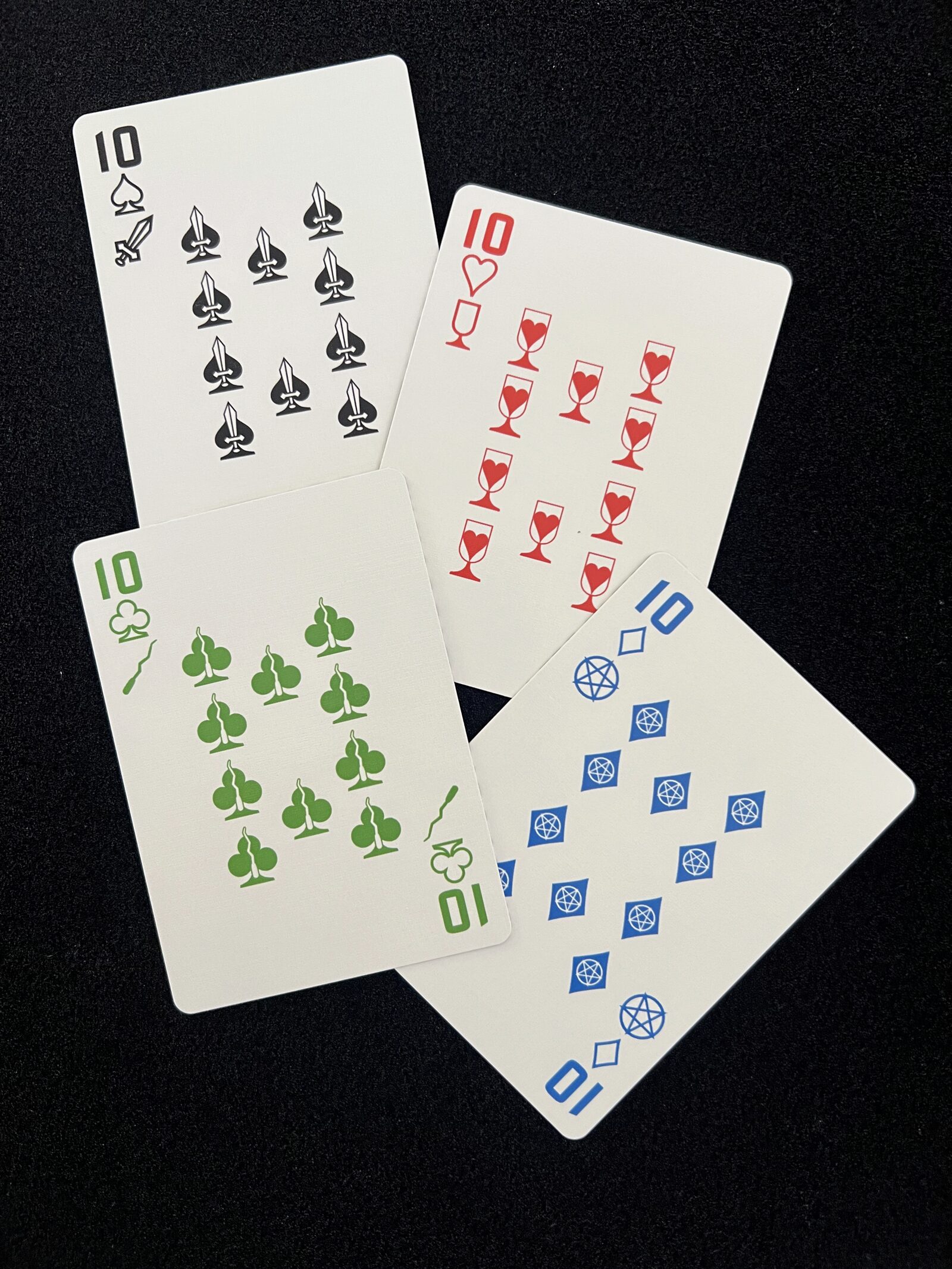
Every Minor Arcana card carries three things in its corner: the rank, the poker suit and the tarot suit. The poker suits are four-color, which is standard in online play and increasingly common at live tables, so you tell suits apart at a glance instead of squinting at a pip:
- Clubs (Wands) – green
- Hearts (Cups) – red
- Spades (Swords) – black
- Diamonds (Pentacles) – blue
The four colors were chosen so that no two sit at the same visual weight, a difference you can see across a lit table and not only under a lamp. Any game that uses a standard 52-card deck works. If your game needs jokers, two Major Arcana make serviceable ones, and the Fool is the traditional choice.
Application 2: Ikonology Solitaire
There is no traditional solitaire for a tarot pack, so I built one for this deck. Ikonology Solitaire uses all 78 cards and plays like Klondike, with the Major Arcana as a fifth suit.
The Layout
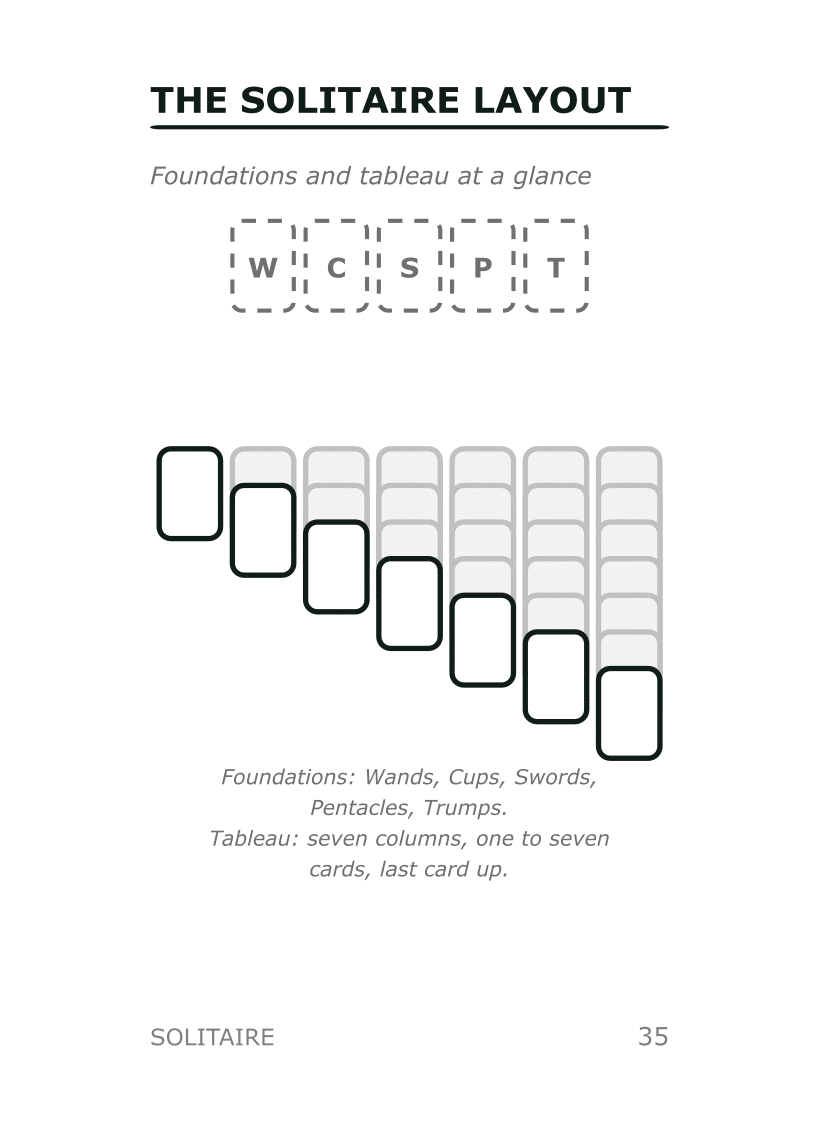
Shuffle all 78 cards. Deal seven columns of 1, 2, 3, 4, 5, 6 and 7 cards, twenty-eight in all, and turn the last card of each column face up. The remaining fifty cards are the stock. Leave room above the columns for five foundations: one for each suit and one for the trumps (the Major Arcana).
The Foundations
A suit foundation begins with its Ace and builds up: Ace, Two through Ten, Page, Jack, Queen, King. The trump foundation begins with the Fool and builds up 0, I, II and on to XXI. Because the tarot Knight is a Jack in this deck, the courts run Page, Jack, Queen, King rather than the traditional Page, Knight, Queen, King.
The Tableau
Build down in any suit but the same one. A Six of Cups takes any Five except another Cup. Move one card, or a whole run of correctly built cards, together. An empty column may be filled by any card.
Trumps Are Wild in the Tableau
A Major Arcanum may be laid on any card, and any card may be laid on a Major. They are wild in the tableau, and only in the tableau. On the trump foundation they must run in strict order.
The Stock
Turn three cards at a time. The top card of the waste is in play. You get three passes through the stock, and then it is closed.
Winning
Complete all five foundations. It will not happen often. The layout is also a full 78-card spread, if you care to read it.
Make It Easier or Harder
If the game feels too easy, restrict the wild Majors so they can only be played into an empty column. If it feels too hard, allow a fourth pass through the stock. Treat the wild-Major rule as the difficulty dial and set it wherever the game is fun for you.
Application 3: Using Ikonology as a Tarot Oracle
The booklet in the box gives you the keywords for every card and two spreads. This is the fuller guide it points to. Start here if you have never read tarot, and skim it if you have.
Before You Begin
Shuffle in whatever way settles your mind. There is no correct method. Then frame a question that is open rather than closed. “What should I understand about this?” will take you further than “Will it work out?”
Upright and Reversed
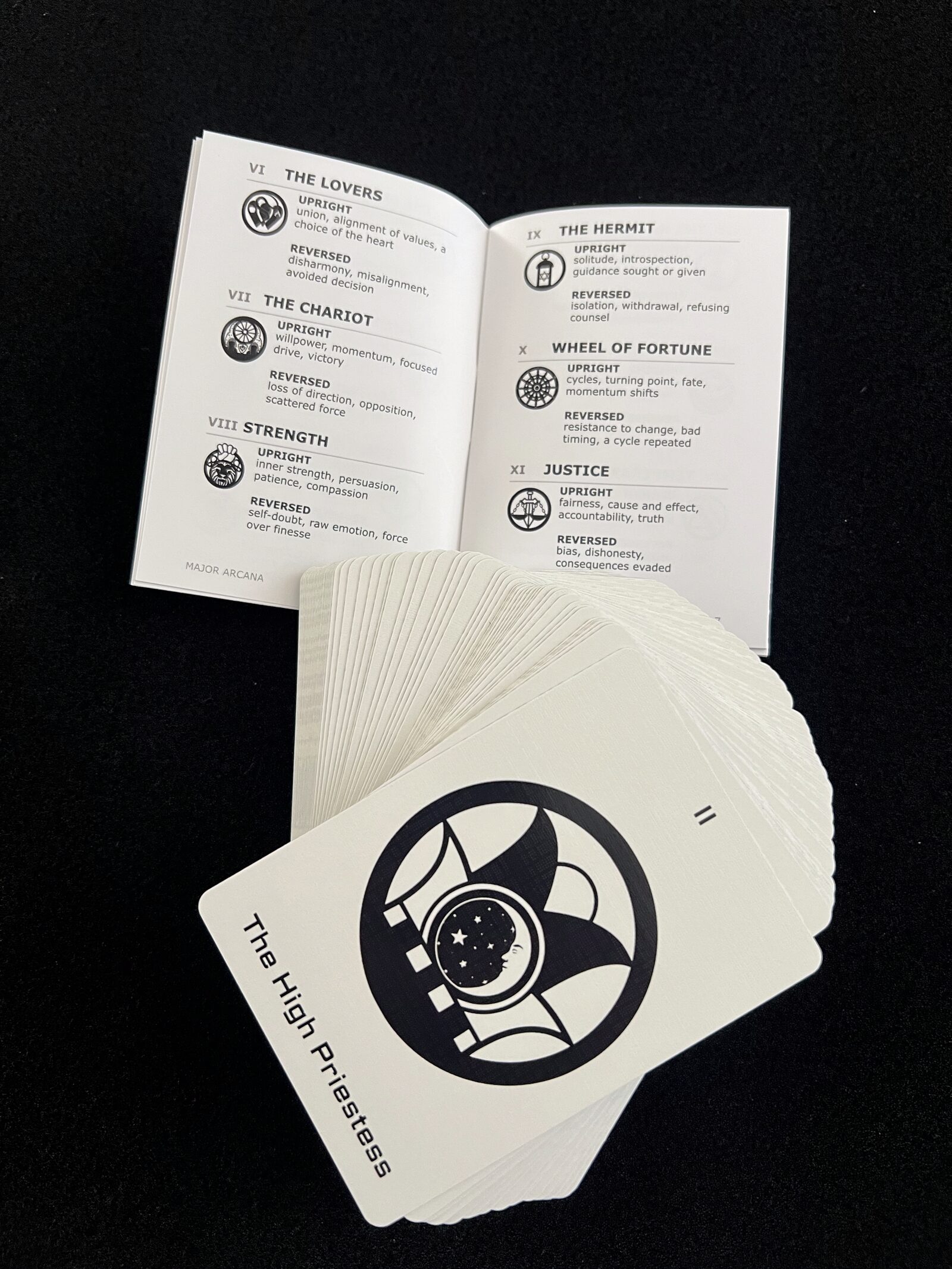
A card that reads the right way up is upright: on the Major Arcana the Roman numeral is at the top and the name at the bottom, and on the Minor Arcana the corner index sits at the top left. A reversed card is not the opposite of its upright meaning. More often it is the same energy blocked, delayed, turned inward or overdone. If you would rather not read reversals at all, turn every card the right way up and read it upright.
The Major Arcana
The 22 trumps, from the Fool (0) to the World (XXI), carry the large themes of a reading. When one appears, the matter is bigger than the day-to-day. In the booklet each card has an upright and a reversed keyword set. The Fool, for example, is new beginnings, innocence, spontaneity and a leap of faith upright, and recklessness, naivety and ignoring the risk when reversed.
The Four Suits
Each suit governs a territory. Before you read a single card, its suit has already told you what kind of matter you are looking at.
- Wands / Clubs (Fire): drive, will and creation. Work you choose rather than work you are given. Ambition, enterprise, the spark before the thing exists.
- Cups / Hearts (Water): feeling, relationship and intuition. Love in all its forms, and the inner weather that love produces.
- Swords / Spades (Air): thought, conflict and truth. The mind at work, and the trouble the mind makes. Communication, decision and the cost of both.
- Pentacles / Diamonds (Earth): body, money and craft. What can be counted, built, spent or inherited. Health, home and the long slow work.
The Numbers
Each number carries its own weight, whatever the suit. Learn these ten and you have a reading for any of the forty pip cards before you look it up.
- Ace: the seed. Pure potential of the suit, offered but not yet taken up.
- Two: duality. Choice, partnership, balance held between two things.
- Three: first growth. The idea becomes real and others are involved.
- Four: structure. Stability, and the stagnation that stability risks.
- Five: disruption. Loss, conflict, the necessary breaking of the four.
- Six: recovery. Harmony restored, generosity, movement onward.
- Seven: assessment. Reflection, challenge, the value of what you hold.
- Eight: movement. Mastery through repetition, or swift change forced on you.
- Nine: near completion. The fruit of the suit, for good or ill, felt alone.
- Ten: completion and excess. The suit at its fullest, and the end of the cycle.
The Court Cards
Courts may be people, or they may be the manner in which you are acting. Read them as either, and let the surrounding cards decide.
- Page (P): the student. Curiosity, a message arriving, a beginning taken seriously. Not yet skilled, and unafraid of that.
- Jack (J): the Knight of tarot. Motion, commitment, the suit pursued at speed. Powerful and often unbalanced.
- Queen (Q): mastery held inwardly. The suit understood, embodied and used with judgment rather than force.
- King (K): mastery expressed outwardly. Authority in the suit’s territory, and responsibility for it.
The Three-Card Spread
The simplest useful spread, and often the only one you need. Draw three cards and lay them left to right:
- Past: what brought this about
- Present: where the matter stands
- Future: where it tends if nothing changes
The same three cards can be read in other ways. Try Situation / Action / Outcome, or Mind / Body / Spirit, or What helps / What hinders / What is hidden.
A Sample Reading
Say the question is “What should I understand about starting this new project?” You draw the Three of Cups, the Fool and the Magician reversed.
- Past, Three of Cups (upright): friendship, community, shared joy. The idea grew out of people who believe in you.
- Present, the Fool (upright): new beginnings and a leap of faith. You are standing at the edge, and the invitation is to step.
- Future, the Magician (reversed): poor planning and untapped talent. If nothing changes, the risk is not a lack of ability but a lack of a plan.
Read together, the cards say the support is already there and the leap is worth taking, as long as the talent gets a plan to work with. That is the whole method: suit and number tell you what kind of matter it is, the position tells you where it sits in time, and your own question decides what it means for you.
The Celtic Cross
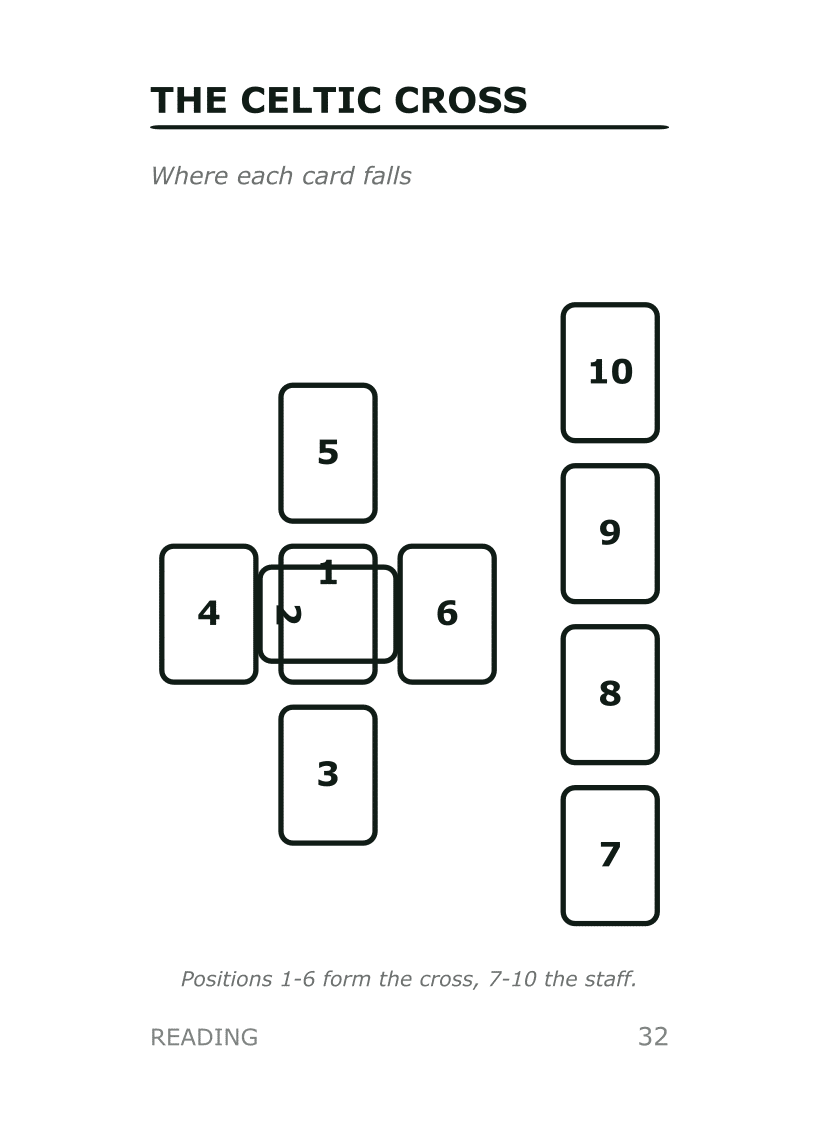
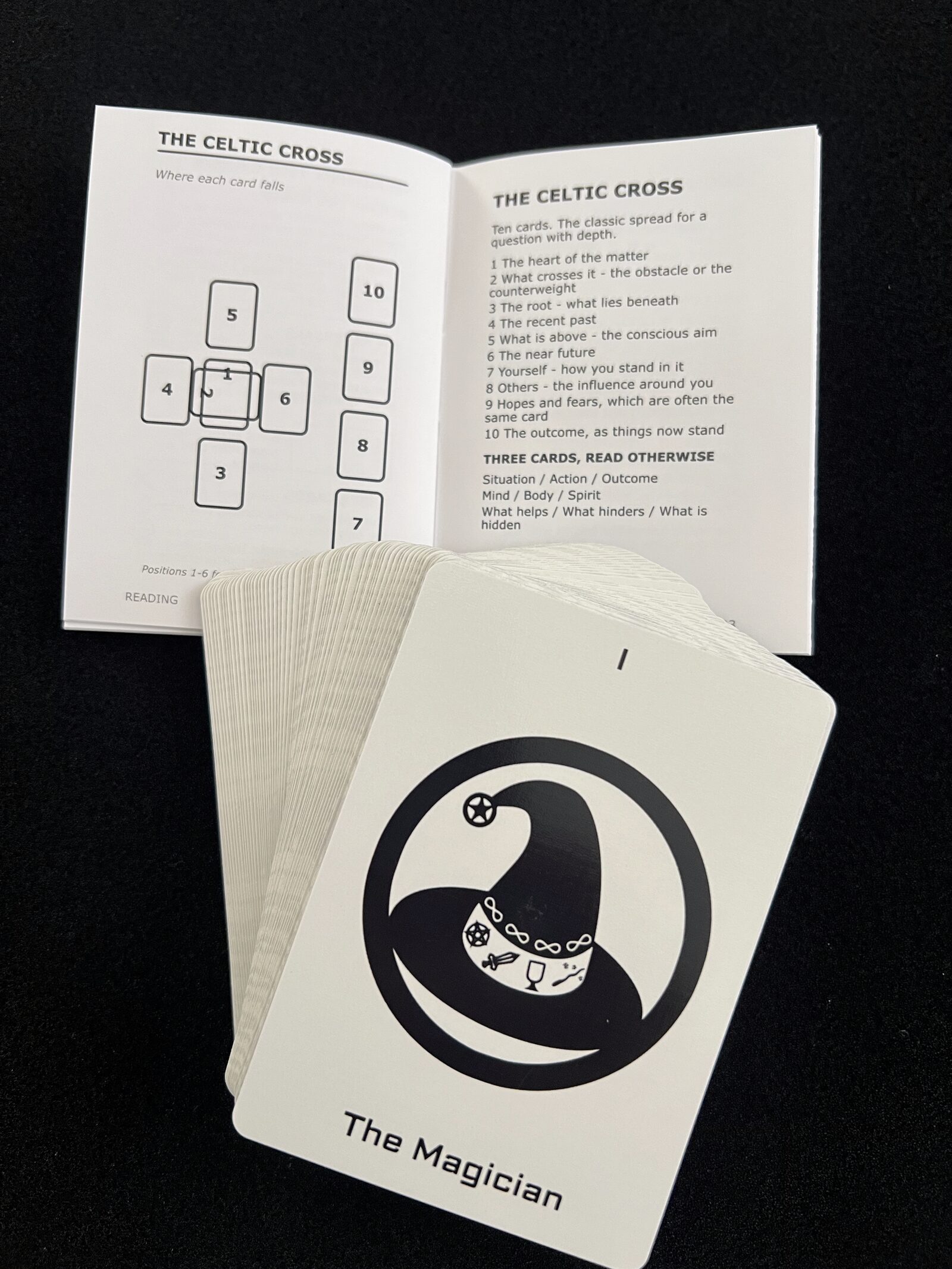
Ten cards, the classic spread for a question with depth. Positions 1 to 6 form the cross and positions 7 to 10 form the staff.
- The heart of the matter
- What crosses it: the obstacle or the counterweight
- The root: what lies beneath
- The recent past
- What is above: the conscious aim
- The near future
- Yourself: how you stand in it
- Others: the influence around you
- Hopes and fears, which are often the same card
- The outcome, as things now stand
Why the Card Back Is a Clock
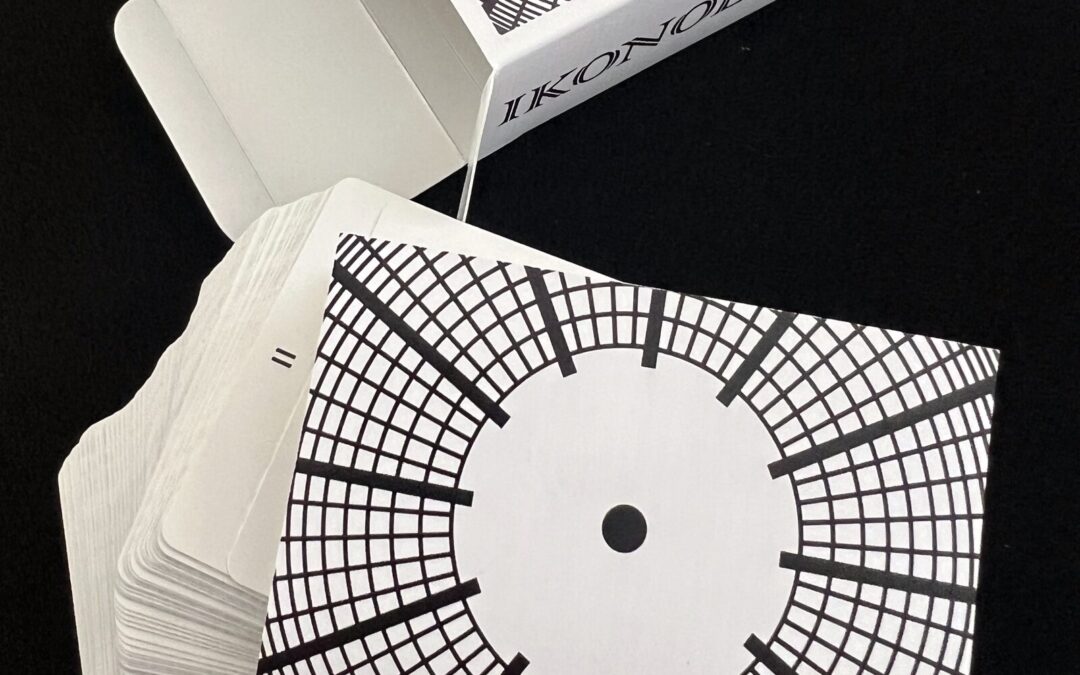
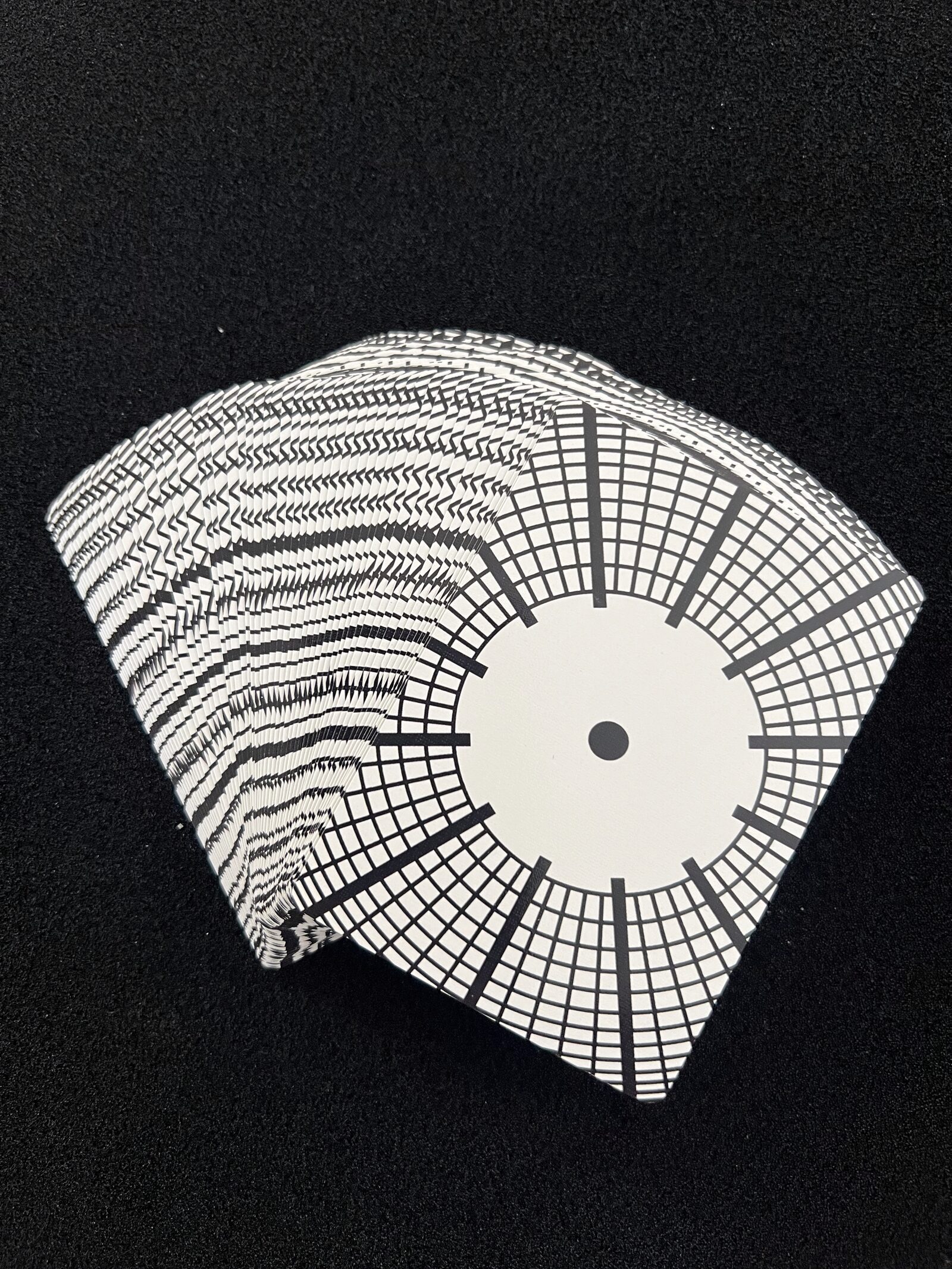
The back of every card is built on a clock face: sixty lines radiating from the center, with twelve drawn heavier to mark the hours. Tarot has always doubled as an oracle, and an oracle is about time, a question asked now and an answer that means something because of when it is drawn. The card back says so before you turn a single card over.
Full Card Meanings
The booklet gives you keywords for every card, upright and reversed. The full meanings for all 78 cards go well beyond those keywords:
- Major Arcana meanings
- Wands / Clubs meanings
- Cups / Hearts meanings
- Swords / Spades meanings
- Pentacles / Diamonds meanings
What’s in the Box
- 78 cards: 22 Major Arcana and 56 Minor Arcana (Ace through Ten, Page, Jack, Queen and King in each of four suits)
- Standard poker size, 2.5 × 3.5 inches
- A 40-page companion booklet covering the Major Arcana, the Minor Arcana, readings and spreads, solitaire and the 52-card poker deck
- A custom tuck box
- Vector artwork in flat color, four-color suits and a clock-face card back
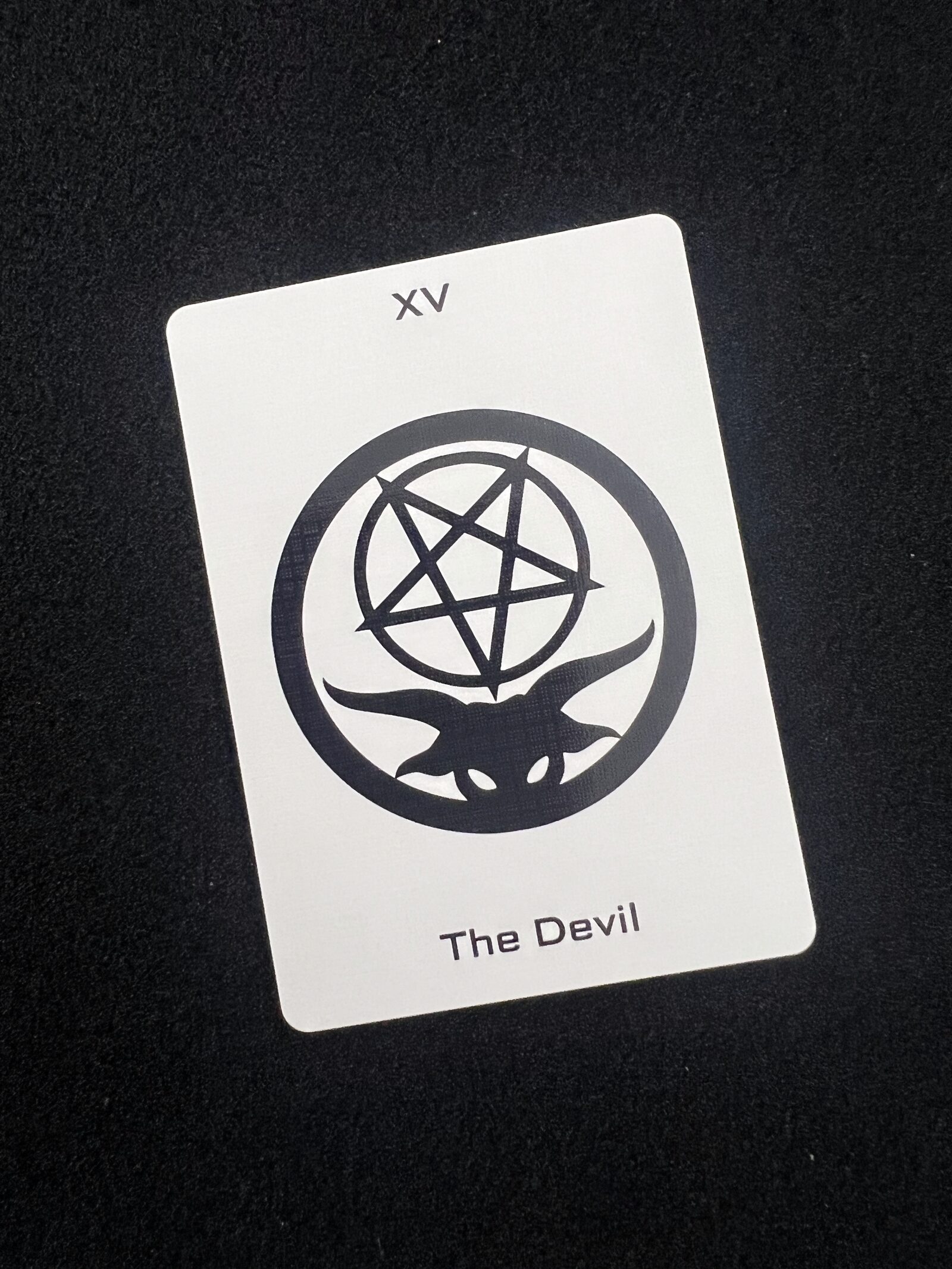
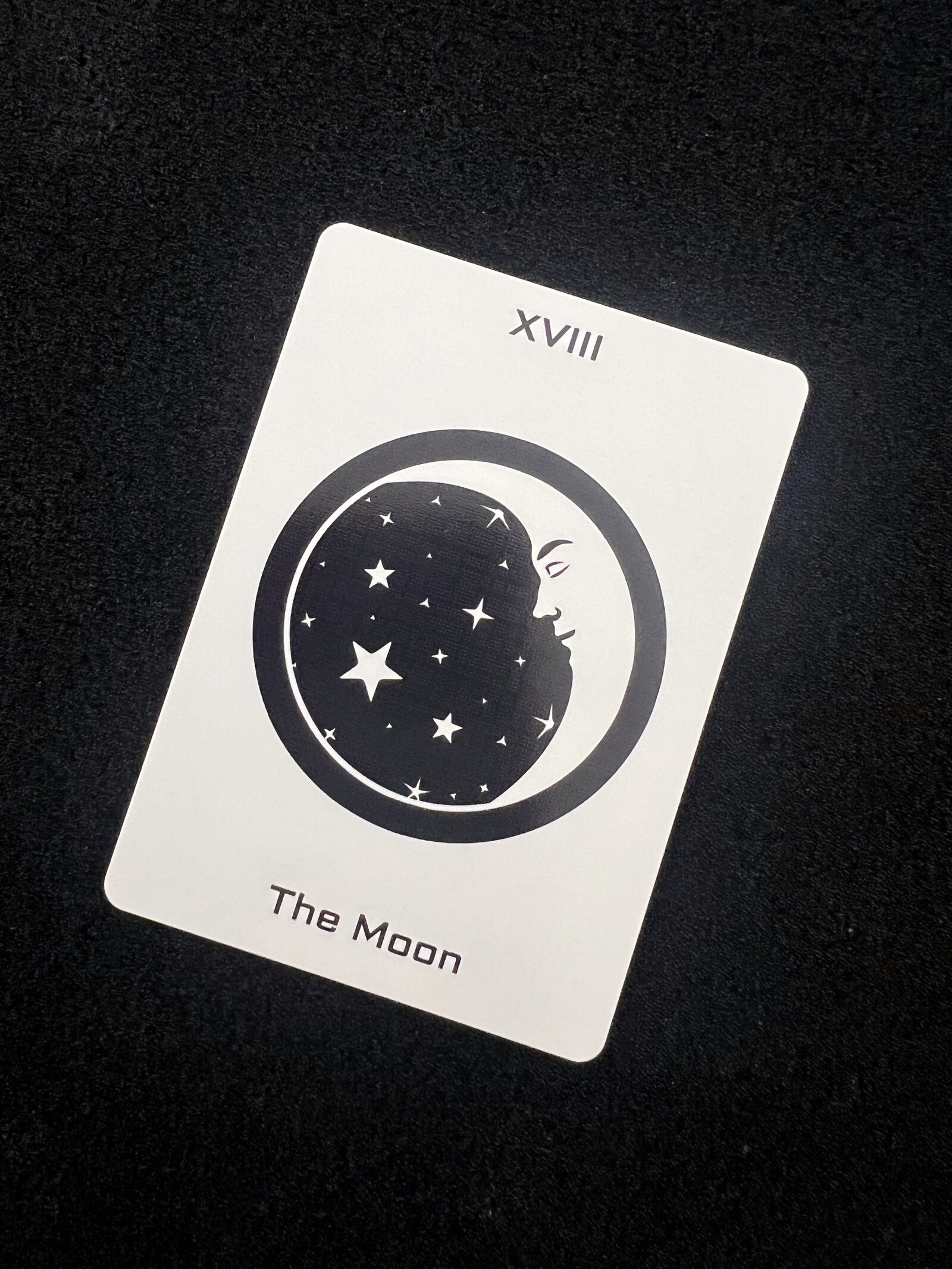
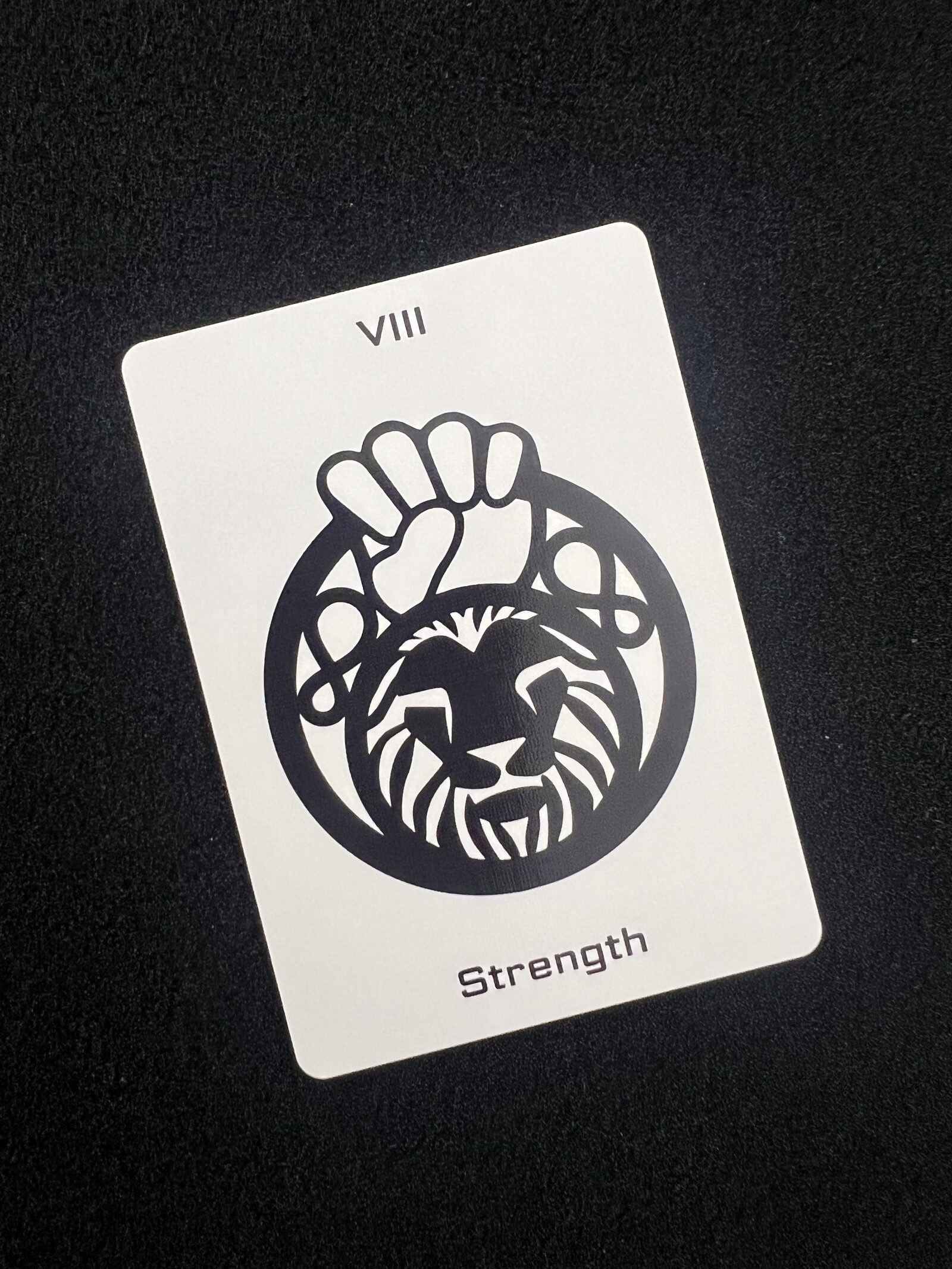
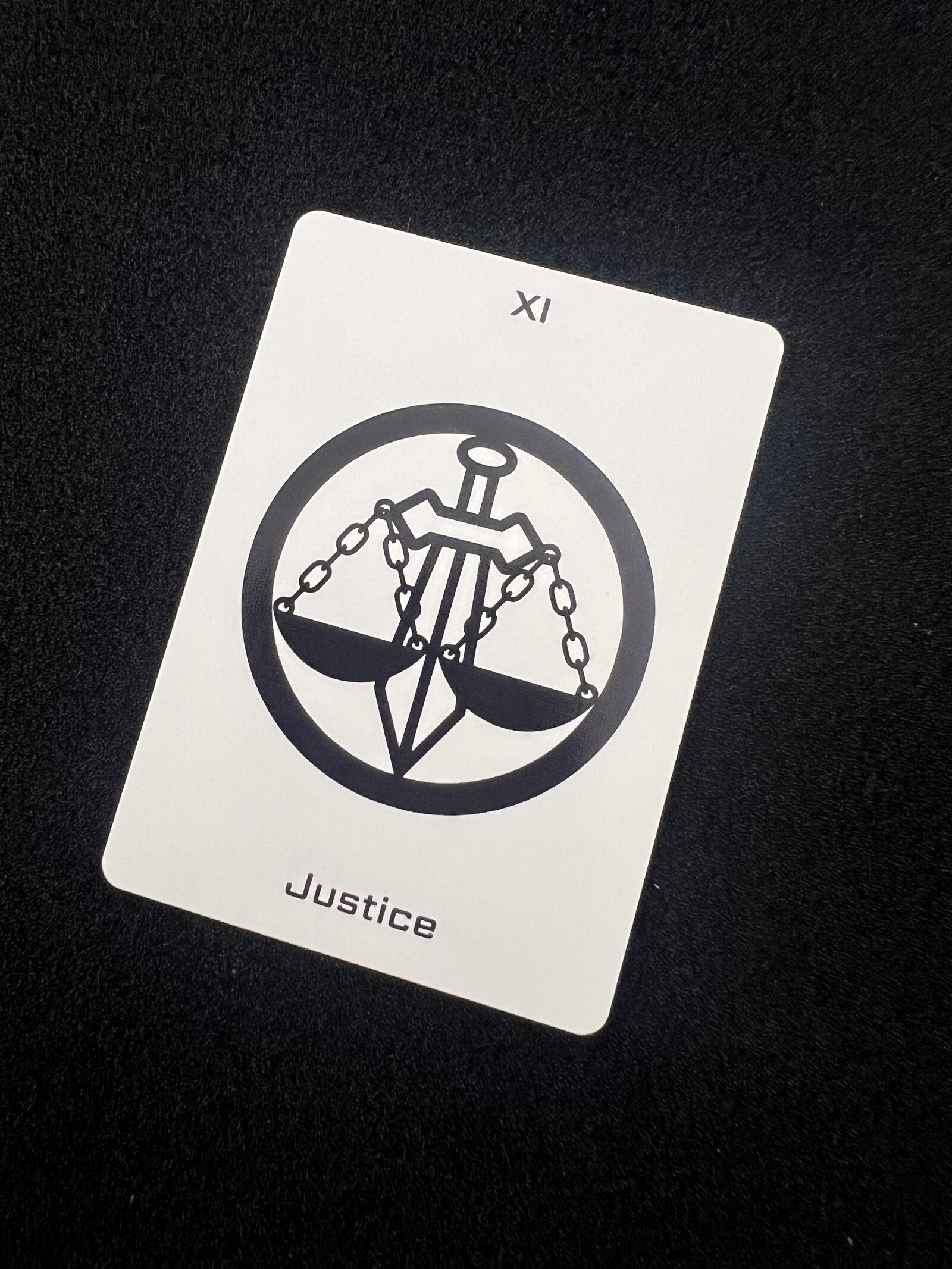
See It in Hand
A short video of the deck, shot with a real printed copy.
Frequently Asked Questions
Do I need to know tarot to use Ikonology?
No. The booklet gives keywords for every card, upright and reversed, plus two spreads, and the guide above walks through the rest. If you only want the poker deck or the solitaire game, you can ignore the tarot side entirely.
Can I really play poker with it?
Yes. Remove the 22 Major Arcana and the four Pages and you have a complete 52-card deck at standard poker size, with the Knights serving as Jacks. Any game that uses a standard 52-card deck works.
Does it come with jokers?
No. If your game needs them, two Major Arcana make serviceable jokers, and the Fool is the traditional choice.
Why poker size instead of tarot size?
Poker size shuffles like a normal deck, fits standard poker equipment and accessories, and lets the full solitaire layout fit on an ordinary table. It is what makes the dual purpose real.
How do I tell whether a card is upright or reversed?
A card is upright when it reads the right way round: the Roman numeral at the top and the name at the bottom on the Major Arcana, and the corner index at the top left on the Minor Arcana. If you read reversals, an upside-down card is reversed. If you do not, just turn it round and read it upright.
Why is it spelled “Ikonology” with a K?
The name combines icon and -ology, the study of something. Swapping the C for a K makes it as distinctive as the cards.
Where can I buy it?
Ikonology will be sold through The Game Crafter, which prints each deck on demand and ships it to you. The price is $53.99, and shipping options are shown at checkout.
Get Ikonology
$53.99 for the 78-card deck, the 40-page booklet and the custom tuck box. You can purchase a copy of Ikonology here.
Ikonology is the first card project from FatMunkey, not the only one. Next up is a money-themed poker deck. The name is still under wraps, but it is coming.
Check Out FatMunkey's Books
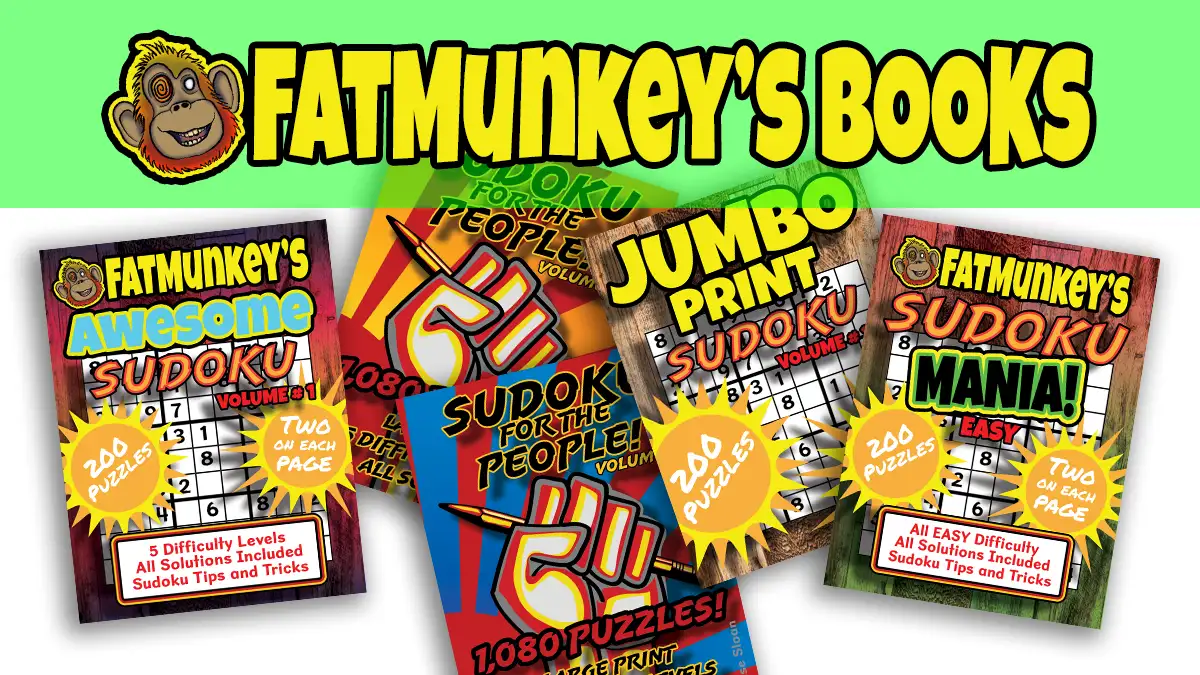
FatMunkey has a huge selection of sudoku and other puzzle books you are sure to enjoy.
Have a look at this post to see all of the books and read about what FatMunkey has published so far.